Mexican Rice
Tomato gives this rice its orange-red color; a short fry in oil gives the grains a lightly toasted flavor before they absorb the cooking liquid. The aim is tender rice that falls apart gently under a fork, with enough structure to sit beside a stew without becoming a mash.
This is a simple version of arroz rojo, the Mexican red-rice preparation. Pati Jinich's red rice informs the sequence of frying the rice, cooking tomato into it and resting it after simmering. Here, plain passata replaces her blended fresh-tomato mixture, onion is diced rather than blended, and water replaces broth. There are no peas, carrots or chiles in this base version. For wider regional context, see the Mexico food guide.
Yield: 6 side portions, roughly 150–180 g cooked rice each, depending on evaporation. Allow about 55 minutes including a 10-minute covered rest. A low-powered burner or rice that needs extra steaming can add 5–10 minutes.
Rice, liquid and equipment
Use ordinary long-grain white rice, not instant, parboiled, brown or short-grain sushi rice. Start with the rice dry, ready for cooking according to its packet. If your brand requires rinsing, drain it very thoroughly before frying and allow a little extra preparation time.
For 300 g dry rice, measure 240 ml passata and 480 ml water, a total of 720 ml before reduction. Passata counts toward the liquid; adding a full rice-cooking quantity of water on top would make the dish wetter. Mahatma's long-grain white rice directions use roughly two volumes of water per volume of rice and a 20-minute covered simmer. Tomato thickness, the lid and burner affect this preparation, so use the grain checks below as well as the clock.
Use a heavy 2.5–3 litre saucepan, about 20 cm across, with a tight-fitting lid, a wooden spoon and a measuring jug. A very wide pan or a loose lid loses more steam. Passata here means plain, strained tomato purée, without added herbs, sugar or oil. It is not concentrated tomato paste.
Ingredients
- 🍚 300 g dry long-grain white rice
- 🫒 30 ml mild olive oil
- 🧅 60 g peeled white onion, finely diced
- 🧄 6 g peeled garlic, finely chopped
- 🍅 240 ml plain tomato passata
- 💧 480 ml water
- 🧂 5 g fine salt
Instructions
1. Measure the liquids
Measure the 240 ml passata and 480 ml water into separate containers. Keep them separate because the tomato cooks with the rice before the water goes in. Have the chopped onion and garlic ready before heating the pan.
2. Toast the rice
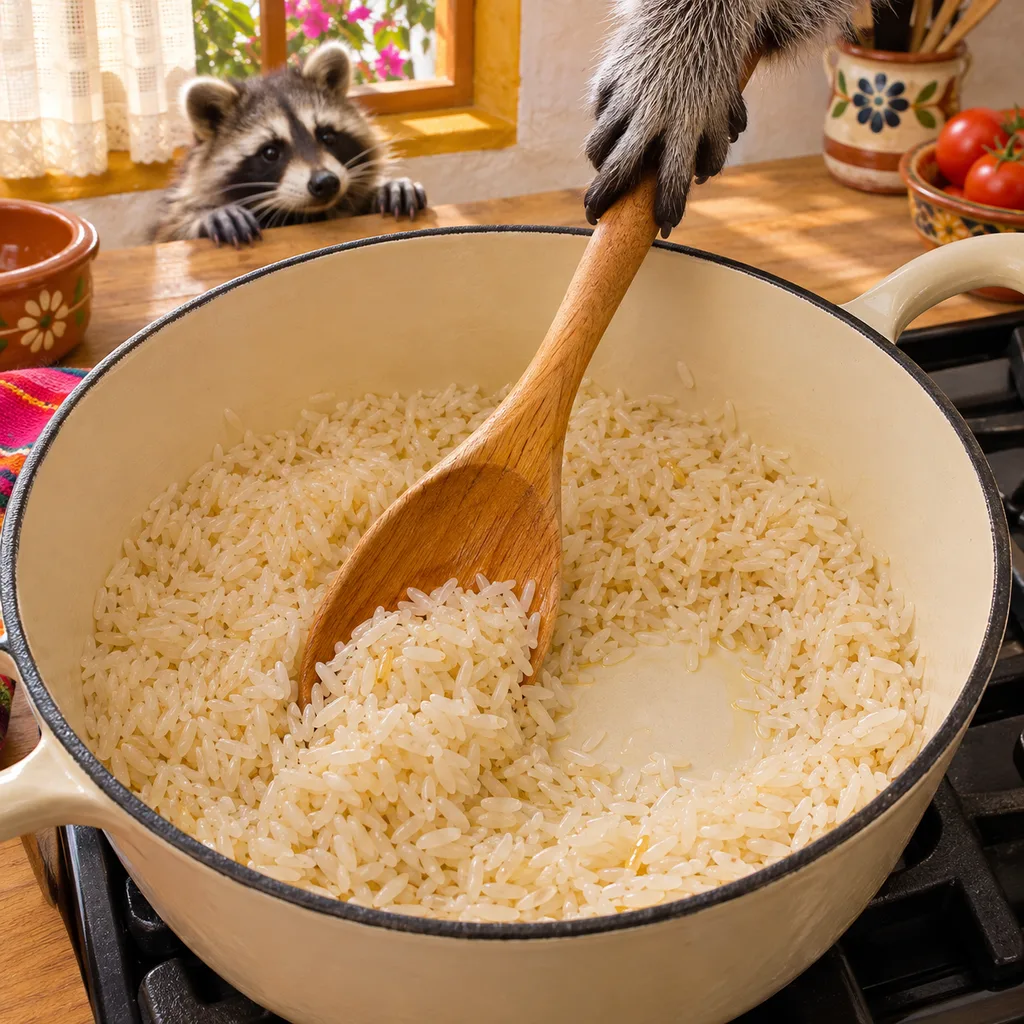
Heat the 30 ml olive oil in the saucepan over medium heat for about 1 minute. Add the 300 g dry rice and stir frequently for 4–5 minutes. The grains should become opaque ivory, with a few pale-gold edges and a faint toasted smell. Keep them moving across the bottom; lower the heat if they brown quickly. Do not take them to a deep brown.
3. Soften the aromatics
Add the 60 g diced onion to the rice and cook over medium heat for 3 minutes, stirring, until the onion starts to look translucent. Stir in the 6 g garlic and cook for 30 seconds, just until fragrant. Avoid browning the garlic; reduce the heat if the pan is getting too hot.
4. Reduce the tomato
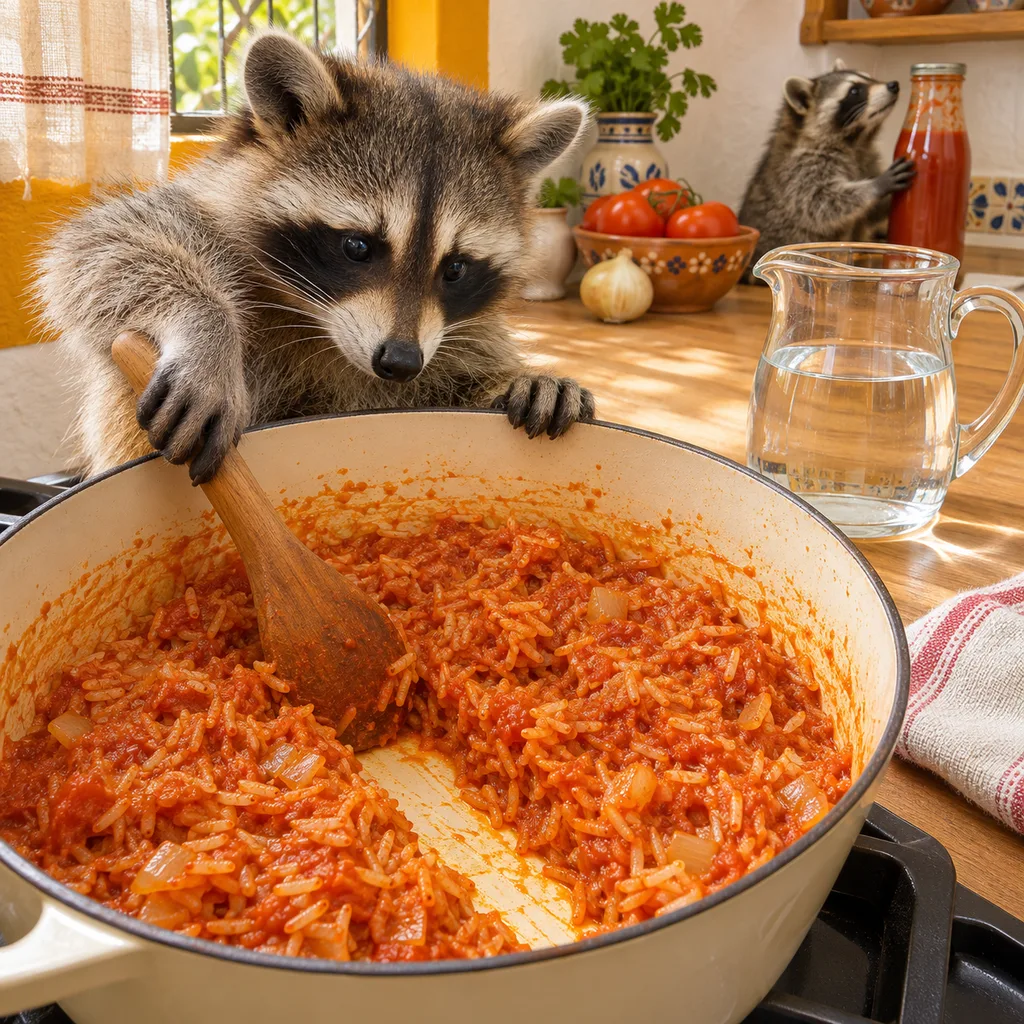
Lower the heat to medium-low. Carefully add the 240 ml passata, keeping clear of any splashes, and stir through the rice. Cook uncovered for 3–4 minutes, stirring along the bottom, until the tomato thickens and clings to the grains. A spoon drawn through it should briefly reveal the bottom of the pan. It should smell cooked and tomato-rich, without scorched patches.
5. Simmer under the lid
Pour in the 480 ml water and add the 5 g salt. Stir once to distribute the rice and loosen anything stuck to the bottom. Bring to a steady simmer over medium-high heat, about 2–3 minutes, then cover immediately and turn the heat to low. Cook at a gentle simmer for 18–20 minutes. Leave the lid closed and do not stir during this period; you want slow steam, not a rolling boil that drives off the liquid.
At 18 minutes, check briefly. There should be no free liquid pooling on top, and a grain should be almost tender with no hard, chalky center. If the rice is hard and the pan is dry, sprinkle in 30 ml hot water, cover and cook on low for another 3–5 minutes. If liquid remains, cover and cook for 2–3 minutes before checking again. Do not add water simply because the surface looks dry when the grains are already tender.
6. Rest and fluff
Take the pan off the heat and leave it covered for 10 minutes. This rest is part of the cooking time plan, allowing the moisture to settle through the rice. Uncover and gently lift and separate the grains with a fork, working around the edges rather than stirring vigorously. Serve hot. Avoid scraping any browned bottom crust through the fluffy rice.
Troubleshooting
Soft rice with excess moisture: once the grains are cooked, uncover over very low heat for 1–2 minutes to release surface moisture, then remove from the heat. Further stirring can break the rice. For the next batch, check the liquid measures and use the same pan and a gentler simmer.
Scorched base: move the unburnt upper rice to a clean bowl without scraping the bottom. A smaller burner, lower heat and heavier pot help prevent this. If burning starts before the grains are tender, transfer the unburnt rice to another saucepan, add 30 ml hot water and finish covered on low heat.
Different rice: brown, parboiled and instant rice need different liquid and cooking schedules. Their packet directions do not make them direct replacements in this method. For a deliberately sticky, vinegar-seasoned preparation, compare Perfect Sushi Rice.
Serving
Serve the rice beside Chile Verde or spoon mole negro over a separate portion. Add homemade corn tortillas and offer Salsa Verde separately, so its acidity and heat can be adjusted at the table. These accompaniments are not included in the recipe's yield or nutrition estimate.
Cooling and leftovers
Serve promptly after the covered rest. For leftovers, divide the rice into shallow containers and chill it quickly, ideally within 1 hour of cooking. Do not leave it cooling in the saucepan. Refrigerate at 0–5°C and use within 24 hours. Reheat only once, with a small splash of water and a loose cover, until steaming hot throughout; stir during reheating to eliminate cold pockets. These limits follow the Food Standards Agency's rice guidance and Food Standards Scotland's refrigerator guidance. Slow cooling can permit bacterial growth and toxin formation; reheating does not make poorly stored rice safe.
Estimated nutrition per serving
One serving is 1/6 of the recipe. Values are rounded estimates.
- Calories
- 240 kcal
- Protein
- 4 g
- Carbohydrate
- 43 g
- Fat
- 5 g
Calculated from USDA FoodData Central, SR Legacy (April 2018) food composition data and the stated recipe yield.
How this estimate was calculated
Ingredient amounts are converted to edible weights, matched to USDA foods, added together and divided by 6 servings. Comparable foods are used where a regional ingredient has no exact record. Ingredient brands, portion sizes, discarded fat and cooking losses can change the result. Optional ingredients and unmeasured accompaniments are excluded. Sodium is not estimated because salt and brine retention vary.
- Uses all 300 g dry rice and all 30 ml cooking oil; no draining or oil discard is assumed.
- Plain passata is estimated with canned tomato sauce at an assumed density of 1.05 g/ml; brands vary in concentration.
- Water absorption changes cooked weight, not the total starting-ingredient estimate. Serving accompaniments are excluded.