Perfect Sushi Rice
Sushi rice isn't just cooked rice with vinegar—it's a precise balance of texture, temperature, and seasoning that takes practice to master. The fish might be the star, but rice is the foundation that makes or breaks every piece of sushi.
Timing: The total estimates 45 minutes of preparation (including the 30-minute rice soak), 30 minutes of cooking and steaming, and 15 minutes of final fanning and cooling. Cooling can take about 10–20 minutes depending on the vessel and fanning; the estimate uses 15 minutes. Stop when the rice reaches body temperature. The soak is already included in preparation and is not added twice.
Ingredients
🍚 2 cups short-grain sushi rice (koshihikari preferred)
💧 2 cups water (plus extra for rinsing)
🍶 1/4 cup rice vinegar
🍚 2 tablespoons sugar
🧂 1 teaspoon salt
🌊 Small piece of kombu (optional)
Equipment
- Rice cooker or heavy-bottomed pot with lid
- Hangiri (wooden sushi tub) or large bowl
- Shamoji (rice paddle) or wooden spoon
- Fan (uchiwa) or magazine for cooling
Instructions
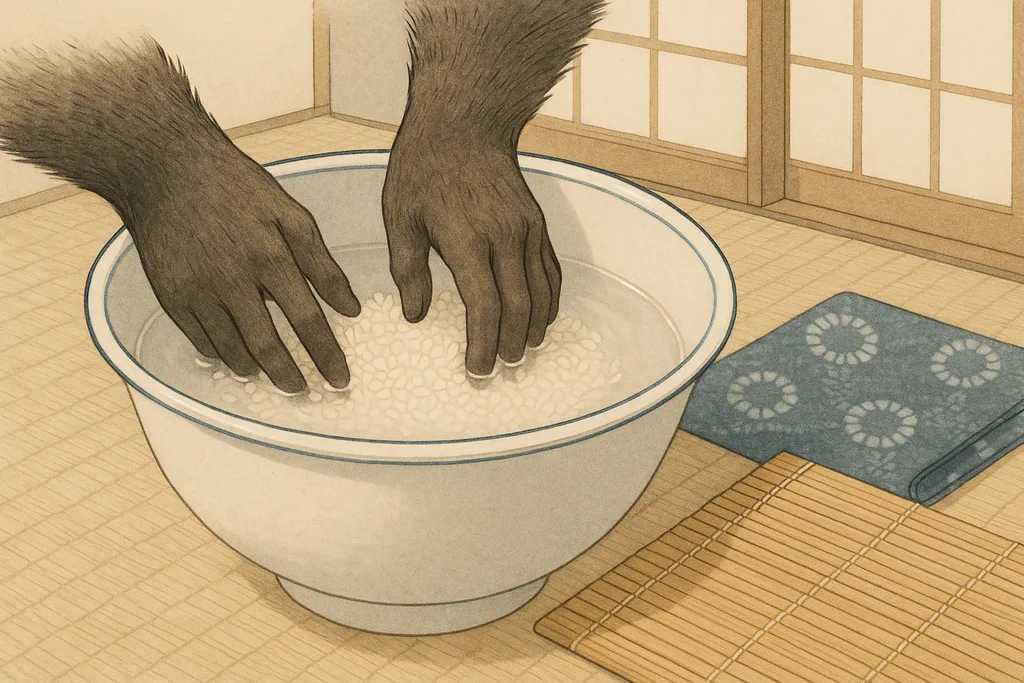
- Rinse the rice: Place rice in a bowl and cover with cold water. Gently swirl with your hand, then drain. Repeat 4-5 times until water runs clear. This removes excess starch.
-
Soak: Let rice soak in measured water for 30 minutes. This ensures even cooking.
-
Cook: Add kombu if using. In rice cooker: use sushi setting. On stove: bring to boil, reduce to low, cook 15 minutes. Turn off heat and let steam 10 minutes. DO NOT lift the lid!
-
Prepare sushi-zu: While rice cooks, gently heat vinegar, sugar, and salt until dissolved. Don't boil. Cool to room temperature.
-
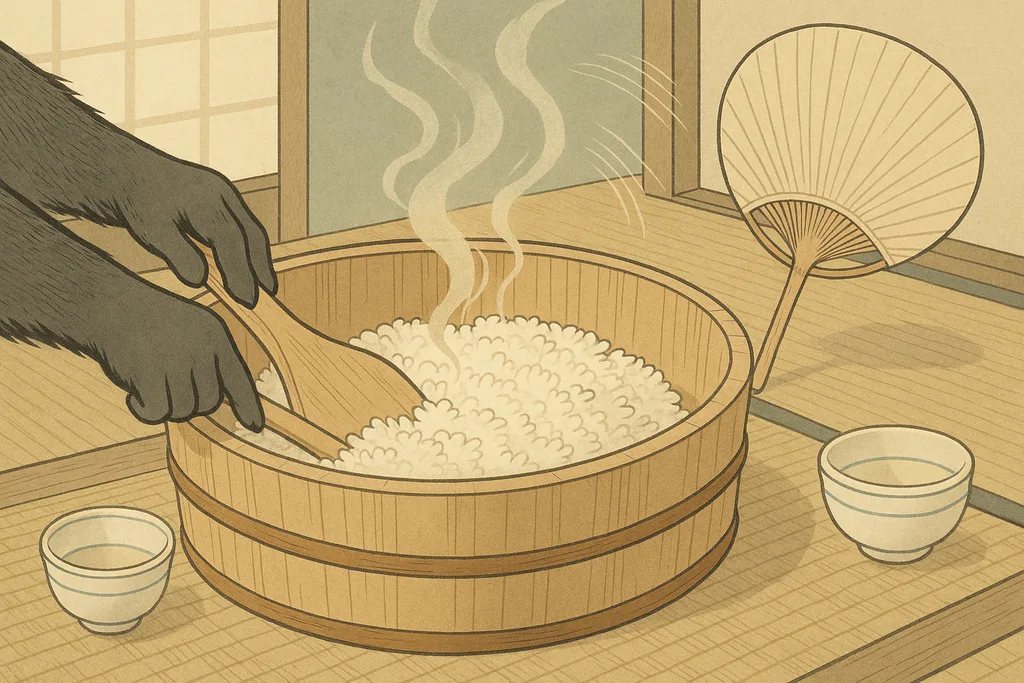
Season the rice: Transfer hot rice to hangiri or bowl. Drizzle sushi-zu over rice while gently folding with shamoji. Use cutting motions - never mash!
-
Cool quickly: Fan the rice while folding to cool it quickly. This gives the rice its signature glossy appearance. Continue until rice reaches body temperature.
Sushi Rice Precision Flow
Critical Points:
- Never skip the rinsing - excess starch ruins texture
- Patience during steaming - lifting lid releases crucial moisture
- Cutting motions when mixing - preserves grain integrity
- Quick cooling creates glossy finish
- Rest: Cover with damp cloth. Use within 2 hours.
The Perfect Texture
- Each grain should be distinct but stick together
- Not mushy or dry
- Slightly warm, never cold
- Glossy appearance
- Sweet-sour balance
Common Mistakes
- Over-washing: Rice becomes waterlogged
- Under-washing: Rice is too starchy
- Too much vinegar: Overpowers delicate fish
- Stirring too roughly: Creates mush
- Using cold: Never refrigerate sushi rice
Notes
Yamamoto-san told me his apprentices spend a year just making rice before they touch fish. Now I understand why. The difference between good and perfect sushi rice is subtle but crucial.
This rice is essential for nigiri, maki, and chirashi. Once you master it, try making Salmon Nigiri or explore other Japanese fundamentals in my Japan guide.
This recipe demonstrates the precision of Japanese rice techniques in my Rice around the world exploration. For contrast, compare this to Mexican Rice - both are flavored rice, but the techniques and purposes couldn't be more different. It shows how each cuisine approaches the same ingredient uniquely.
Rice Quality Timeline
Critical Temperature Windows:
- Peak Quality: Body temperature (98°F) - grains distinct but cohesive
- Working Window: 85-95°F - still good for nigiri and maki
- Acceptable Range: 75-85°F - use for hand rolls or chirashi
- Beyond Use: Below 75°F - texture compromised, start fresh batch
Professional Tip: Yamamoto-san keeps finished rice under a damp cloth in a warm (not hot) place, using it within 2 hours maximum.
Remember: sushi rice is alive. It changes texture by the minute, which is why the best sushi is eaten immediately after preparation.
Estimated nutrition per serving
One serving is 1/6 of the recipe. Values are rounded estimates.
- Calories
- 255 kcal
- Protein
- 4 g
- Carbohydrate
- 57 g
- Fat
- 0 g
Calculated from USDA FoodData Central, SR Legacy (April 2018) food composition data and the stated recipe yield.
How this estimate was calculated
Ingredient amounts are converted to edible weights, matched to USDA foods, added together and divided by 6 servings. Comparable foods are used where a regional ingredient has no exact record. Ingredient brands, portion sizes, discarded fat and cooking losses can change the result. Optional ingredients and unmeasured accompaniments are excluded. Sodium is not estimated because salt and brine retention vary.