Oyakodon
Onion softens in a shallow layer of sweet soy broth, then beaten egg gathers the chicken into a topping you can slide over rice. Leave a little broth in the pan: it should season the upper layer of rice without turning the bowl into soup.
Oyakodon is a Japanese chicken-and-egg rice bowl. Japan's Ministry of Agriculture, Forestry and Fisheries documents it among Tokyo's regional dishes, while noting that its origins have several accounts. This version uses chicken thigh and onion with a dashi base. MAFF's account of oyakodon.
The two-stage egg addition follows the binding technique illustrated in Kikkoman's oyakodon lesson. Here, both additions are cooked until set, rather than leaving a raw finish. A covered pan and a gentle simmer keep the topping moist.
Yield: two substantial rice bowls. Allow about 50 minutes from dry rice, including a 15-minute soak and 10-minute covered rest. Prepare the topping while the rice cooks; those stages overlap. With hot, freshly cooked plain rice already available, allow about 25 minutes for the topping.
Equipment
Use a small, heavy saucepan with a tight lid for the rice, a 20 cm frying pan with a lid for the topping, a thin spatula and an instant-read thermometer. A much wider frying pan evaporates this small amount of broth quickly.
Ingredients
Rice
- 🍚 150 g Japanese short-grain white rice, dry
- 💧 190 ml water
Chicken and egg topping
- 🍗 250 g boneless, skinless chicken thigh, cut into 2 to 3 cm pieces
- 🧅 150 g onion, peeled and thinly sliced
- 🥣 150 ml unsalted dashi, prepared
- 🫘 30 ml Japanese soy sauce
- 🍶 15 ml mirin
- 🍬 5 g granulated sugar
- 🥚 3 large eggs, about 150 g without shells
- 🌿 10 g scallion greens, thinly sliced
Use plain dashi made from kombu and bonito, or prepare an unsalted product according to its packet. If your dashi contains salt, start with 20 ml soy sauce and taste the broth before adding the chicken. The nutrition estimate uses the full 30 ml soy sauce. Mirin contributes sweetness as well as alcohol; an unseasoned rice vinegar is not a direct replacement.
Instructions
1. Rinse and soak the rice
Put the 150 g rice in a bowl, cover with cold water and swish gently. Drain and repeat two or three times until the water is less cloudy; it need not run completely clear. Drain well, transfer to the saucepan and add the measured 190 ml water. Soak for 15 minutes. Slice the onion and scallions during this wait, then prepare the raw chicken on a separate board.
2. Cook and rest the rice
Cover the saucepan and bring the soaked rice to a boil over medium heat, about 3 minutes. Immediately turn the heat to its lowest setting and cook, still covered, for 15 minutes. Turn off the heat and leave covered for 10 minutes. Start the topping during the rice's low simmer so the two finish close together. After resting, fluff the rice with a paddle and keep it covered until serving.
3. Soften the onion
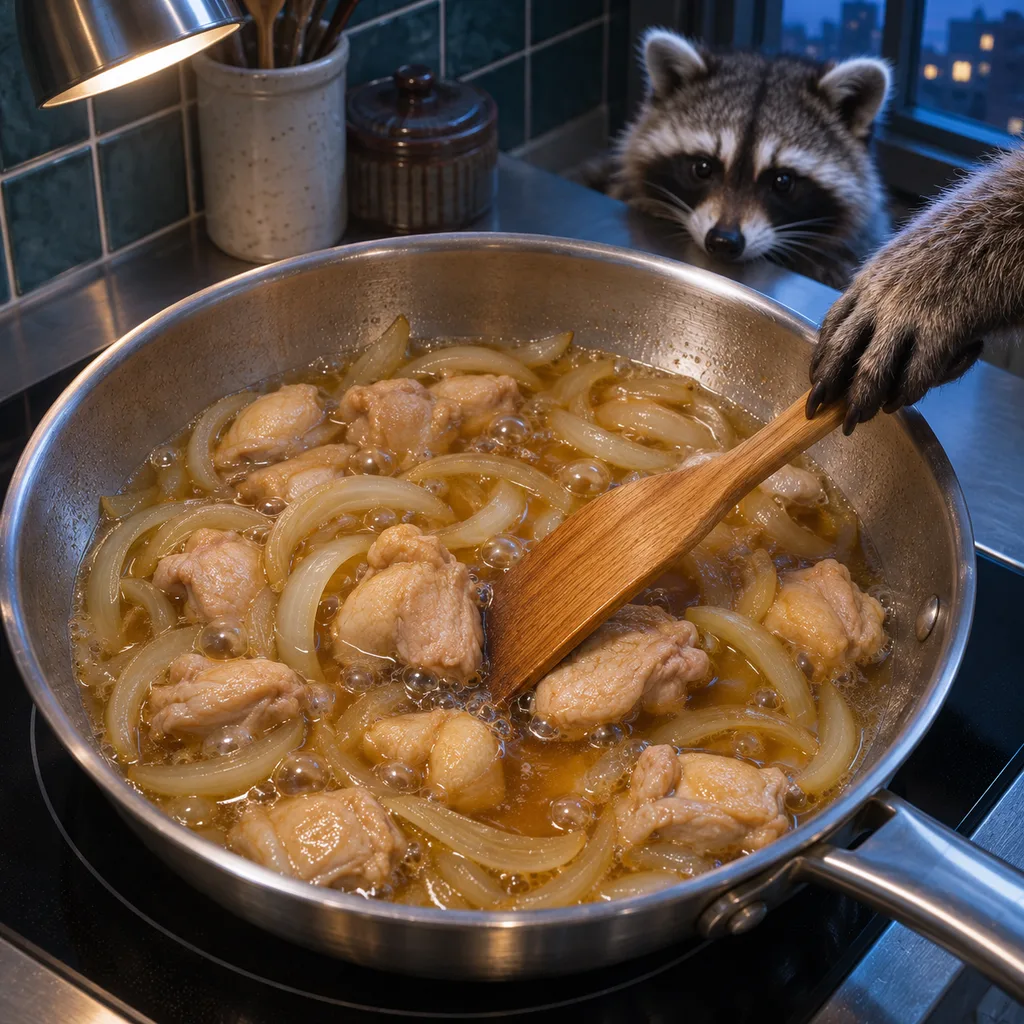
Combine the 150 ml dashi, 30 ml soy sauce, 15 ml mirin and 5 g sugar in the frying pan. Add the onion and bring to a gentle simmer over medium heat. Cook uncovered for 4 to 5 minutes, turning the slices once or twice, until they bend easily and begin to look translucent. The broth should still cover the base of the pan.
4. Simmer the chicken
Arrange the chicken in one layer among the onions. Cover and maintain a gentle simmer over medium-low heat for about 7 to 9 minutes, turning the pieces halfway through. Check the largest pieces with a thermometer: the centre must reach 74°C (165°F) before you add the eggs. Add 15 ml water at a time if the pan becomes dry; the chicken should simmer in broth, not fry against the metal.
5. Bind the topping with egg
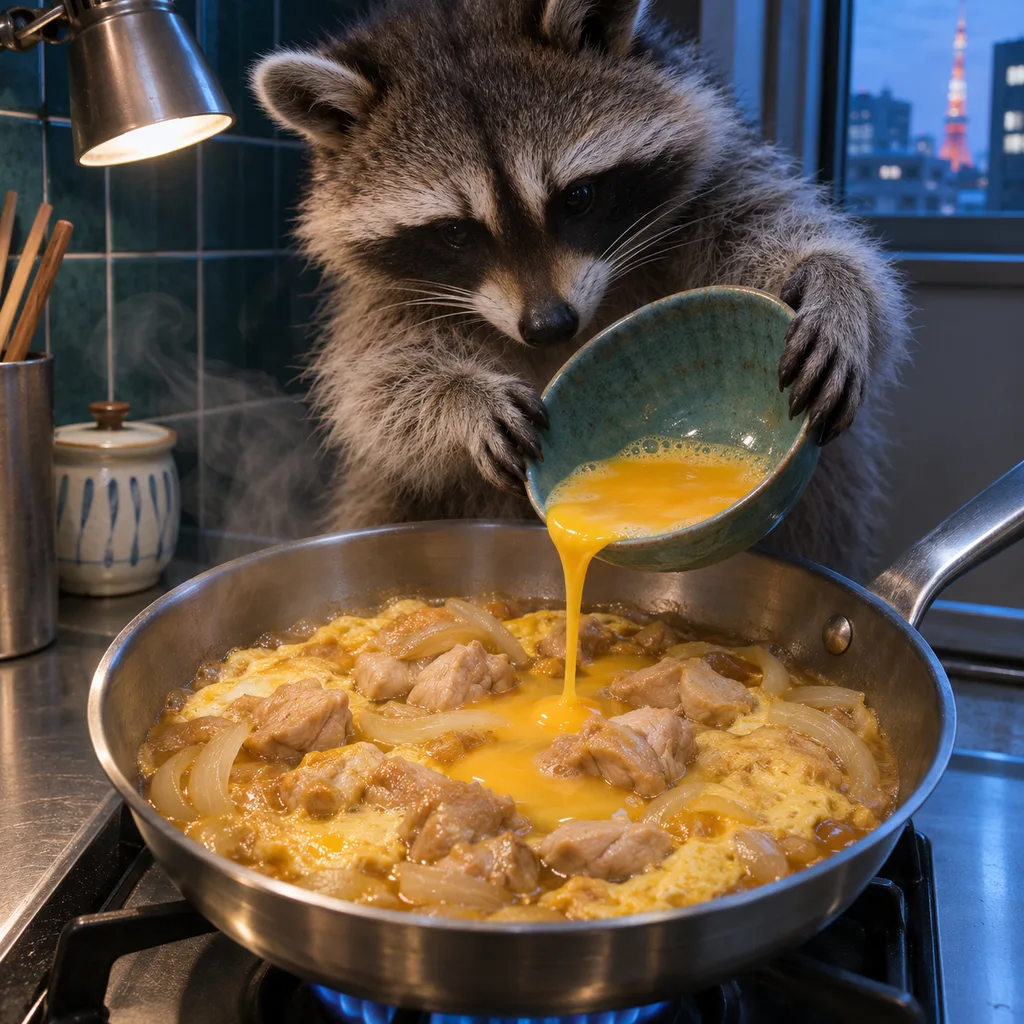
Beat the eggs briefly with a fork, just enough to break the yolks and loosen the whites. Bring the broth back to a steady gentle simmer. Pour about two-thirds of the egg evenly over the chicken and onions. Cover for 45 to 60 seconds, until most of that first addition has set. Pour the remaining egg across the gaps, cover again and cook over low heat for about 1 to 2 minutes, checking early. The egg should be moist but fully set, with no flowing raw patches, and reach at least 71°C (160°F). If it needs longer, keep the heat low and check every 20 seconds rather than boiling the pan hard.
6. Slide onto the rice
Divide the hot rice between two bowls. Use a spatula to divide the chicken-and-egg topping in half, then slide each portion over the rice with its share of broth. Scatter the scallion greens on top and serve immediately. Keep the egg in loose connected pieces rather than stirring it into fine curds.
Keep the topping moist
Too much liquid: simmer the chicken uncovered for the last minute before adding the egg. Keep several spoonfuls of broth so the topping can slide out of the pan. Do not reduce it to a sticky soy glaze.
Egg tough at the edges: the heat was too high or the pan stayed on the hob too long. Add the final egg at a gentle simmer and remove the pan as soon as it is fully set. The broth keeps a fully cooked finish moist; a runny finish is not required.
Rice still firm: sprinkle 15 ml hot water over the surface, cover, cook on very low heat for another 3 minutes and rest for 5 minutes. If the bottom smells scorched, stop heating and lift out the unaffected rice without scraping the base.
A larger batch: make two separate pans rather than doubling into the same 20 cm pan. Crowded chicken cooks unevenly, and a deep egg layer is harder to set gently.
Cooking and storing safely
Use separate utensils for raw chicken and ready-to-eat scallions. Check the chicken before the eggs go in, then check the egg layer before serving. The temperatures above follow the FDA's safe minimum cooking temperatures: poultry to 74°C (165°F) and egg dishes to 71°C (160°F).
Refrigerate leftovers promptly in shallow covered containers, within 2 hours of cooking, and within 1 hour when the room is above 32°C (90°F). Reheat to 74°C (165°F); the egg will become firmer. For the best texture, cook only the number of bowls needed. The FDA's safe food handling guidance explains cooling and reheating limits.
Serve and explore
A small bowl of cucumber sunomono adds a cool, sharp contrast. Use plain unseasoned rice here; sushi rice explains a different preparation that is seasoned with vinegar for sushi.
The Japan cuisine guide places the bowl alongside other dishes. For a different meal built around rice and smaller accompaniments, read the Japanese breakfast guide. The miso-glazed eggplant recipe gives another Japanese main to cook on a separate evening.
Estimated nutrition per serving
One serving is 1/2 of the recipe. Values are rounded estimates.
- Calories
- 600 kcal
- Protein
- 42 g
- Carbohydrate
- 75 g
- Fat
- 13 g
Calculated from USDA FoodData Central, SR Legacy (April 2018) food composition data and the stated recipe yield.
How this estimate was calculated
Ingredient amounts are converted to edible weights, matched to USDA foods, added together and divided by 2 servings. Comparable foods are used where a regional ingredient has no exact record. Ingredient brands, portion sizes, discarded fat and cooking losses can change the result. Optional ingredients and unmeasured accompaniments are excluded. Sodium is not estimated because salt and brine retention vary.
- Includes all rice, chicken, eggs, onion, sauce and scallions; assumes all topping broth is served.
- Uses ready-to-serve broth as a low-energy dashi proxy and a sugar/white-wine mixture as a mirin proxy; actual brands and dashi strength vary.
- Mirin proxy counts starting alcohol-containing ingredients without assuming a cooking loss. No sodium or dietary alcohol claim is inferred.