Miso-Glazed Eggplant
A thin coat of sweet miso settles into scored eggplant flesh, then bubbles under the broiler. Roast the eggplant until it is soft all the way through before adding the glaze: the final heat browns the sauce but cannot finish a firm centre without burning it.
Nasu dengaku is Japanese eggplant served with sweet miso. Miso producer Marukome's dengaku preparation pairs scored eggplant with a cooked miso sauce. Namiko Hirasawa Chen's baked-and-broiled version informs the oven sequence here. This adaptation uses small oval eggplants, a measured white-miso glaze and foil that can stay on the tray under the broiler. It is an oven approach to the dish, rather than a claim to reproduce every regional preparation.
Yield: four halves, enough for two generous vegetable side portions. Allow about 55 minutes including preheating. Eggplant thickness changes the roasting time; a particularly thick half can need another 10 minutes. Rice and other accompaniments are additional.
Equipment
Use a rimmed metal baking tray lined with foil, a sharp knife, a pastry brush, a thin spatula and an oven with a broiler (overhead grill). Avoid parchment under the broiler. Follow your oven's instructions for the broiler setting and door position.
Ingredients
Eggplant
- 🍆 2 small oval eggplants, about 250 g each
- 🫗 15 ml toasted sesame oil
Glaze
- 🫘 40 g white miso paste
- 🍶 15 ml mirin
- 🍬 10 g granulated sugar
- 💧 15 ml water
Finish
- 🌰 6 g toasted sesame seeds
- 🧅 10 g scallion, thinly sliced
Choose firm eggplants about 14–16 cm long and no more than 7 cm wide, with glossy skins and no sunken patches. This timing is for these small oval eggplants. Slender Japanese eggplants cook faster; large globe eggplants need longer. Use plain white miso paste, not ready-made dengaku sauce or instant miso soup. White miso varies in sweetness and saltiness by brand, so do not add salt to the flesh. The mirin contributes sweetness as well as aroma; it contains alcohol unless its label says otherwise.
Instructions
1. Heat the oven and score
Heat the oven to 220°C conventional or 200°C fan with a rack in the middle. Wash and dry the eggplants, trim the hard stalk ends and halve lengthwise. Lay each half flat, cut side up. Make diagonal cuts about 1 cm apart and 5 mm deep, then cut across them to form diamonds. Keep the skin intact and your supporting fingers outside the knife's path.

2. Oil and roast until soft
Brush the 15 ml sesame oil over all four cut surfaces, using a little on the foil beneath them. Place the halves cut side down with space between them. Roast for 25–35 minutes. Carefully turn one with the spatula: its cut face should be lightly golden, the skin slightly wrinkled and a skewer should slide through the thickest flesh without rubbery resistance. If it is still firm, return it cut side down and roast another 5–10 minutes before checking again.
3. Mix the glaze
While the eggplant roasts, stir the 40 g white miso and 10 g sugar together in a small bowl, then work in the 15 ml mirin and 15 ml water until smooth. It should spread with a brush rather than sit in stiff lumps. Keep the sesame and scallion separate for finishing.
4. Turn and brush
Remove the tray from the oven and turn all four halves cut side up. Switch on the broiler and position the tray so the eggplant surfaces will be about 15–20 cm below the element, subject to the oven manufacturer's guidance. Brush the glaze evenly over the flesh and into the shallow cuts. Use the measured batch as a thin coating across all four halves, without piling sauce into the centres.
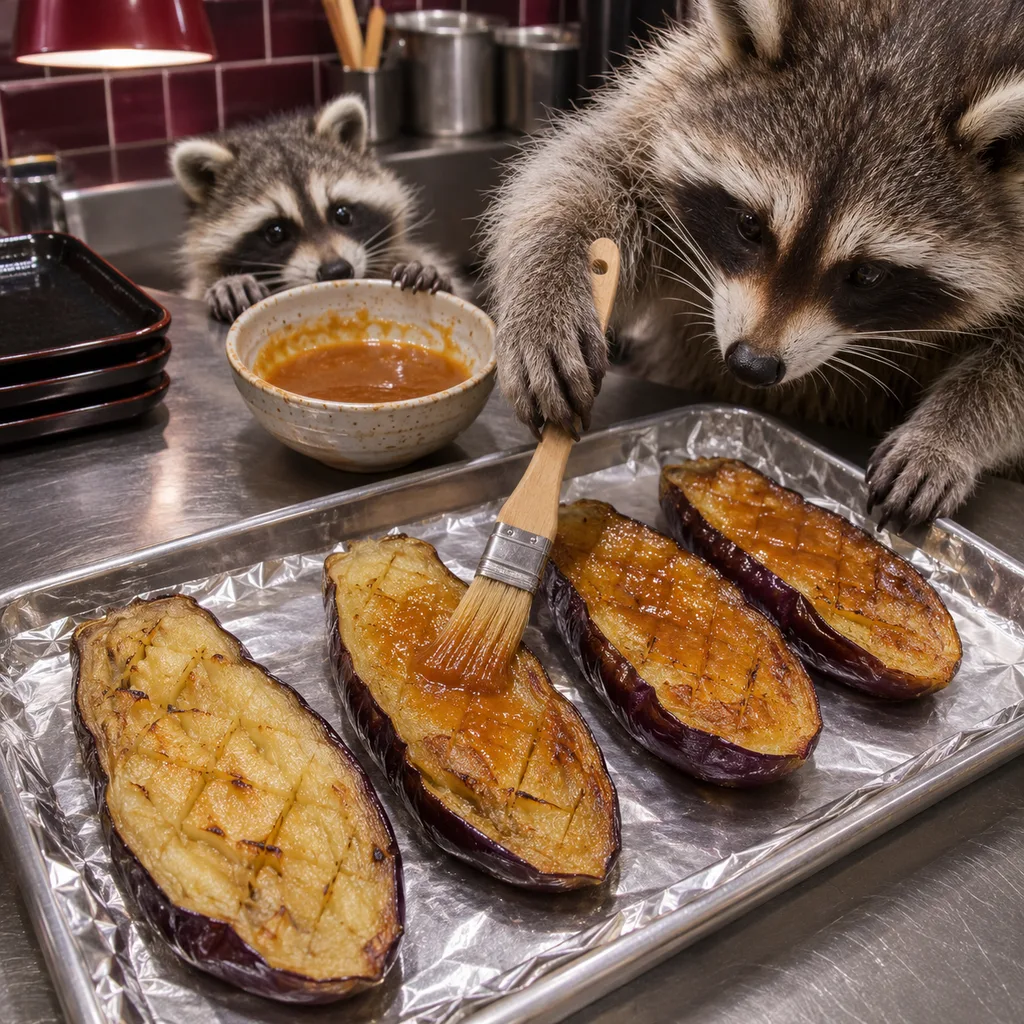
5. Brown under the broiler
Broil for about 2–4 minutes, watching continuously from the first minute. Rotate the tray if one side browns sooner. Remove it when the glaze bubbles and develops scattered brown patches while the flesh stays moist. The surface should not turn uniformly black. If it darkens within seconds, remove the tray immediately and lower its position before continuing briefly. Add the sesame and scallion after the tray leaves the oven, then serve hot.
Texture and troubleshooting
Firm flesh beneath a brown top: the roast was too short or the eggplant was thicker than specified. Before glazing, give it more oven time until a skewer meets no resistance. If it is already glazed, cover loosely with foil and return to the 180°C oven until tender; the topping will soften.
Bitter or black glaze: miso and sugar scorch quickly under direct heat. Stop at bubbling and patchy browning. Scrape off a scorched patch rather than stirring it into the flesh. A spoonful of plain rice alongside balances a concentrated but unburnt glaze.
Sauce running onto the tray: the eggplant should be cut side up and stable before brushing. Keep the glaze on the flesh and out of any puddled cooking liquid. A little sauce around the edges is normal; a thick mound of extra miso makes the dish too salty.
Serving and keeping
Serve with plain steamed short-grain rice and cucumber sunomono, whose vinegar dressing gives a fresh contrast to the glaze. The sushi rice guide explains rice washing and texture; its vinegar seasoning is for sushi, so leave that seasoning out when preparing plain rice for this plate.
For context, read the Japan cuisine guide. The Kyoto tofu guide discusses another ingredient used in dengaku preparations. Oyakodon is a separate chicken-and-egg rice meal, while the Japanese breakfast guide explains how rice, soup and small dishes can form a meal.
Cool leftovers promptly and refrigerate covered for up to 3 days, following Chen's storage guidance. Reheat covered at 180°C until hot throughout, checking after 10 minutes. The skin and glaze soften in storage; use gentle oven heat rather than trying to brown the sugary surface again.
Estimated nutrition per serving
One serving is 1/2 of the recipe. Values are rounded estimates.
- Calories
- 220 kcal
- Protein
- 5 g
- Carbohydrate
- 30 g
- Fat
- 10 g
Calculated from USDA FoodData Central, SR Legacy (April 2018) food composition data and the stated recipe yield.
How this estimate was calculated
Ingredient amounts are converted to edible weights, matched to USDA foods, added together and divided by 2 servings. Comparable foods are used where a regional ingredient has no exact record. Ingredient brands, portion sizes, discarded fat and cooking losses can change the result. Optional ingredients and unmeasured accompaniments are excluded. Sodium is not estimated because salt and brine retention vary.
- Includes 490 g edible eggplant after trimming, all measured sesame oil, all glaze and both measured garnishes. Rice and other accompaniments are excluded.
- White miso is approximated by soybean solids, rice, sugar and water using existing USDA records; fermentation and brand differences are not modelled. This composite is a nutrient proxy, not a substitute to cook.
- Mirin uses the reviewed sugar/white-wine proxy, counted before cooking without an assumed alcohol loss. No sodium or alcohol-free claim is inferred.