

Gutti Vankaya Kura
Andhra-style baby aubergines stuffed with roasted peanut, sesame and coconut masala, simmered gently in a tangy gravy until tender.
November 20, 2026
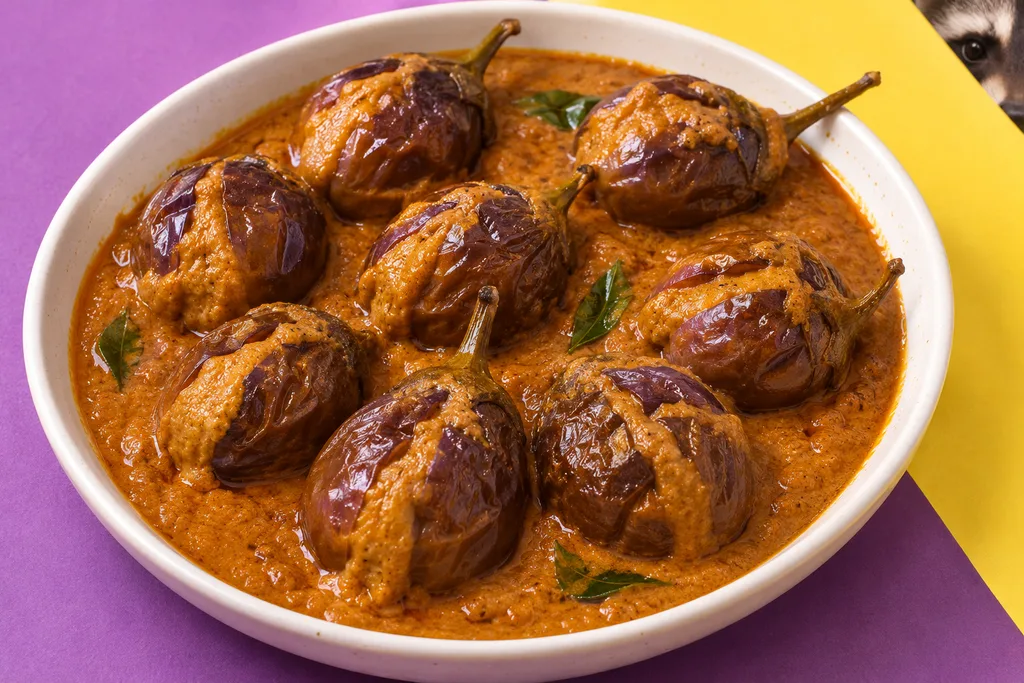
Gutti vankaya is a stuffed aubergine preparation with many Andhra household variations. Here small aubergines hold a roasted peanut, sesame and coconut filling; the extra paste thickens the gravy. Keeping the crown intact and turning with a wide spoon helps the vegetables survive the simmer.
Makes four portions, with two baby aubergines each. You need a spice grinder or small blender and a wide lidded pan that holds eight aubergines in one snug layer. The 15-minute tamarind soak and five-minute spice cooling happen during preparation.
Ingredients
- 8 small purple aubergines, about 600 g total
- 15 g seedless tamarind pulp, soaked in 150 ml hot water
- 60 g unsalted peanuts
- 20 g white sesame seeds
- 25 g unsweetened desiccated coconut
- 2 teaspoons coriander seeds
- 1/2 teaspoon cumin seeds
- 3 dried red chillies, stems removed
- 1/4 teaspoon turmeric
- 1 teaspoon fine salt, divided, then to taste
- 3 tablespoons neutral oil, divided
- 150 g onion, finely chopped
- 10 g garlic, crushed
- 10 g ginger, grated
- 1/2 teaspoon black mustard seeds
- 10 fresh curry leaves
- 1 teaspoon grated jaggery, optional
- 1 tablespoon chopped coriander leaves, optional, for finishing
- 250 ml water, plus a little for grinding and adjustments
Instructions
Roast and grind. Toast peanuts in a dry skillet over medium-low heat for 4–5 minutes until fragrant. Transfer out. Toast sesame for one minute, then coconut for about one minute until pale gold; remove each as ready. Toast coriander, cumin and chillies for one minute. Cool for five minutes, then grind together with turmeric, 1/2 teaspoon salt and about 60 ml water to a thick paste that stays on a spoon.
Prepare the cross-cuts. Trim only the very tip of each stem. Cut from the rounded base toward the crown in two crossing cuts, stopping about 1 cm short of the stem so the quarters remain attached. Check for damaged flesh. Gently open the cuts and press in about two teaspoons of filling per aubergine. Reserve the remaining paste.
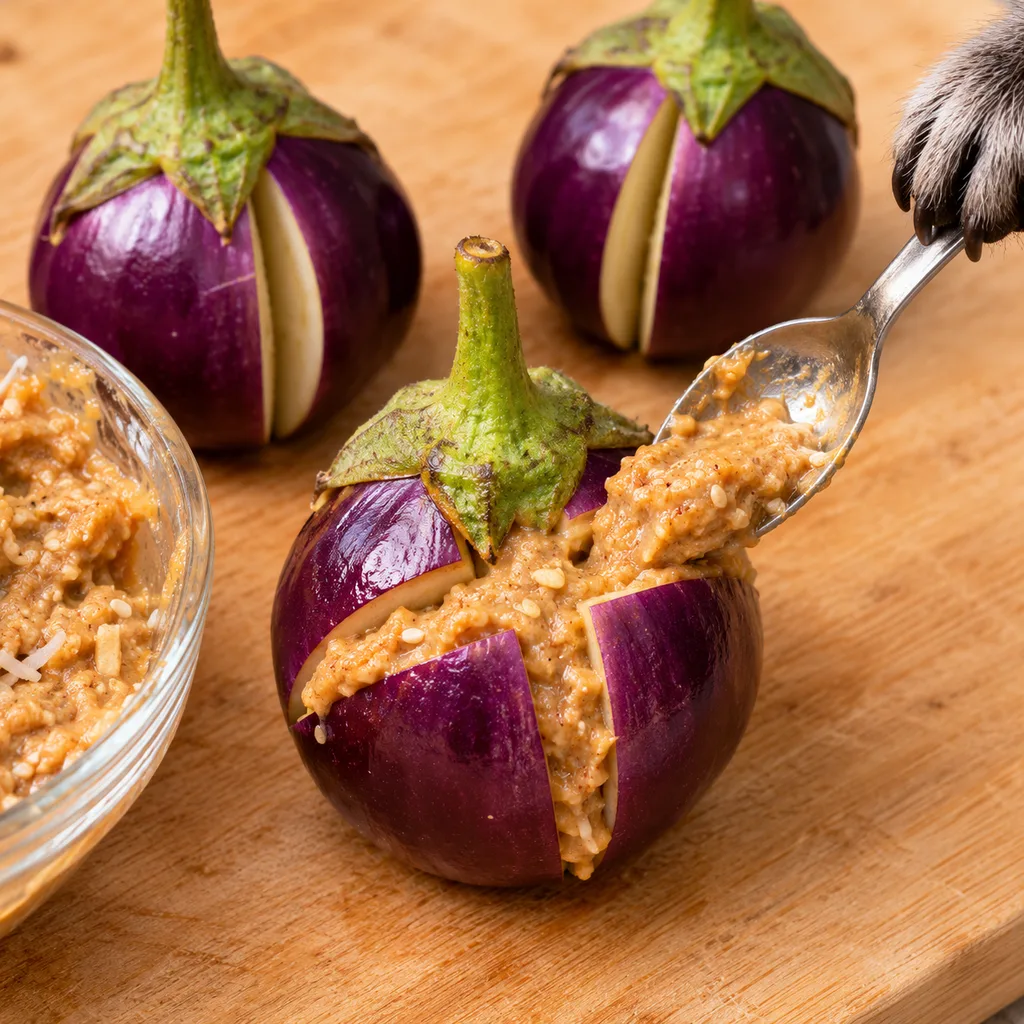
Build the sauce. Squeeze and strain the tamarind into its soaking water. Heat 2 tablespoons oil in the wide pan. Add mustard seeds and let them pop, then curry leaves. Cook onion for 7–8 minutes until golden at the edges. Add garlic and ginger for one minute, then the reserved filling for two minutes, stirring constantly.
Nestle and simmer. Add tamarind liquid, 250 ml water, remaining 1/2 teaspoon salt and optional jaggery. Stir smooth, then arrange stuffed aubergines in one layer. Drizzle the remaining tablespoon oil over them. Bring to a gentle simmer, cover and cook over low heat for 25–35 minutes. Every 8–10 minutes, spoon sauce over the tops and turn carefully with a wide spoon. Add splashes of hot water if the sauce catches before the flesh softens.
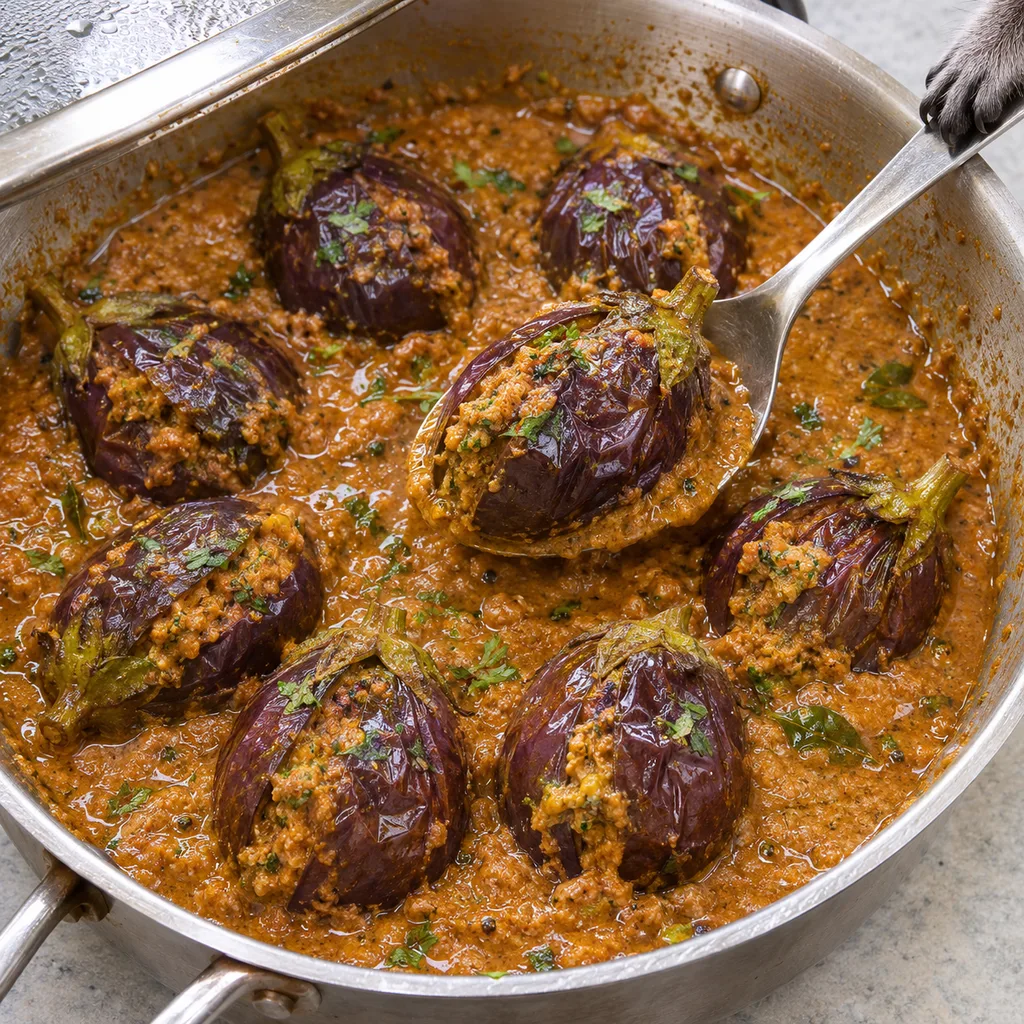
Check the centre. A thin skewer should enter the thick flesh near the crown without resistance. The filling should be hot through and the skin wrinkled. If tender but the sauce is thin, remove the lid and simmer for five minutes. Avoid vigorous stirring; gently shake the pan instead. Taste for salt, scatter optional coriander and serve with rice or flatbread.
Notes and sources
Large globe aubergines will not cook on this schedule. Choose evenly sized baby aubergines; tough flesh near the crown usually needs more time, not more heat. For other aubergine techniques, try layered Eggplant Parmigiana or charred Baba Ganoush. Surti Undhiyu uses stuffed vegetables in a different mixed-vegetable preparation.
Sailu's gutti vankaya documents the intact cross-cut and careful simmering. Sailaja Damodaran's version supplies a peanut-sesame-coconut reference. This version combines a nut filling with a covered braise rather than pre-frying the whole aubergines.
You might also like
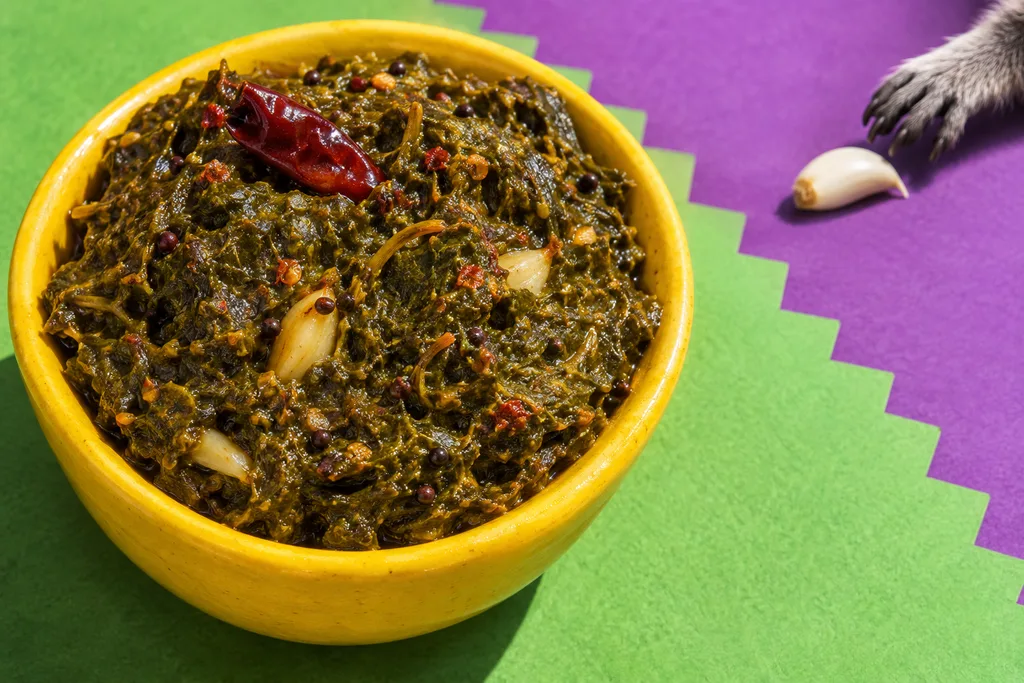
Gongura Pachadi
A coarse Andhra-style gongura leaf chutney, with garlic, dried chilli and a restrained fenugreek tempering to complement the leaves' sharpness.
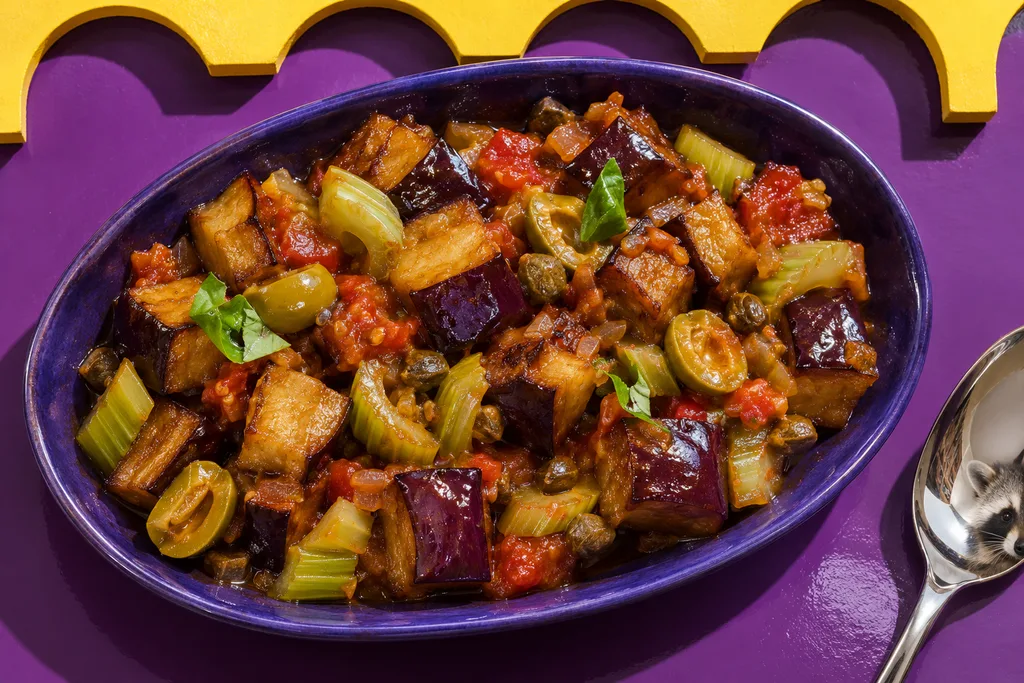
Caponata di Melanzane
A Sicilian aubergine caponata with distinct fried cubes, celery, olives and capers in a balanced sweet-sour tomato dressing.
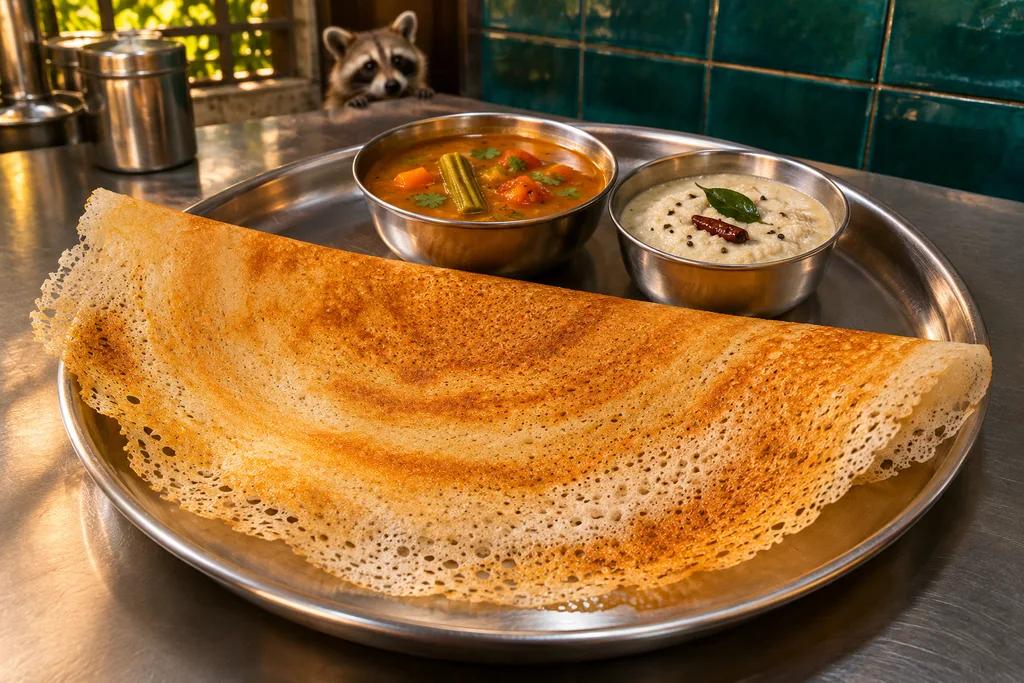
Crispy Dosa
Thin, golden South Indian dosa with a fermented rice-and-urad-dal batter, clear texture cues and practical help for spreading it on a home tawa.
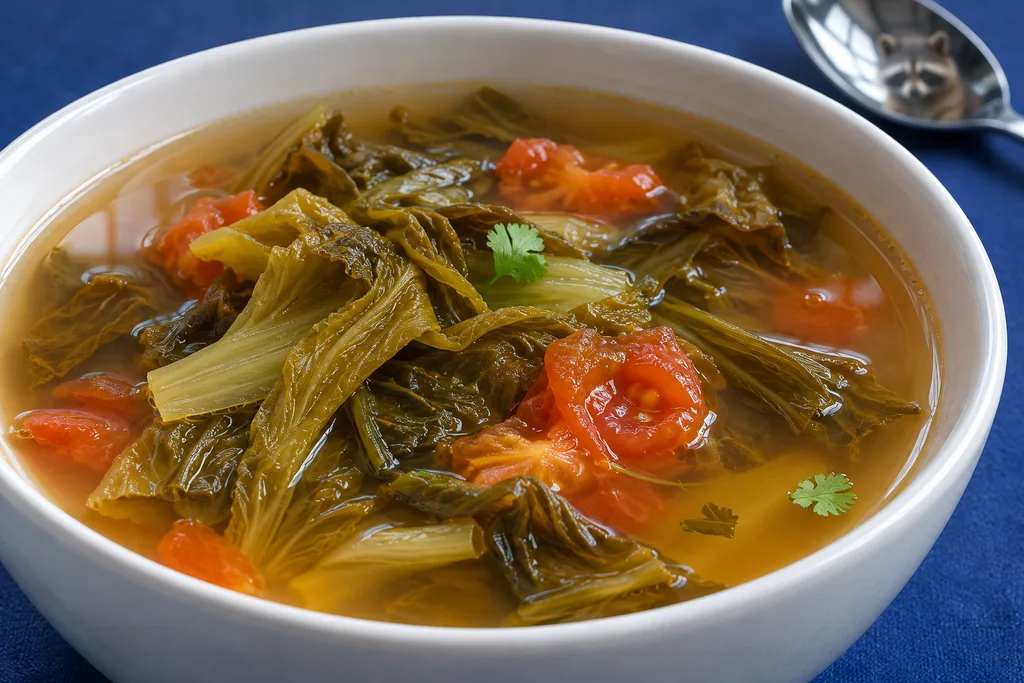
Gundruk Soup
A light, tangy soup of prepared dried fermented greens, tomato, ginger and garlic, with a small finishing pinch of timur.