

Crispy Dosa
Thin, golden South Indian dosa with a fermented rice-and-urad-dal batter, clear texture cues and practical help for spreading it on a home tawa.
November 16, 2026
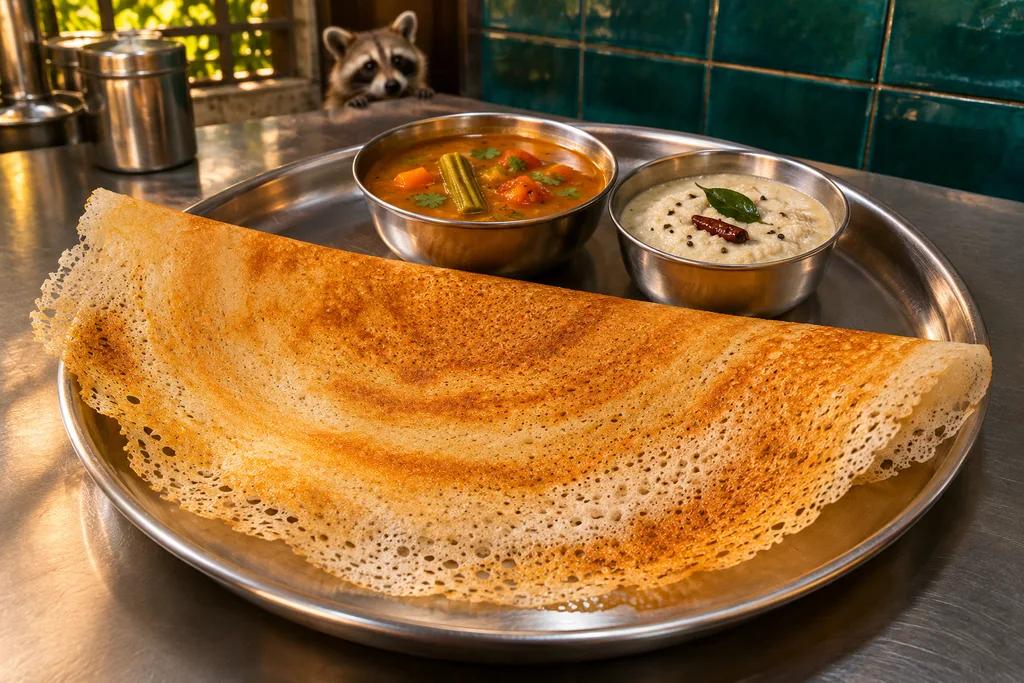
A good crisp dosa is thin enough to show tiny holes, with a golden underside and an edge that lifts cleanly from the pan. The batter does most of its work while you are elsewhere; the cooking asks for a little attention to temperature and thickness.
This is a plain fermented dosa, without a potato filling. South Indian households use many rice-to-dal ratios; this version leans toward a crisp finish. Swasthi's dosa guide is a useful reference for the range of batters and fermentation methods.
Makes about 12 dosas, 22–24 cm across. Plan for six hours of soaking and roughly 8–12 hours of fermentation; the total-time estimate uses ten hours of fermentation. A warm kitchen may be quicker, while a cool one can take longer. Serve with Vegetable Sambar and Coconut Chutney.
Ingredients
- 300 g uncooked white rice, preferably idli rice or a mix of idli rice and ordinary short-grain rice
- 100 g hulled urad dal (white whole or split black gram)
- 1/4 teaspoon fenugreek seeds
- 20 g thin poha (flattened rice)
- 1 teaspoon fine salt, or to taste
- About 450 ml cool water for grinding, plus soaking water and extra water to thin
- 3 tablespoons neutral oil, for the tawa and dosa edges
Instructions
Soak separately. Rinse the rice in one bowl and the dal with fenugreek in another. Cover both generously with water and soak for six hours. Rinse the poha and soak it separately for the final 15 minutes. Drain everything.
Grind the dal. Blend the dal and fenugreek with about 150 ml cool water, adding small splashes only as needed, until smooth and fluffy. Pause if the blender jar becomes warm. Transfer to a large bowl with room for the batter to expand.
Grind the rice and combine. Blend the rice and poha with about 250 ml water, adding up to another 50 ml if needed, until very finely ground. Mix thoroughly with the dal and salt. At this stage it should be thick but pourable, rather than watery.
Ferment until airy. Cover loosely and leave in a warm place, roughly 25–30°C, for 8–12 hours, until the batter has risen, shows small bubbles and smells pleasantly tangy. Use an unheated oven only if it stays gently warm; do not turn it on with the batter inside. Refrigerate once fermented if you are not cooking immediately. Discard batter with mold, unusual discoloration or a rotten smell.
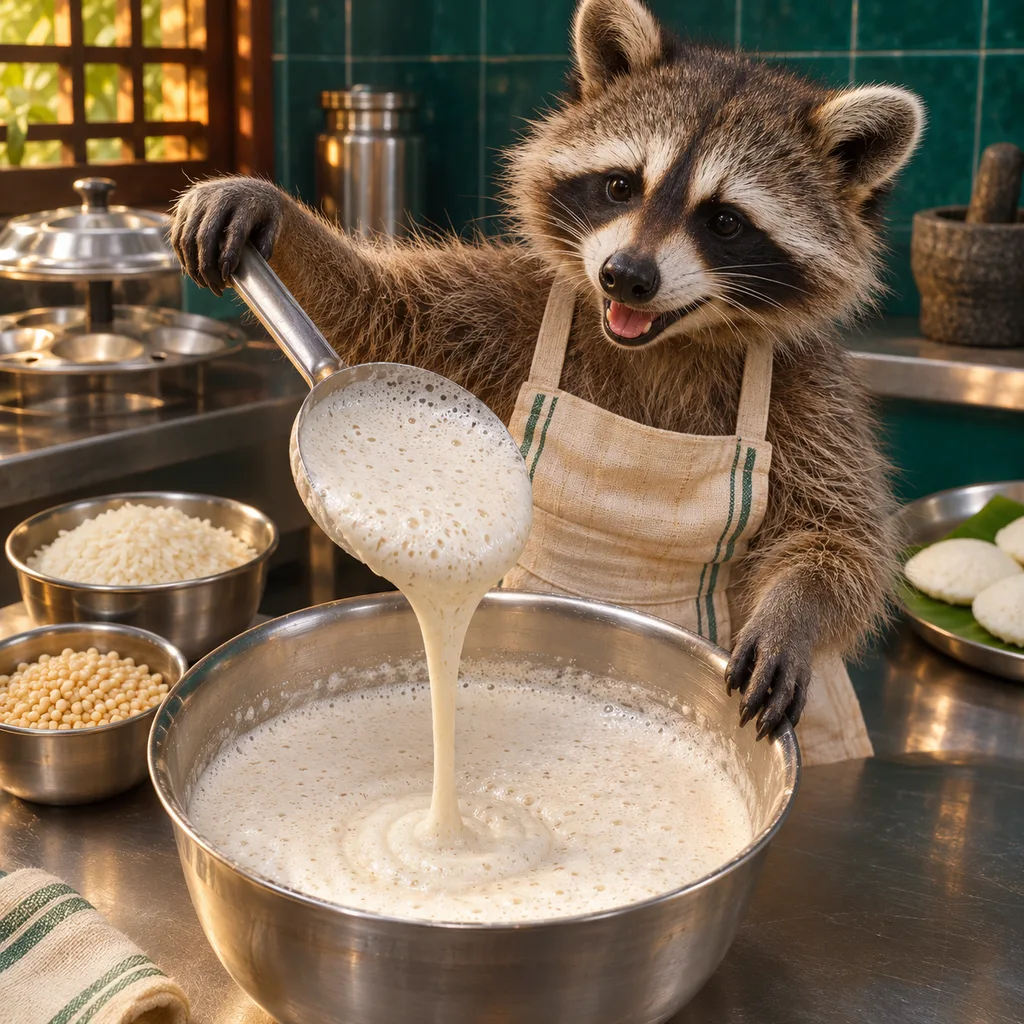
Adjust a cooking portion. Gently stir the batter, then thin just the portion you will cook with water, a tablespoon at a time. It should fall from a ladle in a continuous ribbon and spread without tearing. Keep the remaining fermented batter covered in the fridge.
Prepare the tawa. Heat a well-seasoned flat cast-iron tawa or suitable nonstick pan over medium heat. Rub on a few drops of oil and wipe almost dry. A small drop of water should sizzle, not sit quietly; let the surface dry before adding batter. If the pan is smoking, lower the heat and let it cool slightly.
Spread thinly. Pour about 60 ml batter into the center. Immediately use the rounded back of the ladle to spread outwards in light, widening circles. Stop before the batter sets. Increase to medium-high if needed and drizzle about 1/2 teaspoon oil around the edge.

Cook until crisp. Leave uncovered for 2–3 minutes, until the surface is dry, the underside golden and the edges lift. Fold and serve immediately; a thin dosa normally needs no flipping. Lower the heat briefly between dosas so the next ladleful spreads before it sets. Repeat with the remaining batter.
When the first dosa misbehaves
If batter gathers into clumps under the ladle, the pan is usually too hot or the batter too thick. Cool the pan a little and test a spoonful before thinning the whole bowl. If it sticks, check the seasoning and wait until the underside has set before lifting. A thick pale dosa needs thinner spreading, a little more heat, or more cooking time.
Do not stack finished dosas under a lid: trapped steam softens them. Cook and serve in rounds. Refrigerate unused fermented batter and use within two days; thin it only when needed.
Make a breakfast spread
Set out Vegetable Sambar and Coconut Chutney before you start cooking. Soft Idli offers a softer steamed option, and Indian Masala Chai suits the table. For another crisp rice-based pancake with a different technique, try Banh Xeo.
You might also like

Perfect Sushi Rice
The foundation of great sushi - properly seasoned and textured rice
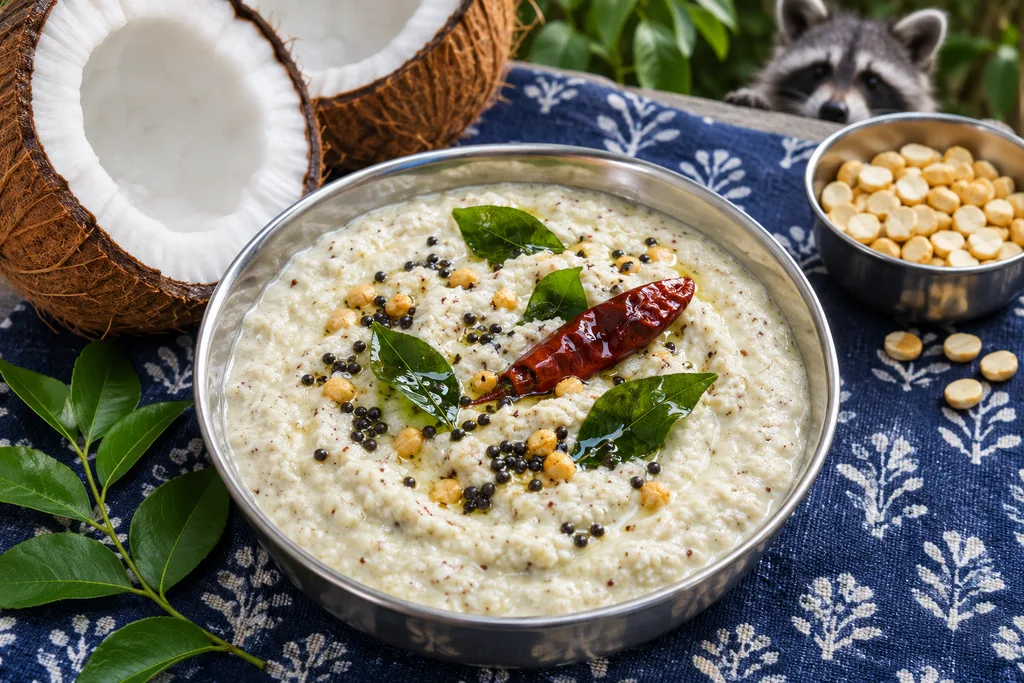
Coconut Chutney
Fresh South Indian coconut chutney with roasted gram, green chilli and ginger, finished with a fragrant mustard-seed and curry-leaf tempering.
Iranian Jeweled Rice (Morasa Polo) in Cast Iron
Fragrant basmati rice studded with jewel-toned dried fruits, nuts, and spices, baked to perfection in cast iron
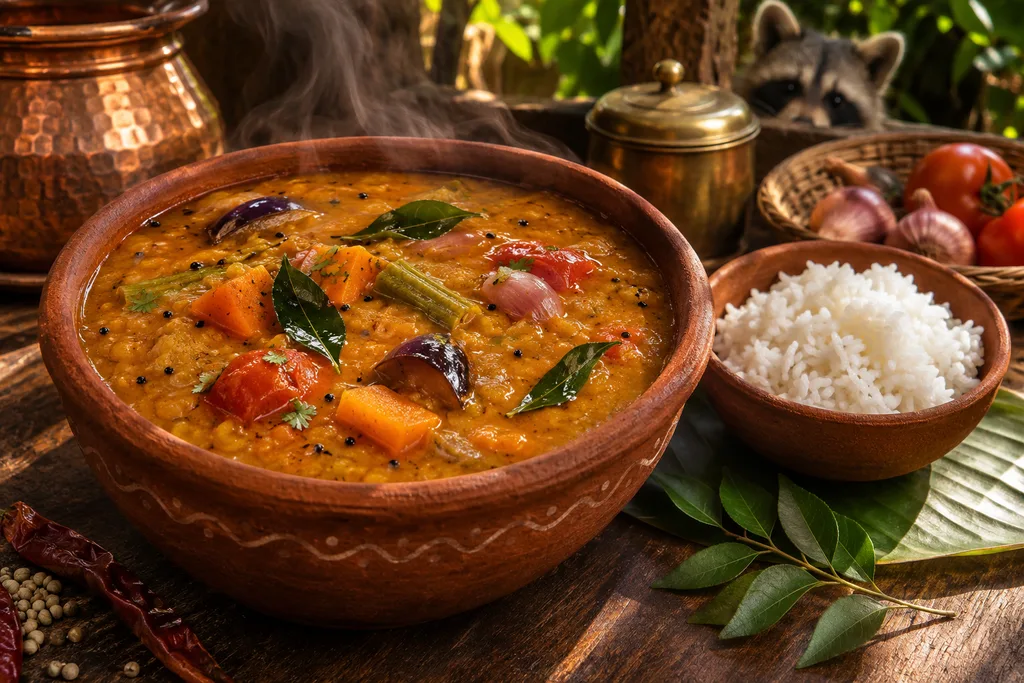
Vegetable Sambar
A tangy South Indian toor dal and vegetable stew finished with mustard seeds and curry leaves, ready for rice, idli or crispy dosa.