Bibimbap
Cook the vegetables separately, and each brings something different to the rice: sweet carrot, tender zucchini, browned mushrooms, soft spinach and cooked bean sprouts. Arrange them in groups, add the egg and sauce, then mix everything together at the table.
Bibimbap has many regional and household versions. The Korea Traditional Knowledge Portal's recipe records seasonal vegetable combinations and an egg garnish. This home-kitchen version uses readily available vegetables, mung bean sprouts and a fully cooked fried egg. It does not claim the specific ingredient set of Jeonju bibimbap. The Korean cuisine guide gives context for the sauces and side dishes served with rice.
Makes four main-course bowls. Allow about 70 minutes, including a 20-minute rice soak and 10-minute covered rest; vegetable preparation and cooking overlap those waits. You need a lidded saucepan for rice, another saucepan for blanching, a wide frying pan, a colander, five small holding dishes and four serving bowls. No stone bowl is required.
Ingredients
Rice
- 🍚 300 g short-grain white rice, dry
- 💧 390 ml water, plus extra for rinsing and soaking
Vegetables and eggs
- 🥬 200 g spinach, tough stems removed
- 🌱 200 g fresh mung bean sprouts
- 🥕 200 g carrots, peeled and cut into 3 mm matchsticks
- 🥒 250 g zucchini, cut into 3 mm matchsticks
- 🍄 120 g fresh shiitake mushroom caps, sliced 5 mm thick
- 🧄 12 g peeled garlic, finely minced, divided
- 🥢 10 ml soy sauce
- 🌻 20 ml neutral cooking oil, divided
- 🌰 10 ml toasted sesame oil, divided
- 🧂 4 g fine salt, divided
- 🥚 4 large eggs
Gochujang dressing
- 🌶️ 60 g gochujang
- 🥢 10 ml soy sauce
- 🍶 15 ml unseasoned rice vinegar
- 🍬 10 g sugar
- 🌰 10 ml toasted sesame oil
- 💧 30 ml water
Finish
- 🌰 8 g toasted sesame seeds, divided
Use short-grain rice sold for Korean or Japanese meals. Gochujang supplies the sauce's fermented chilli flavour; a plain chilli sauce will give a different result. Heat, sweetness and salt vary by brand, so start with a smaller spoonful of dressing on each bowl and add more after mixing. The recipe contains egg, soy and sesame; ordinary soy sauce and some gochujang also contain wheat. Check labels if catering for an allergy.
Instructions
1. Soak and cook the rice
Rinse the rice in several changes of cool water, then cover generously with fresh water and soak for 20 minutes while cutting the vegetables. Drain in a sieve for 2 minutes. Put the rice and the measured 390 ml water in a lidded saucepan. Bring to a gentle boil over medium heat, cover and reduce the heat to its lowest setting. Cook for 12–15 minutes, until the water is absorbed. Turn off the heat and leave covered for 10 minutes, then fluff gently. If your rice package requires a different water ratio or cooking time, follow that instruction for the same 300 g dry rice.
2. Mix the dressing
Stir the gochujang, dressing soy sauce, rice vinegar, sugar, dressing sesame oil and 30 ml water together until smooth. The sauce should fall from a spoon in a thick ribbon. Set it beside the serving bowls; do not pour it into the vegetable cooking pan.
3. Blanch and season the greens
Bring a saucepan of water to a full boil. Add the spinach, stir and cook for 30–45 seconds, until wilted. Lift it into a colander, cool briefly under clean running water and squeeze out excess moisture. Cut any long stems into bite-sized lengths. Toss with 3 g garlic, 5 ml of the vegetable sesame oil, 1 g salt and 2 g sesame seeds in a holding dish.
Return the water to a boil. Rinse the sprouts, add them to the saucepan and boil for about 5 minutes, until thoroughly hot and tender throughout, extending the cooking time if needed. Drain well and toss with 3 g garlic, the remaining 5 ml vegetable sesame oil, 1 g salt and 2 g sesame seeds in another dish. Keep them separate from the spinach. Wash the colander and utensils after handling uncooked sprouts.
4. Sauté three separate batches
Heat the wide frying pan over medium-high heat. Add 5 ml neutral oil, the carrots and 1 g salt. Stir-fry for 3–4 minutes, until the strips bend easily but keep their shape. Transfer to a third dish. Add another 5 ml oil, the zucchini and 1 g salt; cook for 3–4 minutes until tender with a few lightly browned edges, then transfer to a fourth dish.
Add 5 ml oil and the mushrooms. Spread them out and cook for 4–5 minutes, stirring occasionally, until their released moisture has evaporated and the edges brown. Add the remaining 6 g garlic and the vegetable soy sauce. Stir for 30–60 seconds until fragrant and the liquid coats the mushrooms, then transfer to the fifth dish. Reduce the heat if the garlic begins to catch.
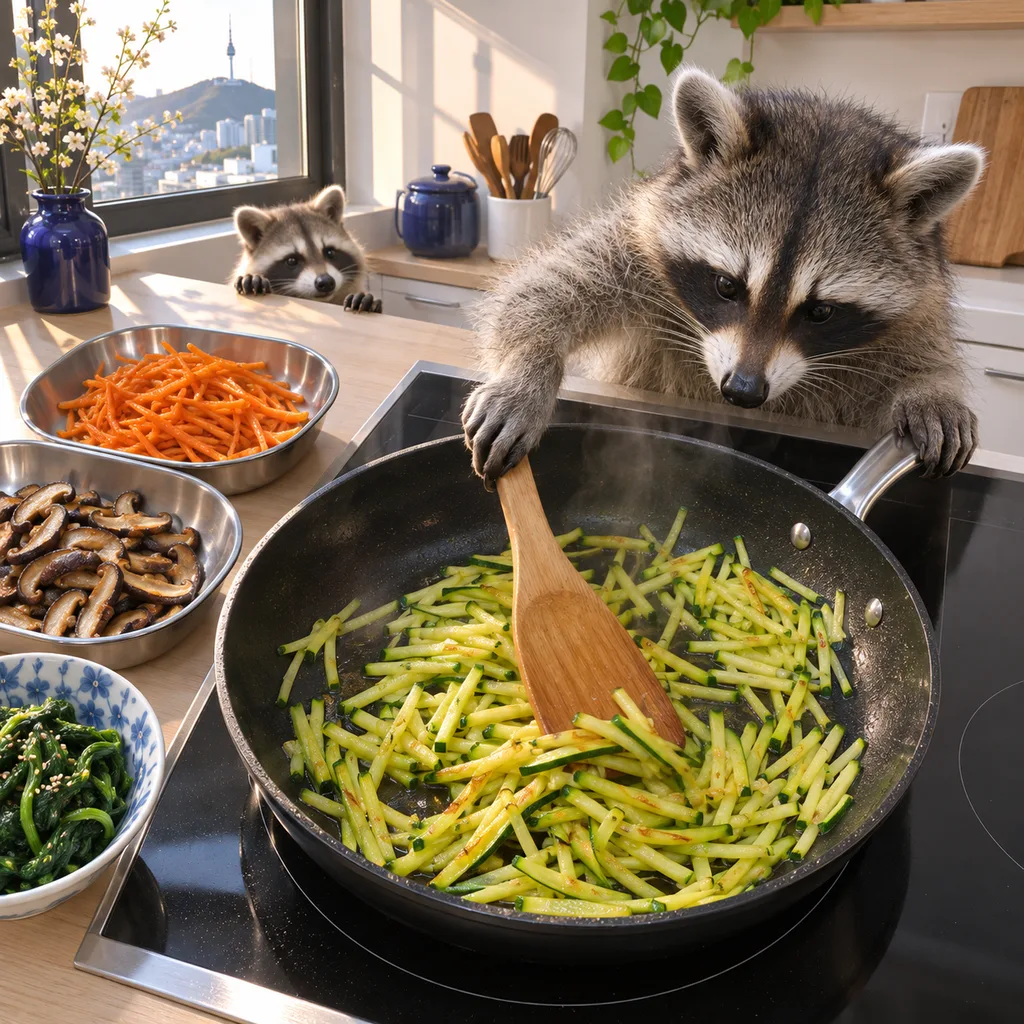
5. Cook the eggs through
Wipe the pan clean if necessary, lower the heat to medium-low and add the remaining 5 ml neutral oil. Crack in the eggs, working in two batches if the pan is crowded. Cook for 2–3 minutes until the whites hold their shape, then gently flip and cook for another 1–3 minutes, until both whites and yolks are firm. Timing varies with pan heat and egg size; the firm centres determine completion. Transfer to a clean plate and wash anything that touched raw egg.
6. Assemble and mix
Divide the warm rice between four bowls. Put one quarter of each vegetable in a separate group over the rice. Top each bowl with an egg and 1 g of the remaining sesame seeds. Offer the dressing separately, starting with about 1 tablespoon per bowl and adding more to taste. Mix thoroughly with a spoon so the sauce reaches the rice beneath the vegetables. Serve immediately.
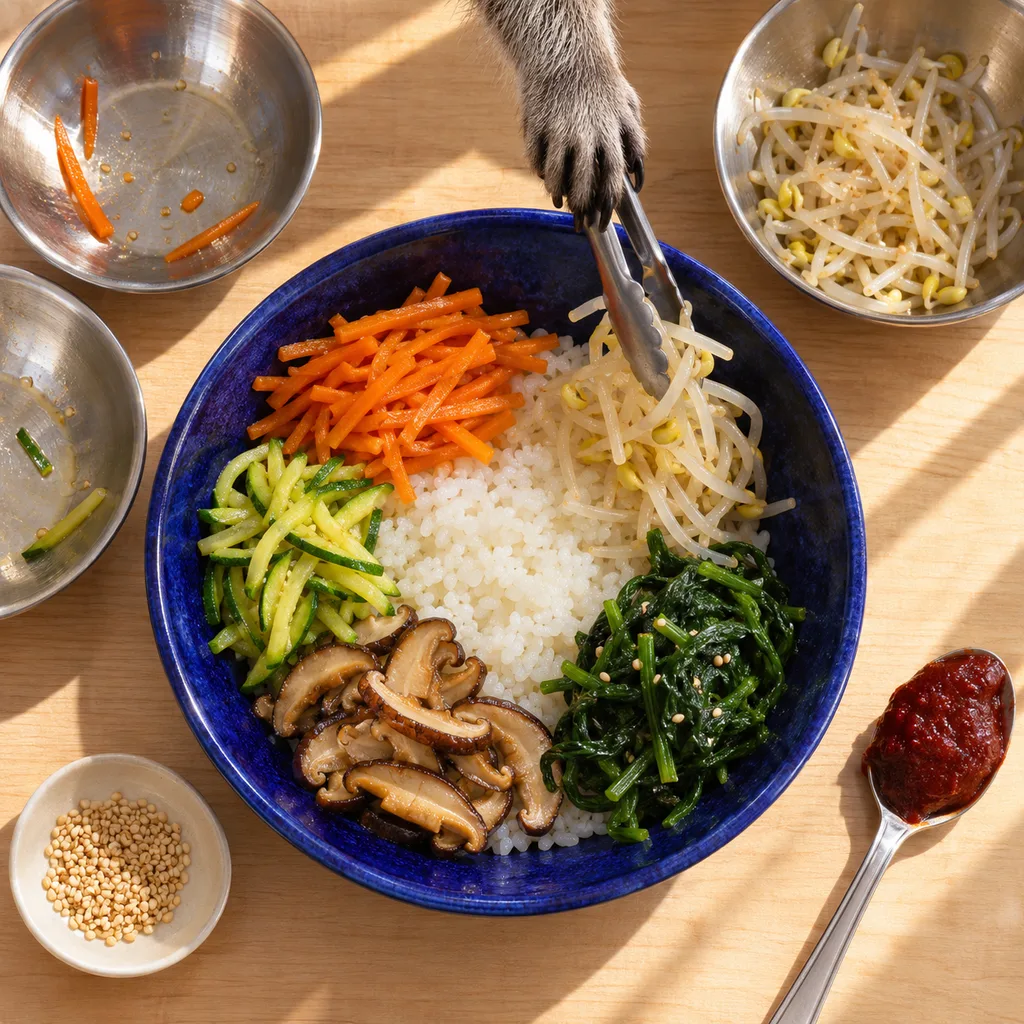
Keep the textures distinct
Wet spinach or sprouts will dilute the sauce and soften the rice. Squeeze the spinach firmly and let the sprouts drain while cooking the other vegetables. If zucchini releases a pool of water, increase the heat briefly and let it evaporate before moving the batch out of the pan.
A small pan needs smaller batches. Piling all the vegetables in at once steams them together and loses the separate textures. Keep the cooked batches in their own dishes, then assemble while the rice is warm. This version is served in ordinary bowls; a cold ceramic bowl will not produce the crisp rice crust associated with a heated dolsot.
Eggs, sprouts and leftovers
The egg is fully cooked here, following the FDA's advice to cook both white and yolk until firm. Do not rely on warm rice to cook a raw egg. Sprouts also need thorough cooking, rather than a quick warming or rinse; Health Canada's sprout guidance explains the handling precautions.
For leftovers, move rice and toppings into shallow containers and refrigerate promptly, ideally within one hour. Keep refrigerated rice no longer than 24 hours, and reheat only once until steaming hot throughout. The Food Standards Agency's rice guidance explains why cooling matters. Store the dressing separately and cook fresh eggs when possible.
Cook alongside it
Offer Korean Kimchi as a separate side, checking its fish sauce ingredients if keeping the whole meal vegetarian. The measured bowl already includes an egg; Beef Bulgogi makes a separate meat dish rather than an uncounted addition to this recipe. For another way to cook and season vegetables in stages, compare Japchae. Korean scallion pancakes suit a shared table when you want an additional dish.
Estimated nutrition per serving
One serving is 1/4 of the recipe. Values are rounded estimates.
- Calories
- 550 kcal
- Protein
- 18 g
- Carbohydrate
- 83 g
- Fat
- 17 g
Calculated from USDA FoodData Central, SR Legacy (April 2018) food composition data and the stated recipe yield.
How this estimate was calculated
Ingredient amounts are converted to edible weights, matched to USDA foods, added together and divided by 4 servings. Comparable foods are used where a regional ingredient has no exact record. Ingredient brands, portion sizes, discarded fat and cooking losses can change the result. Optional ingredients and unmeasured accompaniments are excluded. Sodium is not estimated because salt and brine retention vary.
- Counts the full measured rice, vegetables, four 50 g edible eggs, all cooking oils and the entire dressing; serving less dressing reduces the estimate.
- Shiitake mushrooms use raw white mushrooms as the available USDA snapshot proxy; gochujang uses hoisin sauce as a comparable sweet savoury paste proxy, not a cooking substitution. Brands differ.
- Neutral cooking oil uses olive oil and rice vinegar uses cider vinegar as available macronutrient proxies. Toasted sesame oil uses sesame cooking oil.
- Uses dry rice and raw edible vegetable weights. Blanching losses and oil left in the pan are not deducted; added water contributes no energy.