Vietnamese Spring Rolls
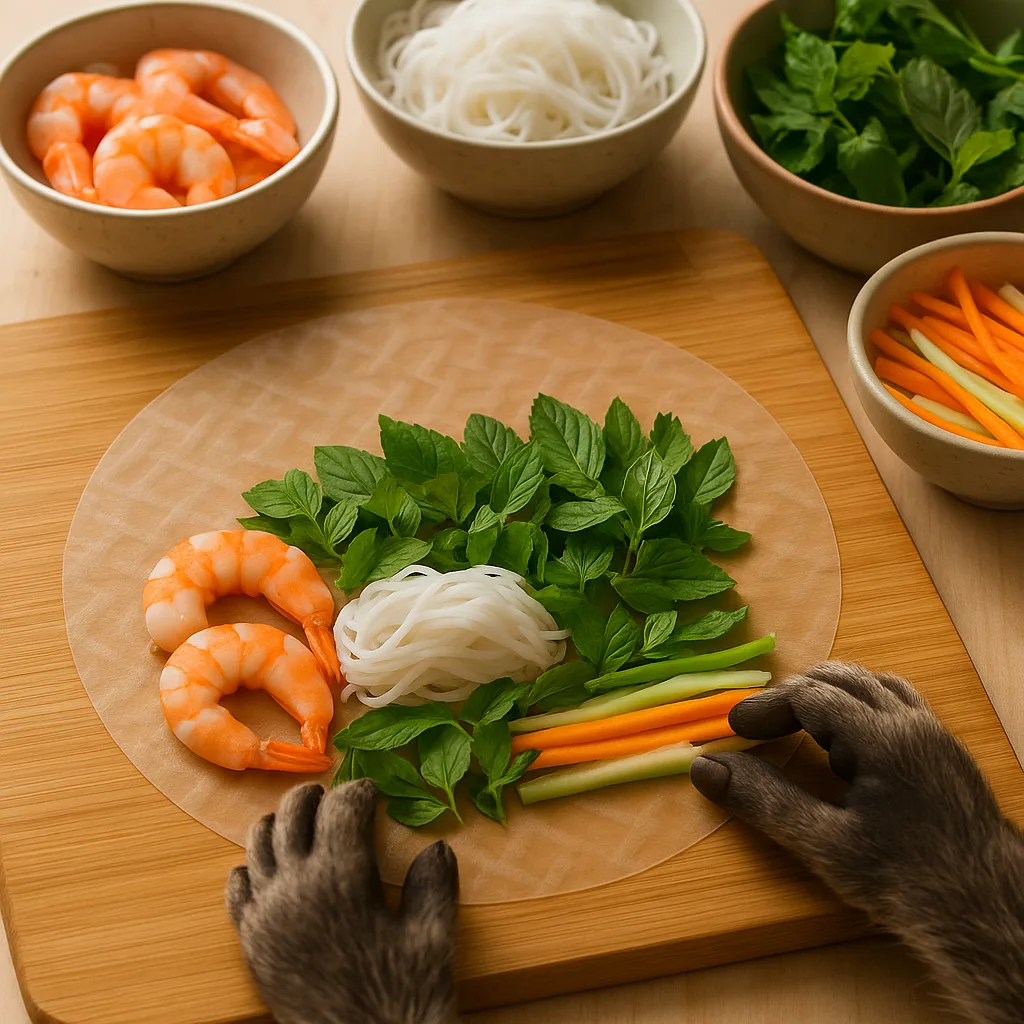
Ingredients that you can see through the wrapper—that's the magic of Vietnamese spring rolls. Each roll becomes a little edible stained glass window, with pink shrimp, green herbs, white noodles, and colorful vegetables arranged like they're meant to be admired before they're eaten.
The technique isn't complicated, but it does require a gentle touch. Rice paper tears easily when it's soft enough to roll, and tears even more easily when you're trying to stuff too much into it.
Ingredients
For the rolls:
🍤 1 pound medium shrimp, peeled and deveined
🍜 4 oz rice vermicelli noodles
🧅 12 round rice paper wrappers (22cm/8.5 inch)
🥬 1 head butter lettuce, leaves separated
🌿 1 bunch fresh mint leaves
🌿 1 bunch fresh cilantro
🌿 1 bunch Thai basil (or regular basil)
🥒 1 large cucumber, julienned
🥕 1 large carrot, julienned
For the dipping sauce (nuoc cham):
🐟 3 tablespoons fish sauce
🍋 3 tablespoons fresh lime juice
💧 3 tablespoons warm water
🍯 2 tablespoons sugar
🧄 2 cloves garlic, minced
🌶️ 1 Thai chili, minced (optional)
🥕 2 tablespoons shredded carrot for garnish
Instructions
Cook the shrimp. Bring a pot of salted water to boil. Add shrimp and cook for 2-3 minutes until pink and just cooked through. Drain and rinse with cold water. When cool enough to handle, slice each shrimp in half lengthwise so you have thin, flat pieces.
Prepare the noodles. Cook rice vermicelli according to package directions (usually just soaking in hot water for 3-5 minutes). Drain, rinse with cold water, and set aside.
Make the dipping sauce. Whisk together fish sauce, lime juice, warm water, and sugar until sugar dissolves. Add minced garlic and chili if using. Let sit for flavors to meld. Garnish with shredded carrot before serving.
Prep your workspace. Set up an assembly line: shallow bowl of warm water for soaking rice paper, clean kitchen towel, and all your fillings within easy reach. Work on one roll at a time.
Soften the rice paper. Dip one rice paper wrapper in warm water for 2-3 seconds until it just starts to soften (it will continue softening as you work). Place on the damp towel.
Layer strategically. Place 2-3 lettuce leaves on the bottom third of the wrapper. Add a small handful of noodles, then 3-4 shrimp halves. Top with cucumber, carrot, and a generous handful of mixed herbs.
Spring Roll Assembly Flow
Key Points:
- Don't oversoak rice paper - it continues softening
- Work with one wrapper at a time
- Keep finished rolls under damp towel
Roll tightly but gently. Fold the bottom edge over the filling, then fold in the sides. Roll tightly toward the top, keeping constant pressure so the roll stays compact. Place seam-side down on a plate.
Keep them moist. Cover finished rolls with a damp towel to prevent the rice paper from drying out and cracking.
Repeat and serve. Continue until all ingredients are used. Serve immediately with nuoc cham dipping sauce.
Technique Tips
Rice paper is forgiving once you get the hang of it, but your first few rolls might look rustic. That's normal—the flavor will still be perfect.
Don't oversoak the rice paper. It should still have a slight firmness when you start rolling since it continues to soften.
If a wrapper tears, you can double-wrap it with another piece of rice paper.
Remix Ideas
Pork and shrimp: Add thin slices of Vietnamese grilled pork (cha lua) along with the shrimp.
Vegetarian version: Replace shrimp with firm tofu, avocado, and extra vegetables.
Tropical twist: Add thin slices of mango or pineapple for sweetness.
Protein swap: Use cooked chicken, beef, or even leftover Vietnamese Pho Ga chicken.
Visual Assembly Guide
Visual Design Tips:
- Shrimp Placement: Position cut-side against wrapper for visibility
- Herb Distribution: Scatter different herbs for varied green tones
- Color Balance: Alternate colors for rainbow effect
- Negative Space: Don't overfill - rice paper should show through
Professional Presentation:
- Cut diagonally to show cross-section
- Arrange cut-side up on platter
- Garnish plate with herb sprigs
- Serve sauce in small individual bowls
The best spring rolls have a perfect balance—enough filling to make them substantial, but not so much that they burst when you bite them. Each ingredient should be distinct but harmonious, and that translucent wrapper should showcase the rainbow of fresh ingredients inside like Vietnam's answer to edible art.
Estimated nutrition per serving
One serving is 1/6 of the recipe. Values are rounded estimates.
- Calories
- 225 kcal
- Protein
- 14 g
- Carbohydrate
- 38 g
- Fat
- 1 g
Calculated from USDA FoodData Central, SR Legacy (April 2018) food composition data and the stated recipe yield.
How this estimate was calculated
Ingredient amounts are converted to edible weights, matched to USDA foods, added together and divided by 6 servings. Comparable foods are used where a regional ingredient has no exact record. Ingredient brands, portion sizes, discarded fat and cooking losses can change the result. Optional ingredients and unmeasured accompaniments are excluded. Sodium is not estimated because salt and brine retention vary.
- Assumes 8 g per dry rice-paper wrapper; dry rice noodles are a macronutrient proxy.