Vietnamese Pho Ga
Three hours of patient simmering transforms chicken bones and aromatics into liquid gold. Star anise and cinnamon don't just flavor the broth—they create an entirely new substance that somehow tastes like morning in Hanoi, no matter where you're slurping it.
I spent weeks perfecting this recipe after returning from Hanoi, where I watched pho masters tend their broths like sacred fires. The secret isn't just in the spices – it's in the patience, the char on the aromatics, and knowing when your broth has crossed from good to extraordinary.
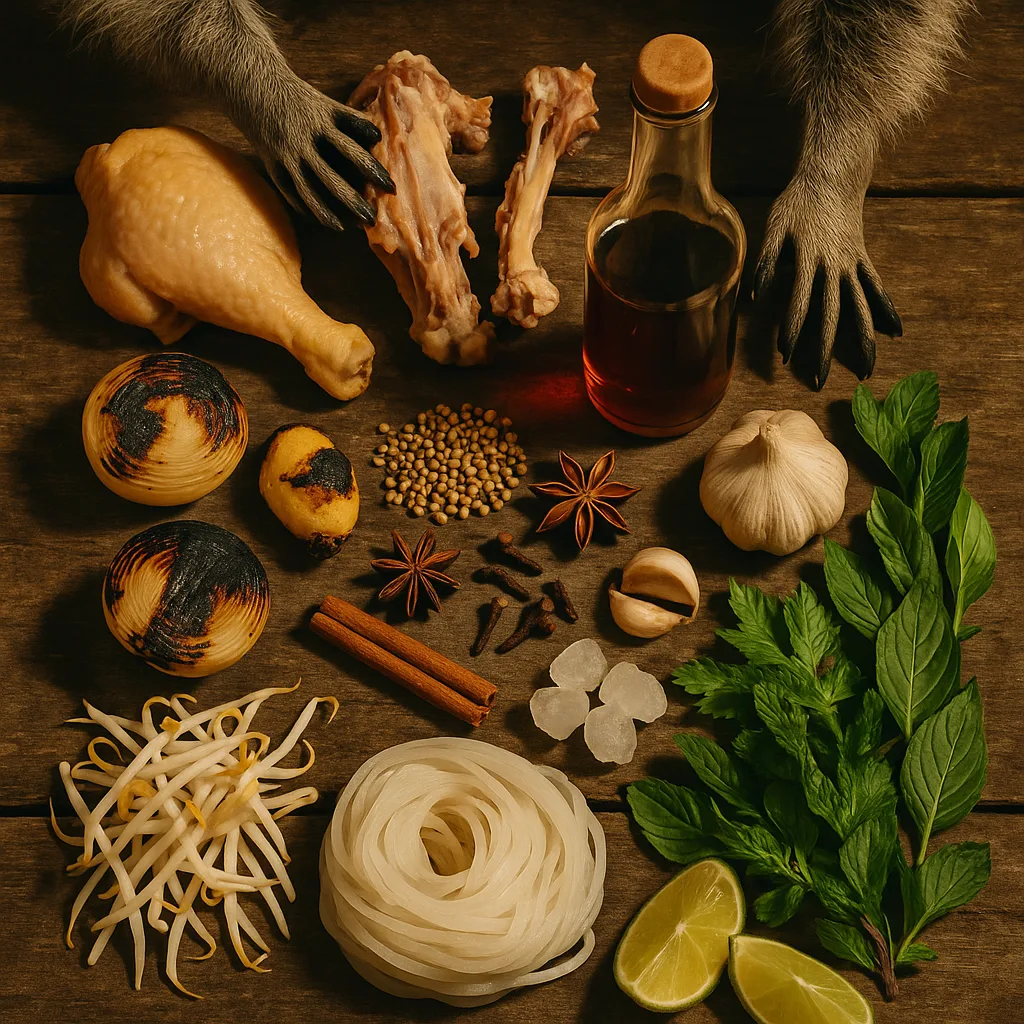
Ingredients
For the Broth
🐔 1 whole chicken (3-4 lbs), cut into pieces
🦴 2 lbs chicken bones (backs, necks, wings)
🧅 2 large yellow onions, halved
🫚 4-inch piece fresh ginger, halved lengthwise
⭐ 6 whole star anise
🌿 1 cinnamon stick (3-inch piece)
🌱 1 tsp whole coriander seeds
🫘 4 whole cloves
🧄 1 head garlic, halved crosswise
🧂 2 tbsp fish sauce, plus more for serving
🍯 2 tbsp rock sugar or brown sugar
🧂 2 tsp kosher salt
For Serving
🍜 1 lb fresh rice noodles (banh pho), or 8 oz dried
🥬 Bean sprouts
🌿 Fresh cilantro sprigs
🌿 Fresh Thai basil leaves
🌿 Fresh mint leaves
🌶️ Thai chilies, sliced
🍋 Lime wedges
🧅 Yellow onion, thinly sliced
🥒 Green onions, sliced
Instructions
Prepare the Aromatics
Char the onions and ginger directly over a gas flame or under the broiler until blackened in spots, about 10 minutes. This adds a smoky depth that bottled can't match. Scrape off the charred skin with a knife and rinse clean.
Toast the star anise, cinnamon, coriander, and cloves in a dry pan until fragrant, about 3 minutes. The spices should smell like a warm embrace.
Build the Broth
Place chicken pieces and bones in a large stockpot and cover with cold water by 2 inches. Bring to a boil, then immediately drain and rinse everything under cold water. This removes impurities for a crystal-clear broth.
Return cleaned chicken and bones to the pot with 4 quarts fresh water. Add the charred onions, ginger, toasted spices, and garlic. Bring to a gentle simmer – never a rolling boil, which makes the broth cloudy.
Simmer uncovered for 2 hours, skimming foam every 30 minutes. The chicken should be tender enough to shred easily.
Finish the Broth
Remove the chicken pieces and set aside to cool. Continue simmering the bones for another hour.
Strain the broth through a fine-mesh sieve lined with cheesecloth. You should have about 3 quarts of aromatic, golden broth. Season with fish sauce, sugar, and salt, tasting as you go.
Shred the cooled chicken, discarding skin and bones. Keep the meat warm in a bit of hot broth.
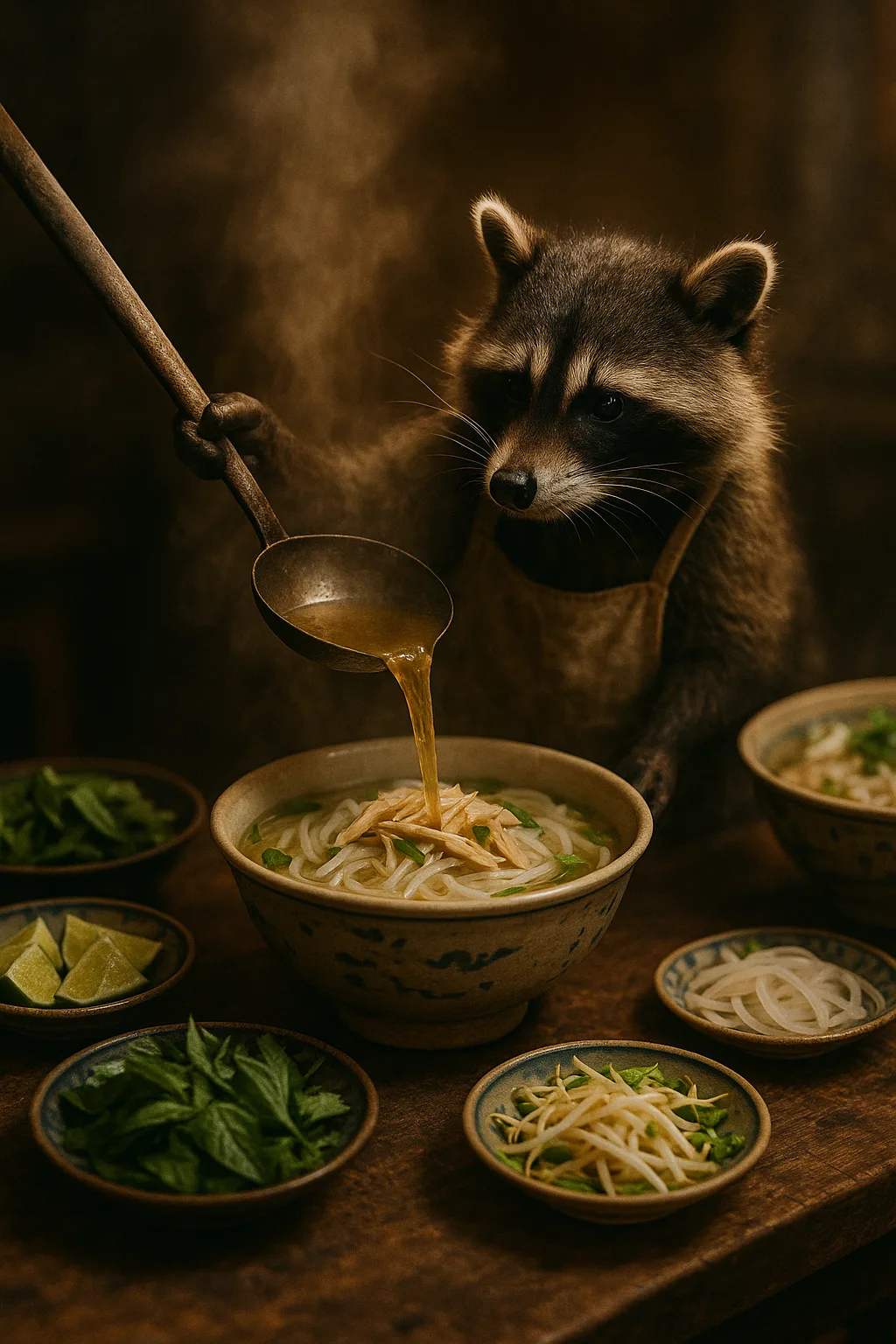
Serve Your Pho
Soak rice noodles in hot water until soft, about 5 minutes for fresh, 15 for dried. Drain well.
Divide noodles among six large bowls. Top with shredded chicken and sliced raw onions. Ladle the piping hot broth over everything – the heat will lightly cook the onions.
Serve immediately with plates of herbs, bean sprouts, chilies, and lime wedges. Everyone doctors their own bowl, which is half the joy.
Pho Ga Process Timeline
The Pho Ritual
Real pho is interactive. Squeeze lime until your bowl turns bright, pile on herbs until you can barely see the broth, add chilies until your nose runs pleasantly. Each spoonful should taste different from the last.
The best pho happens in the morning, when the broth has been simmering all night and the herbs are at their freshest. But honestly, good pho works any time your soul needs warming.
This recipe makes enough for a small army, but pho broth only gets better as it sits. Keep it simmering low on the stove, and you'll have the most welcoming kitchen on the block.
For more about Vietnamese street food culture and the art of perfect broths, check out my Vietnam travel notes.
Estimated nutrition per serving
One serving is 1/6 of the recipe. Values are rounded estimates.
- Calories
- 635 kcal
- Protein
- 43 g
- Carbohydrate
- 41 g
- Fat
- 32 g
Calculated from USDA FoodData Central, SR Legacy (April 2018) food composition data and the stated recipe yield.
How this estimate was calculated
Ingredient amounts are converted to edible weights, matched to USDA foods, added together and divided by 6 servings. Comparable foods are used where a regional ingredient has no exact record. Ingredient brands, portion sizes, discarded fat and cooking losses can change the result. Optional ingredients and unmeasured accompaniments are excluded. Sodium is not estimated because salt and brine retention vary.
- Uses the written 8 oz dry-noodle alternative, equivalent to the fresh noodle portion.
- Assumes 70% edible meat/fat for 🐔 1 whole chicken (3-4 lbs), cut into pieces.
- Uses the first named ingredient option for: 🍯 2 tbsp rock sugar or brown sugar
- Uses the first named ingredient option for: 🍜 1 lb fresh rice noodles (banh pho), or 8 oz dried