Tiradito Nikkei
Thin, clean slices of fish are the point of tiradito. Lime and ají bring acidity and heat; ginger, soy sauce and a little toasted sesame oil give this version its Nikkei direction. Dress the fish at the last moment so it remains supple rather than sitting in a citrus bath.
PROMPERÚ's account of tiradito connects its thin fish slices and absence of onion with Japanese influence on Peru's coastal cooking. This lime-soy dressing is a home-kitchen adaptation, rather than a claim to one definitive formula. Compare the cut and finishing sequence with Classic Ceviche, then explore the wider context in the Peru guide.
Makes four starter portions, each with 100 g fish. The 25-minute timing starts with cold, fully thawed fish. If using frozen fish, allow an additional 8–12 hours for refrigerator thawing, or follow the supplier's longer instructions; that makes the elapsed time roughly 8–12 hours and 25 minutes. Have four chilled plates, a sharp long knife, a non-slip cutting board, a small bowl and a fine grater ready.
Choose fish for this preparation
Ask a reputable fish supplier for skinless sea bass suitable for eating raw and confirmation of its parasite-control treatment and handling. A “sushi-grade” label alone is not a replacement for that conversation. Do not use fish sold with instructions to cook it. If the supplier cannot confirm suitability for raw service, use the cooked adaptation below.
Lime changes fish proteins and appearance; it does not make raw fish microbiologically safe. Commercial parasite-control freezing does not remove every microbial risk. Keep fish at 4°C or colder, thaw it in the refrigerator according to its packaging directions, and keep its board and knife separate from ready-to-eat garnishes. Food Standards Australia New Zealand's raw-fish guidance explains supplier selection, cold storage and cross-contamination prevention.
Children, pregnant people, older adults and people with weakened immune systems should avoid raw seafood. For a cooked adaptation, cook the whole 400 g fillet to 63°C at its thickest point, then divide into four portions and spoon over the dressing at serving. Start checking after 6–8 minutes in a covered steamer; thickness determines the actual cooking time. This produces dressed cooked fish, rather than the raw sliced texture of tiradito. The FDA seafood guide gives the cooking endpoint and explains why cooking is the lower-risk choice.
Ingredients
Fish
- 🐟 400 g skinless, boneless sea bass fillet, prepared for raw service and fully thawed
Dressing
- 🍋 60 ml freshly squeezed lime juice, strained
- 🌶️ 15 g ají amarillo paste
- 🥢 15 ml Japanese soy sauce
- 🫚 5 g peeled ginger, finely grated
- 🌰 5 ml toasted sesame oil
Finish
- 🌿 3 g coriander leaves, finely sliced
- 🌶️ 2 g fresh red chilli, deseeded and finely sliced
- 🌰 4 g toasted sesame seeds
Ají amarillo paste brings a fruity yellow chilli flavour. Buy a ready-to-eat commercial paste and check its heat and salt content before mixing. Avoid swapping in a large quantity of a much hotter chilli paste. Soy sauce contains wheat unless labelled otherwise; use a suitable gluten-free soy sauce if needed. Fish, soy and sesame remain allergens.
Instructions
1. Chill the serving setup
Refrigerate the plates for at least 10 minutes while preparing the dressing and garnishes. Keep the fish covered in the refrigerator until the knife and board are ready. Pat its surface dry with disposable kitchen paper; do not rinse it in the sink.
2. Mix the dressing
Stir the lime juice, ají amarillo paste, soy sauce and ginger together in a small bowl, then whisk in the sesame oil. Taste with a clean spoon before it touches the fish. It should be sharp, lightly salty and fluid enough to run off the spoon. Chill it until serving. If the paste is very salty, begin with 10 ml of the measured soy sauce and add the remaining 5 ml only if needed.
3. Slice across the grain
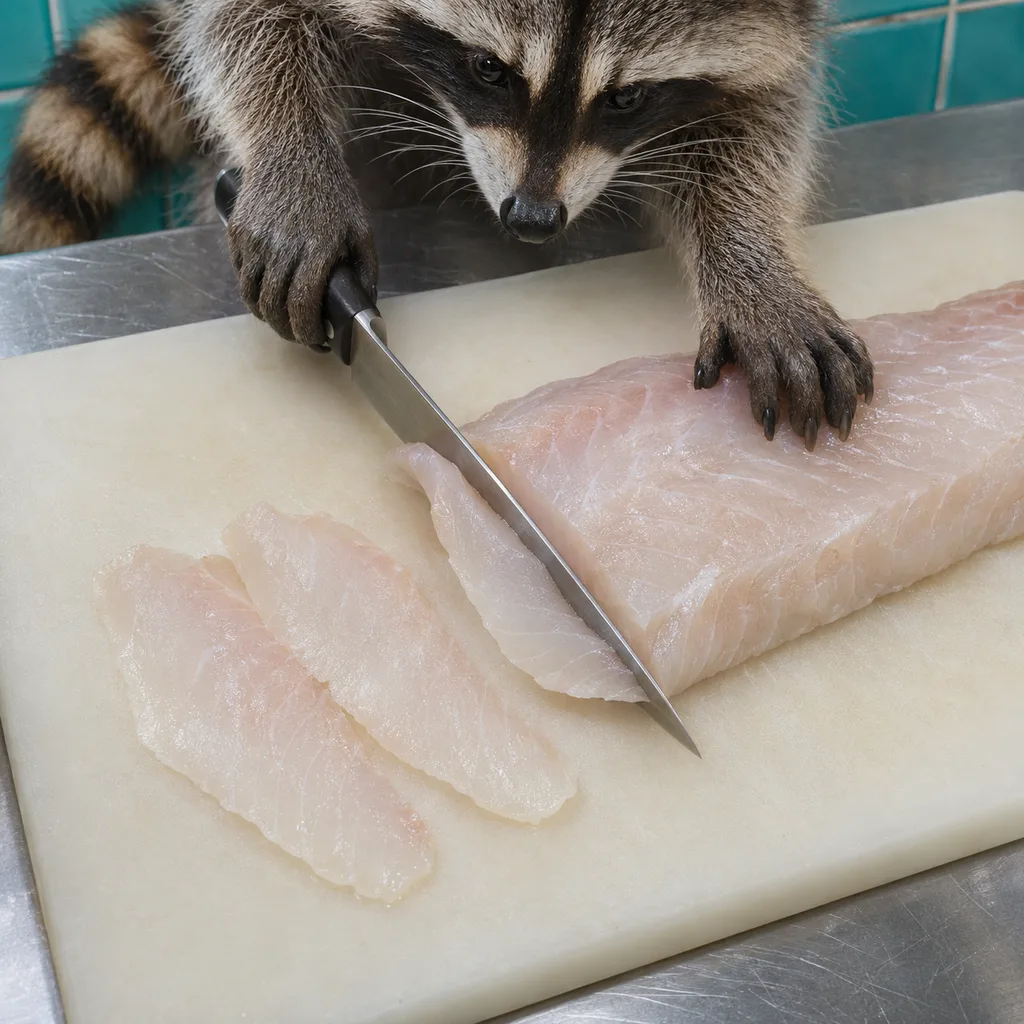
Set the cold fillet on the stable board and remove any remaining pin bones with clean tweezers. Identify the direction of the muscle lines. Angle the knife and draw its length smoothly across the grain to cut slices approximately 3 mm thick. Aim for broad slices rather than cubes. Avoid sawing or pressing down hard, which tears the flesh. Keep your supporting fingertips curled and behind the cutting edge.
4. Arrange cold portions
Divide the fish between the four chilled plates, laying slices in a single, slightly overlapping row. Return the plates to the refrigerator if you are not dressing them immediately. Wash the knife, board and work surface before using them for any ready-to-eat food.
5. Dress and serve immediately
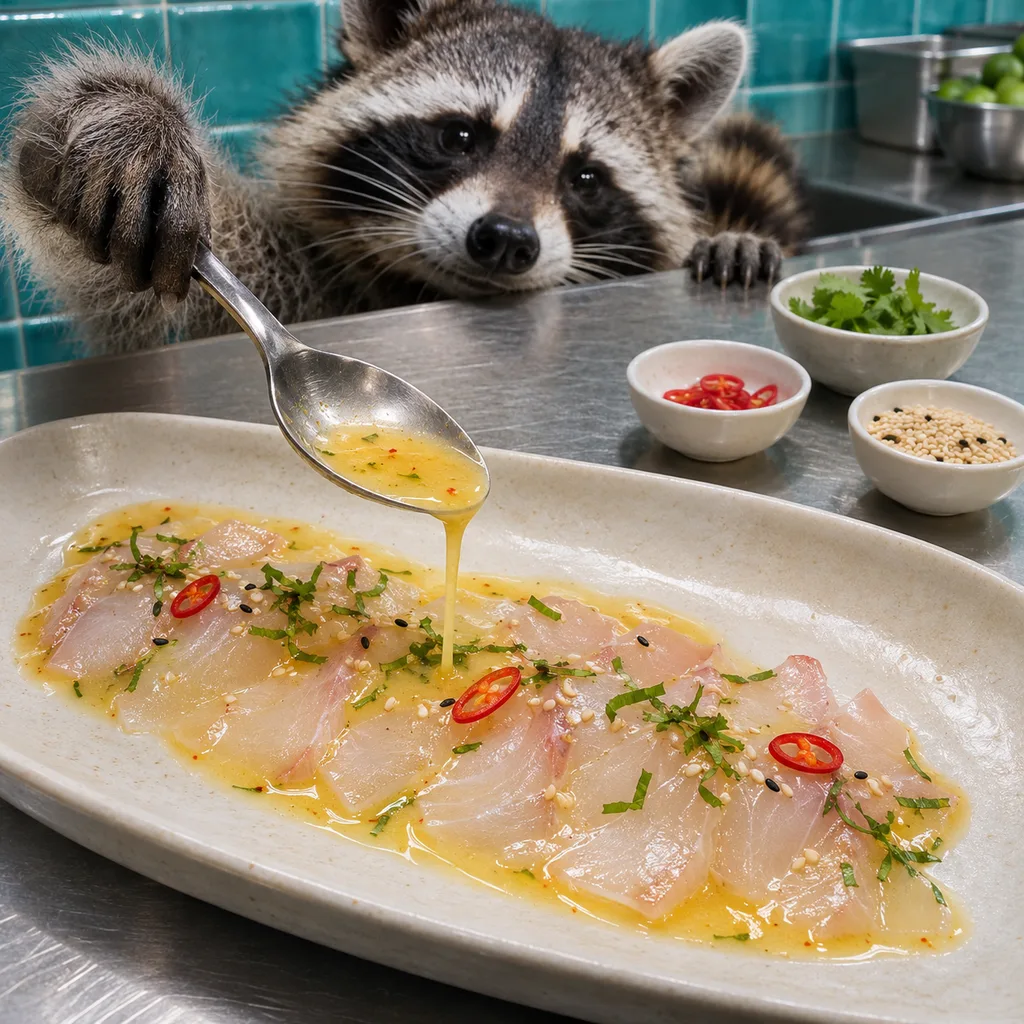
Stir the dressing again and spoon about one quarter over each portion. Scatter over the coriander, chilli and sesame seeds. Serve straight away, without a marinating wait. The thin outer edges may turn opaque quickly; that is a texture change, not evidence that the fish has been made safe.
Texture and serving notes
If the knife drags, sharpen it and pat the fillet dry again. Soft fish is difficult to cut neatly; keep it cold and work in small batches. Do not leave it on the counter to firm up or try to rescue questionable fish with more acid.
If the dressing tastes aggressively sour, check it on a small piece of the fish immediately before serving rather than diluting the full bowl by guesswork. A large puddle hides the cut and makes the final bites harsh; spoon on enough to lightly coat each portion. Keep extra dressing separate and discard any that has touched raw fish.
Tiradito is a starter, not a dish to hold for a buffet or prepare dressed the day before. Slice and dress only what will be eaten immediately. Discard dressed leftovers. For a fuller Peruvian meal, follow it with Lomo Saltado. The Lima ceviche guide compares practical ways to explore the city's seafood cooking, while the Maido guide gives context for contemporary Nikkei restaurant cooking.
Estimated nutrition per serving
One serving is 1/4 of the recipe. Values are rounded estimates.
- Calories
- 105 kcal
- Protein
- 19 g
- Carbohydrate
- 2 g
- Fat
- 2 g
Calculated from USDA FoodData Central, SR Legacy (April 2018) food composition data and the stated recipe yield.
How this estimate was calculated
Ingredient amounts are converted to edible weights, matched to USDA foods, added together and divided by 4 servings. Comparable foods are used where a regional ingredient has no exact record. Ingredient brands, portion sizes, discarded fat and cooking losses can change the result. Optional ingredients and unmeasured accompaniments are excluded. Sodium is not estimated because salt and brine retention vary.
- Sea bass is represented by raw Atlantic cod from the available USDA snapshot; actual fish fat content varies by species.
- Ají amarillo paste is represented by raw red chilli; commercial paste salt, added oil and concentration vary.
- The estimate counts the full measured dressing and garnishes; it excludes any unmeasured serving accompaniments.
- Soy sauce is counted at 17 g per 15 ml; lime juice at 60 g per 60 ml; sesame oil at 4.6 g per 5 ml.