Classic Peruvian Ceviche
Lime changes the texture of raw fish without cooking it with heat. This version uses a short citrus cure for a tender texture; the cure time is a texture choice, not a food-safety control.
Raw-fish safety
Use fish supplied for raw consumption with documented parasite controls, and keep it refrigerated at 4°C or below while preparing the dish. Lime and salt do not make raw fish safe. Freezing controls parasites but does not remove all harmful germs; thorough cooking is the safest option. Pregnant people, children, older adults and people with weakened immune systems should choose fully cooked seafood instead. See the FDA's seafood handling and raw-fish guidance.
Ingredients
🐟 500g very fresh white fish (sea bass or flounder)
🍋 8-10 key limes (Peruvian limón)
🧅 1 red onion, thinly sliced
🌶️ 1-2 ají limo or habanero, minced
🧂 Salt to taste
🌿 Fresh cilantro
🌽 Boiled sweet potato (camote)
🌽 Boiled large-kernel corn (choclo)
🌽 Toasted corn kernels (cancha)
Ceviche Timing Guide
Fish Doneness Guide
Instructions
-
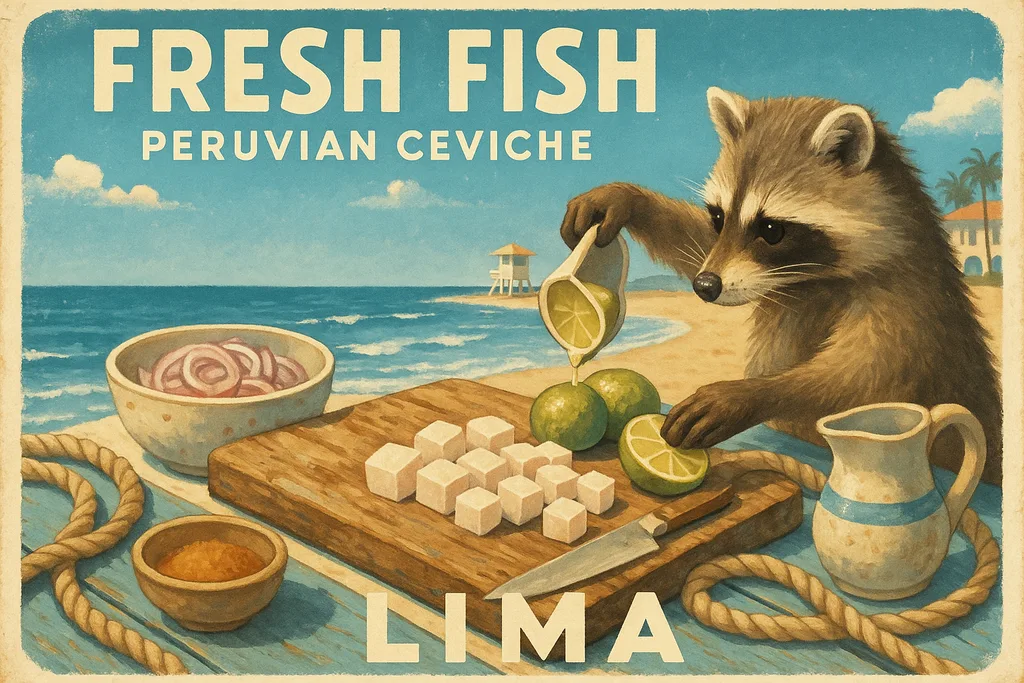
Prepare the fish: Cut fish into 2cm cubes. The size matters - too small and it overcooks, too large and the lime won't penetrate evenly.
-
Salt the fish: Season with salt and let sit for 2 minutes. This firms up the flesh.
-
Prepare leche de tigre: Squeeze limes to get about 1 cup juice. In Peru, they use a special citrus press to extract maximum flavor.
-
Quick cure: Pour lime juice over fish. Add minced chili. Mix gently and let sit for exactly 15 minutes - no more! The fish should be opaque outside but still tender inside.
-
Finish: Add sliced onions in the last 2 minutes. Garnish with cilantro.
-
Serve immediately: Place in bowls with sweet potato, corn, and cancha on the side.
The Rules of Ceviche
- Keep the fish cold - Choose a service time for convenience, not as proof of safety. A morning purchase or lunch service cannot replace sourcing and temperature controls.
- Don't over-marinate - 15 minutes maximum for cubed fish
- Serve the dressing immediately - Leche de tigre contains raw-fish juices. Do not treat it as a remedy or keep it unrefrigerated.
- Use real key limes - Regular limes are too mild
Variations
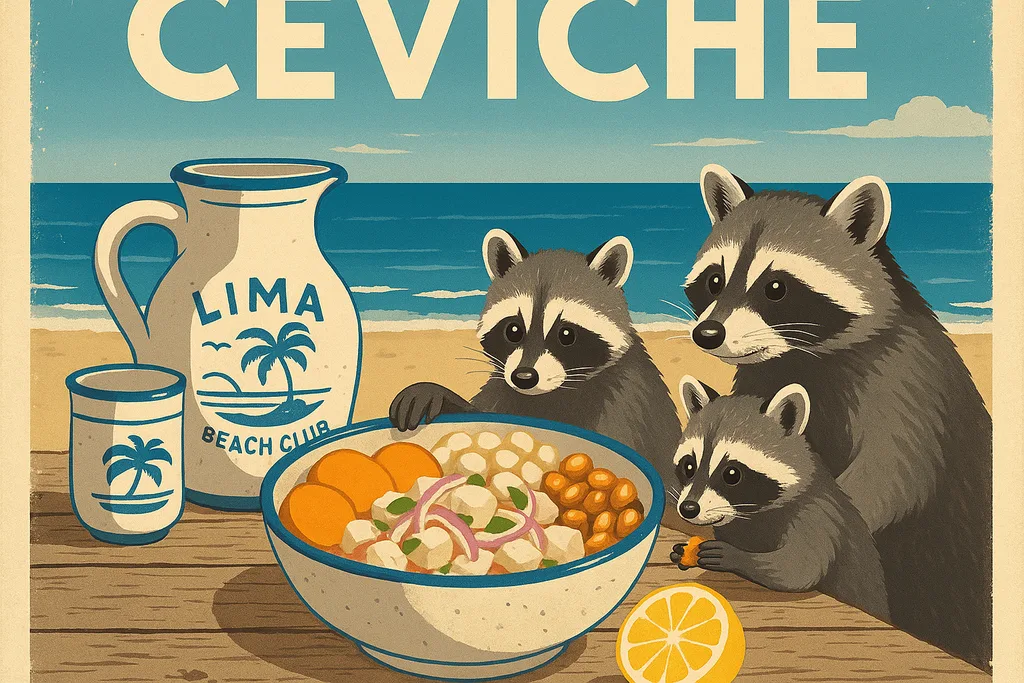
- Ceviche mixto: Add shrimp, squid, and octopus
- Ceviche de conchas negras: Black clams from Tumbes
- Nikkei style: Add soy sauce and ginger - see Tiradito Nikkei
Notes
The best ceviche I ever had was at a tiny stand in Chorrillos fish market at 10 AM. The vendor cut the fish to order and mixed everything in front of me. That experience inspired my Lima Ceviche Trail.
For more on Peru's incredible seafood culture, check out my guide to Peru. The biodiversity of their ocean creates flavors you won't find anywhere else.
This recipe showcases the ancient technique of acid-curing found in my Salt stories collection — how salt and acid transform raw ingredients through chemistry rather than heat. If you enjoy ceviche, try Tiradito Nikkei for a Japanese-influenced version, or explore other Peruvian classics like Lomo Saltado.
Estimated nutrition per serving
One serving is 1/4 of the recipe. Values are rounded estimates.
- Calories
- 150 kcal
- Protein
- 24 g
- Carbohydrate
- 14 g
- Fat
- 1 g
Calculated from USDA FoodData Central, SR Legacy (April 2018) food composition data and the stated recipe yield.
How this estimate was calculated
Ingredient amounts are converted to edible weights, matched to USDA foods, added together and divided by 4 servings. Comparable foods are used where a regional ingredient has no exact record. Ingredient brands, portion sizes, discarded fat and cooking losses can change the result. Optional ingredients and unmeasured accompaniments are excluded. Sodium is not estimated because salt and brine retention vary.
- Uses the first named ingredient option for: 🐟 500g very fresh white fish (sea bass or flounder)
- Uses the first named ingredient option for: 🌶️ 1-2 ají limo or habanero, minced