

Hyderabadi Haleem
A home-style Hyderabadi meat, wheat and lentil porridge, slowly cooked and pounded until cohesive, with crisp onion, mint and lemon.
November 20, 2026
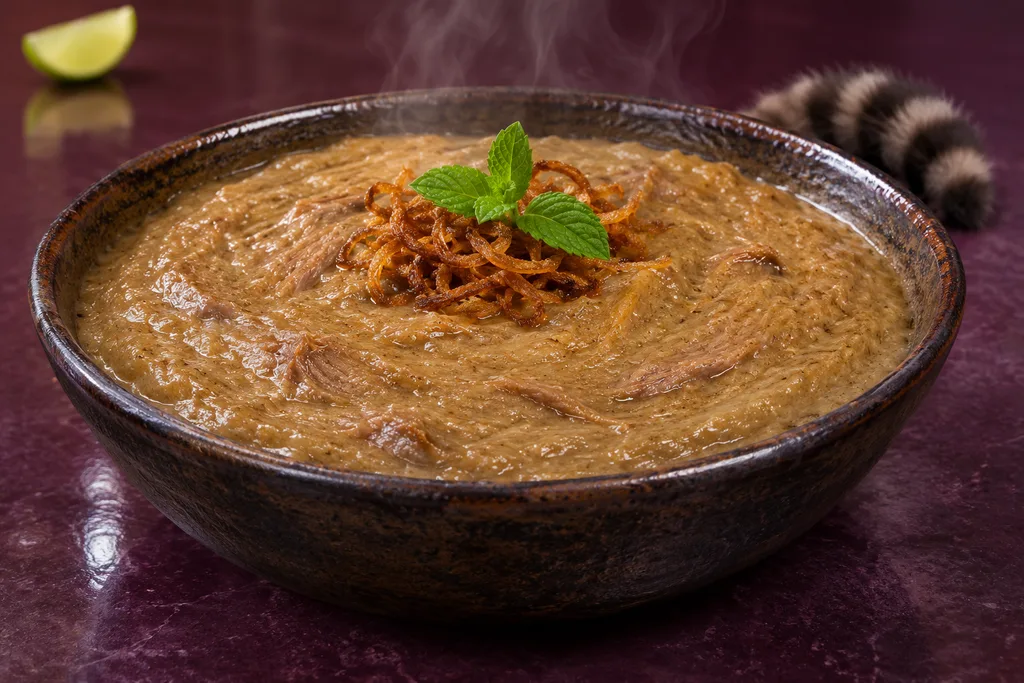
Haleem is closely associated with Hyderabad's Ramadan food culture and belongs to a wider family of meat-and-grain preparations connected with harees. This home version uses boneless lamb shoulder, cracked wheat and three dals, cooked separately before being worked together. The final texture comes from tender fibres dispersed through soft grains, not simply from thickening a meat curry.
Makes six substantial bowls. Use two heavy lidded pots, a sturdy potato masher or wooden pounding tool, and two forks. Allow about six hours including a two-hour soak; active preparation overlaps that wait. Lamb can need 2–3 hours to soften, and older goat meat may take longer. The cooking time includes a final 25–35 minutes of combining and stirring.
Ingredients
Grains and dals
- 150 g coarse cracked wheat (dalia), not instant couscous
- 30 g chana dal
- 30 g split skinned urad dal
- 30 g split yellow moong dal
- 1.3 litres water, plus more as needed
Meat
- 800 g boneless lamb shoulder, cut into 4 cm pieces
- 150 g plain full-fat yogurt
- 20 g ginger, grated
- 20 g garlic, crushed
- 1 teaspoon mild red chilli powder
- 1/2 teaspoon turmeric
- 1 teaspoon ground coriander
- 1/2 teaspoon ground black pepper
- 1 1/2 teaspoons fine salt, divided, then to taste
- 4 tablespoons ghee, divided
- 200 g onion, thinly sliced
- 1 teaspoon shahi jeera, or ordinary cumin as an adaptation
- 4 green cardamom pods, lightly cracked
- 4 cloves
- 4 cm cinnamon stick
- 1 small green chilli, slit
- 900 ml water, plus extra if needed
- 10 g mint leaves, chopped, plus a few for serving
- 10 g coriander leaves, chopped
- 1 teaspoon garam masala
- 40 g ready-fried crisp onions, for serving
- 1 lemon, cut into wedges
Instructions
Soak and season. Rinse wheat and dals together, then soak in plenty of water for two hours. Meanwhile mix lamb with yogurt, ginger, garlic, chilli powder, turmeric, coriander, pepper and 1 teaspoon salt. Refrigerate for at least 30 minutes while the grains soak.
Start the lamb. Heat 3 tablespoons ghee in the larger pot over medium heat. Add shahi jeera, cardamom, cloves and cinnamon for 30 seconds. Cook onion for 10–12 minutes until golden. Add the lamb and its marinade; stir and cook for 8–10 minutes until the yogurt no longer looks watery. Add green chilli, 900 ml water and half the chopped herbs.
Simmer until shreddable. Cover and cook at a gentle simmer for 2–3 hours, stirring every 20 minutes and adding hot water if the meat is no longer mostly submerged. The lamb is ready when a fork twists through it and separates the fibres easily. Remove cardamom pods, cloves and cinnamon as you find them. Lift the meat out with a slotted spoon, retaining its broth, and pull it finely with two forks.
Soften the grains alongside. Drain the soaked wheat and dals. Put in the second pot with 1.3 litres fresh water and remaining 1/2 teaspoon salt. Bring to a boil, then partially cover and simmer for 60–90 minutes. Stir increasingly often as it thickens and add water to prevent sticking. All grains should crush readily; mash while hot until mostly smooth.
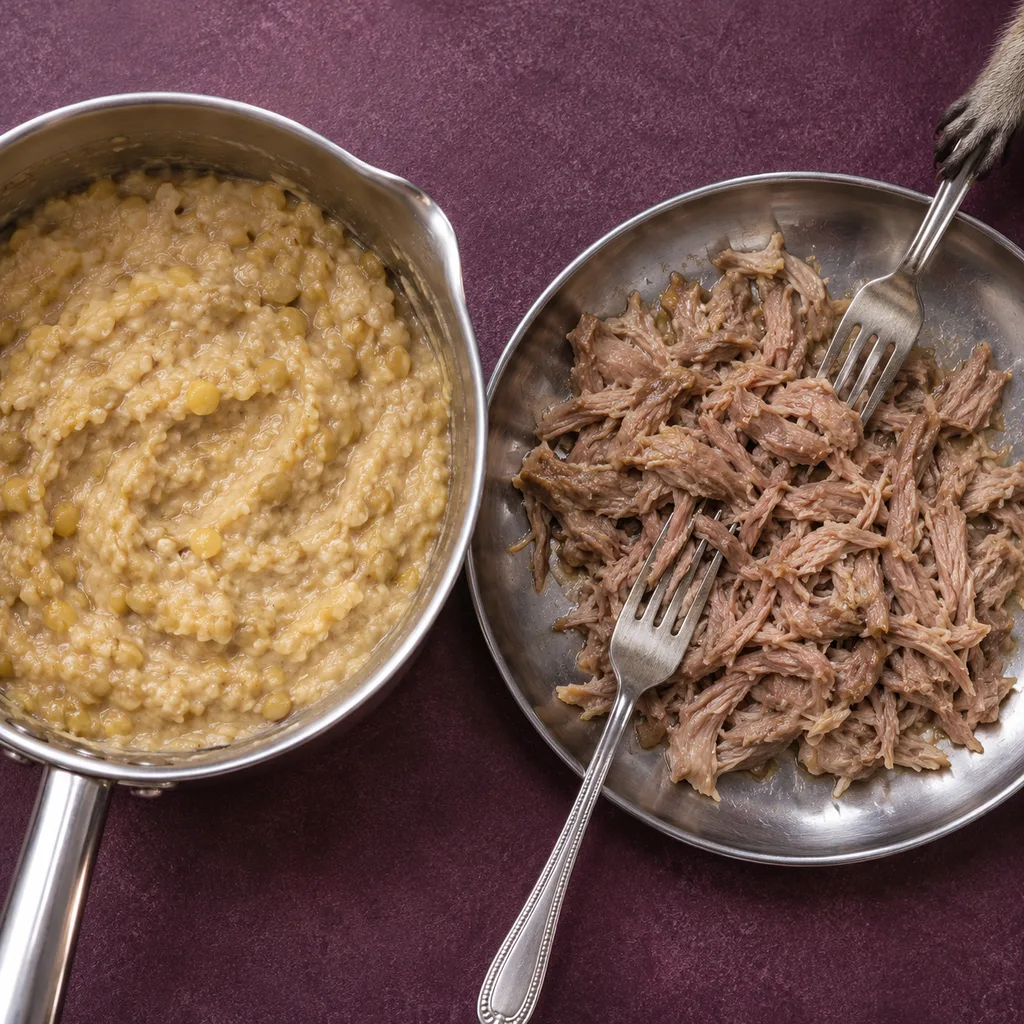
Work into one mixture. Return lamb to its broth and add the mashed grains. Keep on low heat and press, stir and fold with the masher for 15–20 minutes, breaking any remaining clumps. Add hot water in 100 ml portions if too stiff to work. The fibres should disperse through the porridge and the mixture should fall from a spoon in a slow, heavy ribbon.
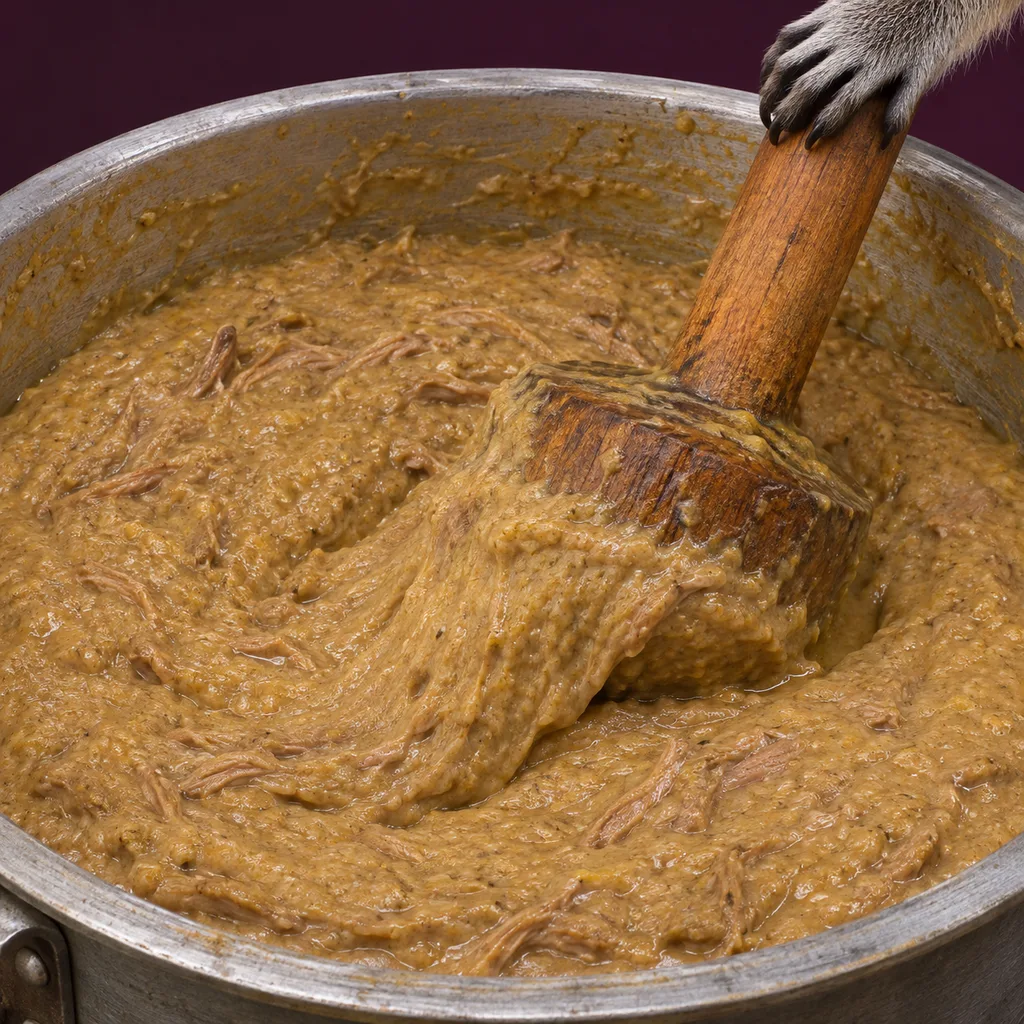
Finish gently. Stir in garam masala, remaining herbs and the last tablespoon ghee. Simmer for another 10–15 minutes, scraping the bottom frequently. Adjust salt. Serve with a little crisp onion and mint, passing lemon wedges separately so each person can sharpen their bowl to taste.
Texture and sources
If distinct firm wheat grains remain, more pounding will not fix them: add water and continue cooking. For comparison, Chinese Congee builds softness from rice, while Moroccan Lamb Tagine keeps tender meat in distinct pieces. Chill leftovers promptly in shallow containers; reheat with water and frequent stirring until steaming throughout.
Chef Kunal Kapur's Hyderabadi haleem informs the separately cooked grains, pulled meat and final working stage. Chef Shyam Longani's preparation in The Navhind Times provides another lamb, dal and wheat reference. This is a measured stovetop adaptation for a home pot, without claiming a commercial Hyderabad producer's exact formula.
You might also like
Galouti Kebabs
Lucknow-style finely minced lamb kebabs with a tender centre and shallow-fried crust, with measured papaya and careful chilled handling.
Kashmiri Rogan Josh
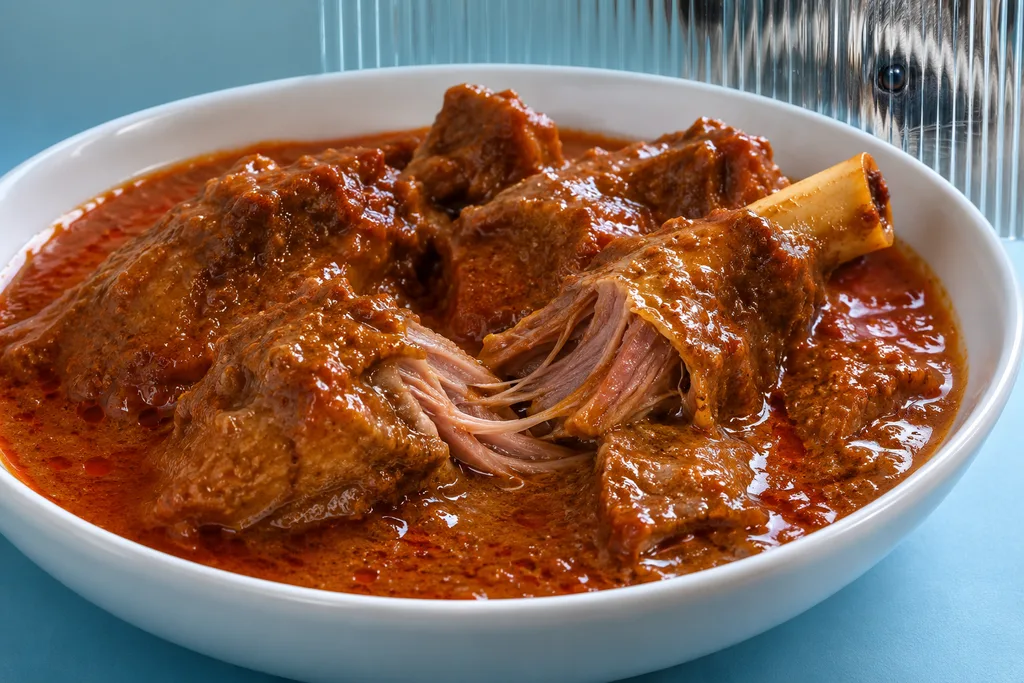
A Kashmiri Pandit-style lamb braise with yogurt, fennel, dry ginger and mild red chilli, cooked slowly until the meat yields to a fork.
Litti Chokha
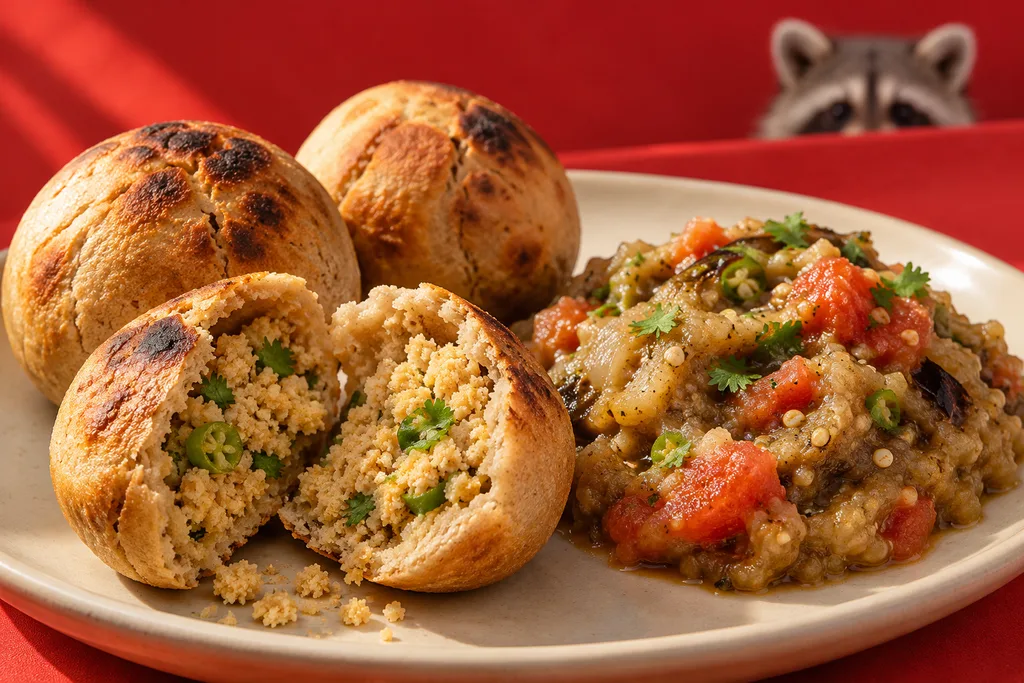
Oven-baked wheat parcels filled with tangy roasted-gram sattu, served with a coarse roasted eggplant and tomato chokha.
Sarva Pindi
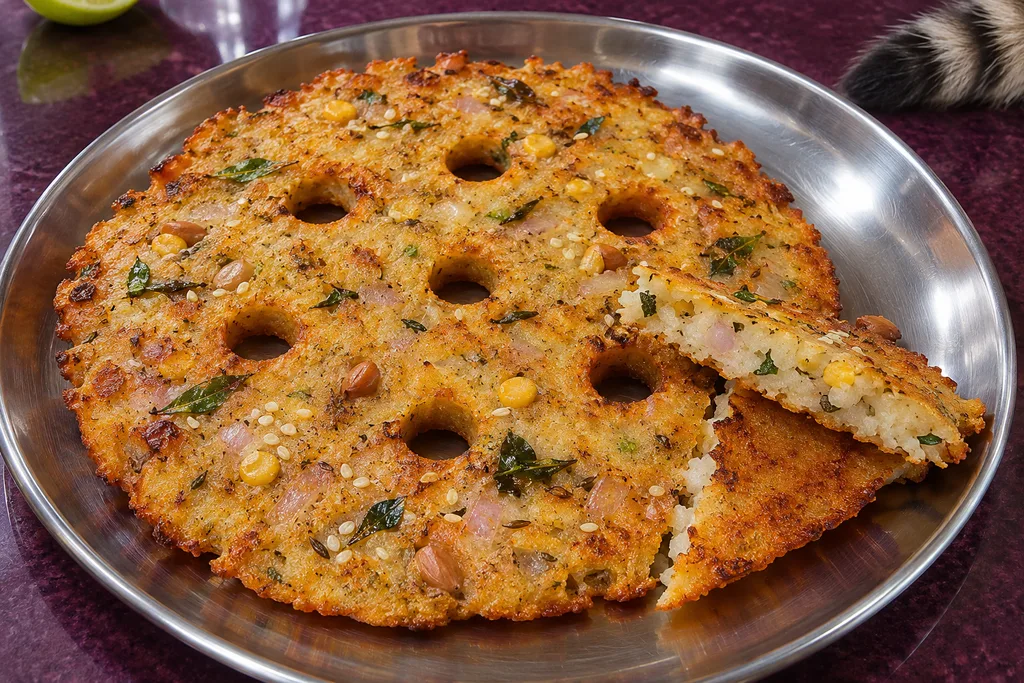
Telangana rice-flour pan bread studded with soaked chana dal, peanuts and sesame, with pierced holes and a slowly crisped base.