Tres Leches Cake
Sponge cake soaked in three milks sounds soggy until you taste it. Done right, tres leches becomes something between cake and custard—impossibly tender, sweet but not cloying, with that mysterious ability to be both rich and refreshing at once.
I learned this from my abuela's neighbor in Guadalajara, who served it on mismatched plates with the confidence of someone who knows exactly what magic she's created. The cake looked unremarkable sitting there—a simple rectangle dusted with cinnamon. Then came that first forkful: pure silk, sweet but not cloying, with that mysterious ability to be both rich and refreshing at once.
The secret isn't just in the three milks (evaporated, condensed, and heavy cream) but in the patience to let them work their slow transformation overnight. The sponge cake practically dissolves into custard-like perfection while somehow maintaining its structure. It's kitchen alchemy at its finest.
Timing: The total estimates 45 minutes of preparation, 25 minutes of baking, 1 hour 30 minutes of cooling and the minimum 4-hour refrigerated milk soak. Cooling usually needs about 1–1½ hours, depending on the pan and room conditions; the estimate uses 1½ hours. Wait until the cake is completely cool before adding the milk. An overnight soak replaces the 4-hour minimum and extends the total.
Ingredients
🥛 For the Cake:
🥚 5 large eggs, separated
🍬 1 cup granulated sugar, divided
🌾 1/3 cup whole milk
🧈 1 teaspoon vanilla extract
🌾 1 cup all-purpose flour
🥄 1½ teaspoons baking powder
🧂 ¼ teaspoon salt
🥛 For the Three Milk Mixture:
📦 1 can (12 oz) evaporated milk
📦 1 can (14 oz) sweetened condensed milk
🥛 ½ cup heavy cream
☁️ For the Topping:
🥛 1 cup heavy cream
🍬 3 tablespoons powdered sugar
🌿 1 teaspoon vanilla extract
🌟 Ground cinnamon for dusting
Instructions
Prepare the Cake Base
Preheat oven to 350°F (175°C). Grease a 9x13-inch baking dish—this cake needs room to absorb all those milks.
In a large bowl, beat egg yolks with ¾ cup sugar until pale and fluffy, about 3 minutes. The mixture should ribbon when you lift the beaters. Add milk and vanilla, mixing until combined.
Sift together flour, baking powder, and salt. Fold dry ingredients into the yolk mixture until just combined—don't overmix or you'll end up with a tough cake instead of the tender sponge we're after.
Create the Magic
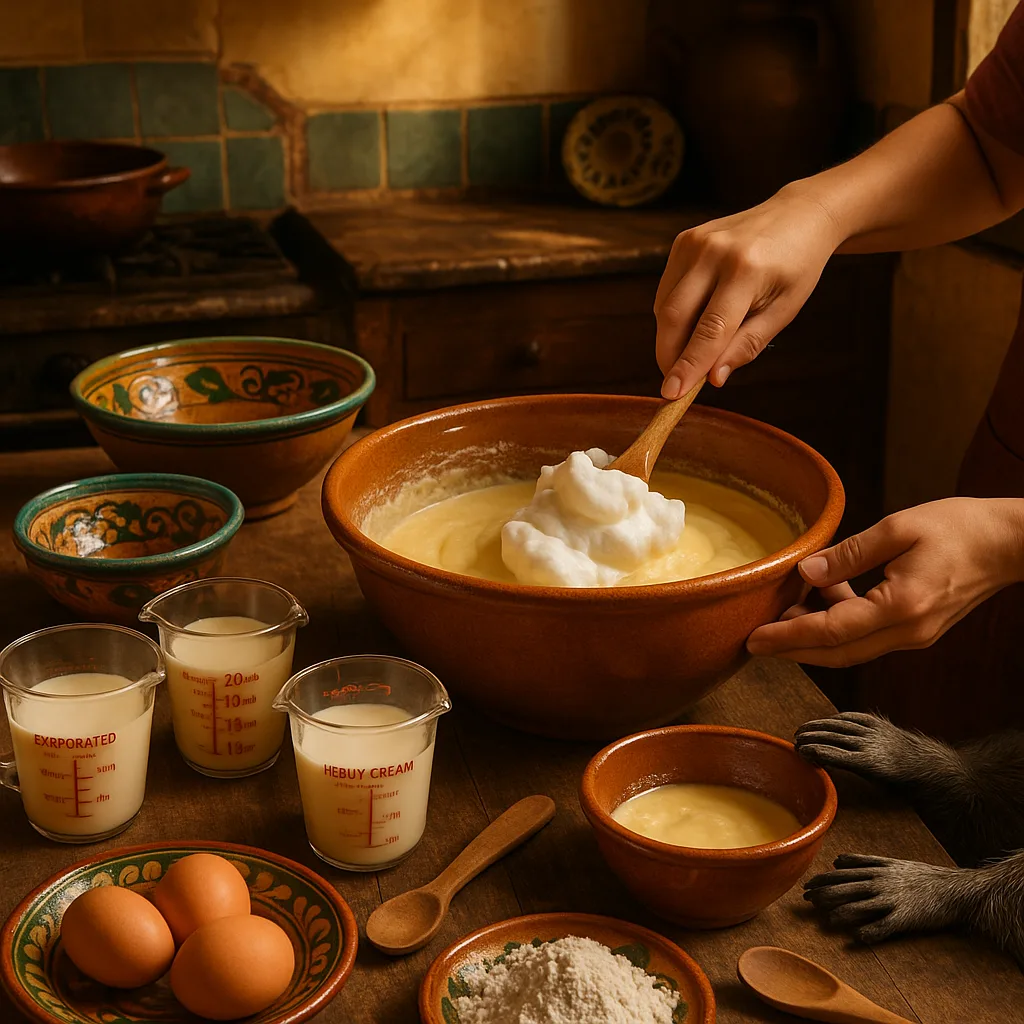
In a separate bowl, beat egg whites until soft peaks form. Gradually add remaining ¼ cup sugar and beat until stiff, glossy peaks form. This is where patience pays off—properly whipped whites make all the difference in texture.
Gently fold ⅓ of the whites into the batter to lighten it, then fold in remaining whites in two additions. Pour into prepared pan and bake 20-25 minutes until golden and a toothpick comes out clean.
The Milk Bath
While cake cools, whisk together evaporated milk, condensed milk, and heavy cream. Some recipes suggest warming the mixture, but I prefer it cold—it soaks more evenly and creates that perfect custard-like texture.
Once cake has cooled completely (and I mean completely—warm cake will fall apart), poke holes all over with a fork or skewer. Pour the milk mixture slowly over the cake, letting it absorb gradually. Don't rush this step.
Cover and refrigerate overnight, or at least 4 hours. The cake needs time to drink up every drop of that milky goodness.
Finish with Flair
Just before serving, whip cream with powdered sugar and vanilla until soft peaks form. Spread over cake and dust generously with cinnamon.
Tres Leches Process Flow
Critical Steps:
- Cake must be COMPLETELY cool before adding milk
- Pour milk mixture slowly to ensure even absorption
- Overnight refrigeration transforms the texture from cake to custard-like perfection
Serving & Variations
Serve chilled, cut into generous squares. The cake improves with time—day two is often better than day one as the flavors meld completely.
Traditional Touches: Some regions add a splash of rum or coffee to the milk mixture. In coastal areas, coconut milk sometimes replaces one of the three milks.
Modern Twists: Try dulce de leche between layers, or fold fresh berries into the whipped cream. I've seen versions with chocolate sponge cake that work surprisingly well.
Storage Notes: Covered in the refrigerator, this keeps for up to 4 days, though it rarely lasts that long.
The beauty of tres leches is its forgiving nature—even if your sponge isn't perfect, the milk bath will work its magic. It's comfort food disguised as dessert, the kind of cake that turns a simple weeknight into something worth celebrating.
Milk Absorption Science
The Science Behind the Magic:
- Sponge Structure: Beaten egg whites create microscopic air pockets that hold the milk
- Milk Density: Different densities create layers of flavor and richness
- Time Factor: Overnight rest allows complete absorption without structural collapse
- Temperature: Cold milk soaks more evenly than warm, preventing breakdown
Quality Indicators:
- Perfect: Cake holds shape when cut, no liquid pools on plate
- Good: Slightly moist bottom, cake mostly intact
- Over-soaked: Cake falls apart, too much liquid
- Under-soaked: Dry patches, uneven absorption
Trust the process, be patient with the soaking, and prepare to understand why this humble cake has conquered hearts far beyond its Mexican origins.
Estimated nutrition per serving
One serving is 1/8 of the recipe. Values are rounded estimates.
- Calories
- 510 kcal
- Protein
- 13 g
- Carbohydrate
- 73 g
- Fat
- 19 g
Calculated from USDA FoodData Central, SR Legacy (April 2018) food composition data and the stated recipe yield.
How this estimate was calculated
Ingredient amounts are converted to edible weights, matched to USDA foods, added together and divided by 8 servings. Comparable foods are used where a regional ingredient has no exact record. Ingredient brands, portion sizes, discarded fat and cooking losses can change the result. Optional ingredients and unmeasured accompaniments are excluded. Sodium is not estimated because salt and brine retention vary.