Classic Margherita Pizza
Three ingredients on perfectly charred dough—that's all a Margherita pizza needs to be perfect. No hiding behind toppings, no complexity for complexity's sake. Just tomatoes, mozzarella, and basil doing exactly what they're supposed to do on a canvas that's been coaxed into submission through time and heat.
I first encountered this revelation not in Naples (though I'd love to claim that origin story), but in a tiny pizzeria in Brooklyn where the owner, a transplanted Neapolitan, refused to put anything else on his menu until you'd tried "la Regina" first. The Queen. He was right to insist.
Timing: Plan on about 3 hours 30 minutes from mixing to serving, rather than 32 minutes of preparation and baking alone. The dough rise takes 2–3 hours; preheat the stone for at least 30 minutes near the end of the rise and prepare the sauce while waiting. A cooler room or baking the four pizzas in successive batches can extend the total.
Ingredients
For the Dough:
🍞 500g 00 flour (or bread flour)
💧 325ml lukewarm water
🧂 10g fine sea salt
🍯 1 tsp active dry yeast
🫒 2 tbsp extra virgin olive oil
For the Pizza:
🍅 400g San Marzano tomatoes, crushed by hand
🧂 1 tsp sea salt
🧄 2 cloves garlic, minced
🧀 250g fresh mozzarella, torn into chunks
🌿 Fresh basil leaves
🫒 Extra virgin olive oil for drizzling
🧂 Coarse sea salt for finishing
Instructions
Prepare the Dough (3-4 hours ahead):
Mix flour and salt in a large bowl. In a small bowl, dissolve yeast in lukewarm water, let sit for 5 minutes until foamy. Pour the yeast mixture and olive oil into the flour, mixing until a shaggy dough forms.
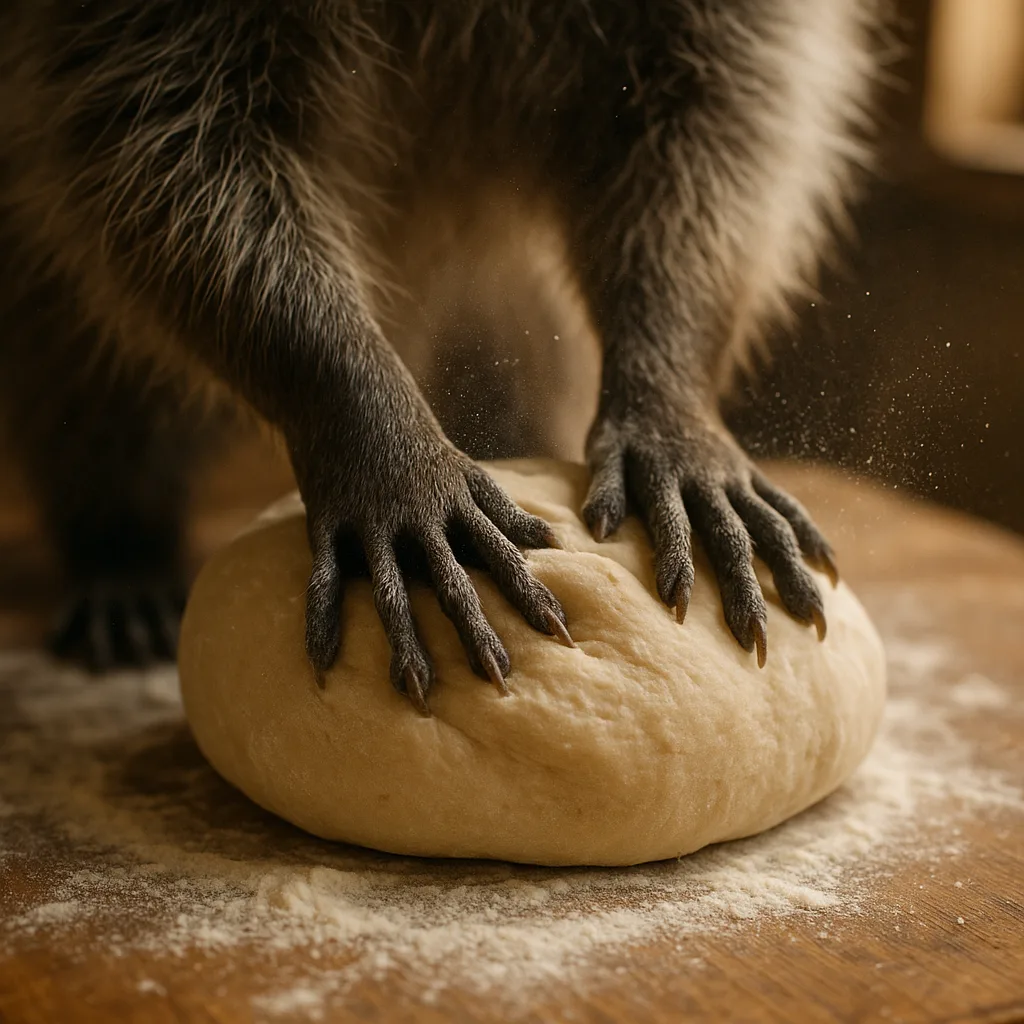
Turn onto a floured surface and knead for 8-10 minutes until smooth and elastic. The dough should be slightly sticky but not wet — resist the urge to add too much flour. Place in an oiled bowl, cover with a damp towel, and let rise for 2-3 hours until doubled.
Make the Sauce:
Crush the tomatoes by hand (this is therapeutic, trust me) and mix with salt and minced garlic. That's it. Don't cook it — let the oven do that work. The sauce should taste bright and a little sharp.
Assembly and Baking:
Preheat your oven to its highest setting (usually 500-550°F) with a pizza stone or inverted baking sheet inside for at least 30 minutes.
Divide dough into 4 portions. On a floured surface, stretch each portion into a 10-inch circle — use your hands, not a rolling pin. The dough should be thin enough to see light through, with a slightly thicker edge for the crust.
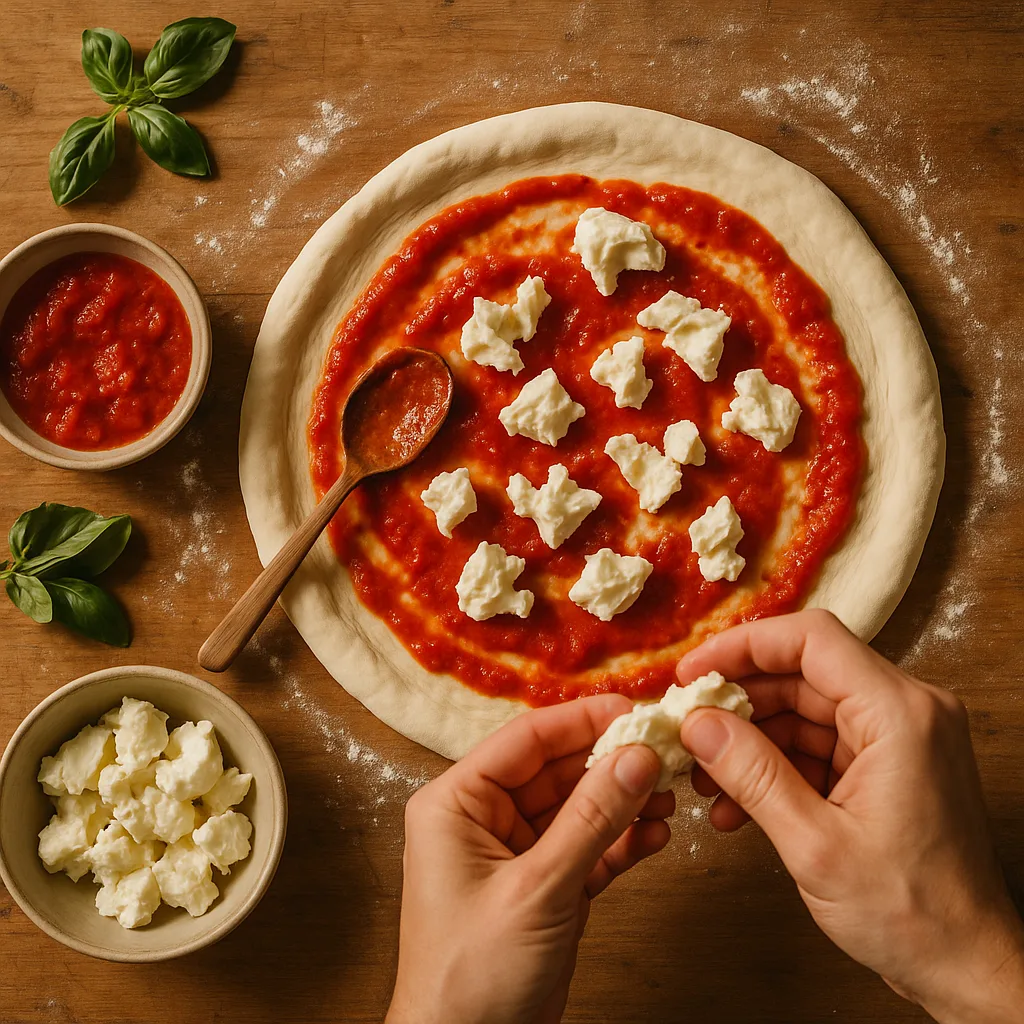
Spread a thin layer of sauce, leaving a 1-inch border. Add torn mozzarella chunks — less is more here. Slide onto the hot stone using a pizza peel or the back of a baking sheet dusted with cornmeal.
Pizza Making Timeline
Key Points:
- Hand stretching preserves air bubbles for light crust
- Raw sauce cooks in oven for fresh tomato flavor
- Less cheese = better melt and no soggy center
- High heat is essential for proper char
Bake for 8-12 minutes until the crust is golden and the cheese is bubbling with brown spots. Remove and immediately top with fresh basil leaves, a drizzle of olive oil, and a pinch of coarse salt.
Serving & Variations
Serve immediately while the cheese is still molten. The traditional way is to eat it with a fork and knife, but life's too short for pizza formality.
Remix Ideas:
- Add a drizzle of hot honey for sweet heat contrast
- Finish with a handful of arugula after baking
- Try burrata instead of mozzarella for extra richness
- Experiment with different tomatoes — even good canned crushed tomatoes work
Cultural Notes:
The Margherita was supposedly created in 1889 to honor Queen Margherita of Savoy, with its red, white, and green ingredients representing the Italian flag. Whether that story's true or just beautiful marketing, the pizza has earned its royal status through pure deliciousness.
The key is restraint. In a world of loaded pizzas, the Margherita reminds us that perfection often comes through subtraction, not addition. Each ingredient has space to sing its own note while harmonizing with the others.
What makes this pizza transcendent isn't innovation — it's execution. Good ingredients, proper technique, and the confidence to let simplicity speak for itself.
Estimated nutrition per serving
One serving is 1/4 of the recipe. Values are rounded estimates.
- Calories
- 755 kcal
- Protein
- 28 g
- Carbohydrate
- 101 g
- Fat
- 26 g
Calculated from USDA FoodData Central, SR Legacy (April 2018) food composition data and the stated recipe yield.
How this estimate was calculated
Ingredient amounts are converted to edible weights, matched to USDA foods, added together and divided by 4 servings. Comparable foods are used where a regional ingredient has no exact record. Ingredient brands, portion sizes, discarded fat and cooking losses can change the result. Optional ingredients and unmeasured accompaniments are excluded. Sodium is not estimated because salt and brine retention vary.
- Assumes one tablespoon finishing olive oil for the whole batch.