

Chhena Poda
Odisha's baked fresh-curd dessert with a dark caramelized crust, tender centre and cardamom, including curd draining and moisture checks.
November 20, 2026
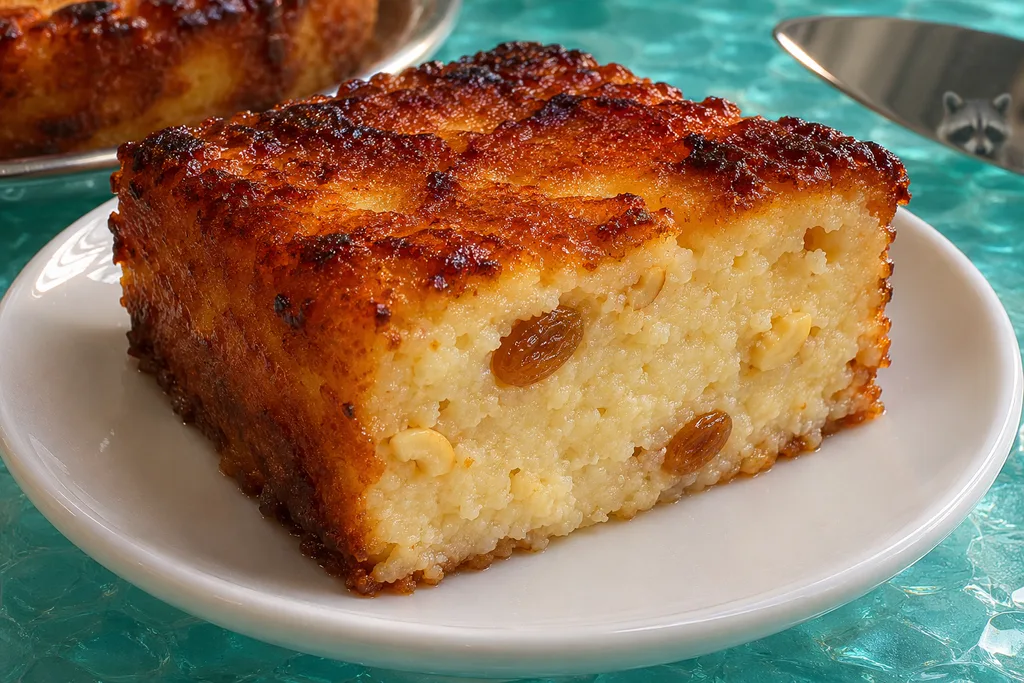
Chhena poda is an Odia sweet made by baking fresh curds with sugar until the exterior browns deeply. Its centre should remain moist and slightly grainy. This oven version uses parchment in a small square tin, with a little semolina to help hold the curds together.
Makes eight modest slices in a 15 cm square tin. You also need a large saucepan, cloth-lined sieve, mixing bowl and kitchen scales. The total allows 20 minutes to drain curds, ten minutes for the mixed batter to hydrate and roughly 70 minutes to cool. Baking usually takes 50–65 minutes; cool longer if the centre is still warm before slicing.
Ingredients
Fresh curds
- 2.5 litres whole milk, preferably not UHT
- 3 tablespoons lemon juice mixed with 3 tablespoons water, plus up to 1 tablespoon more lemon juice if needed
Bake
- 400 g freshly made moist chhena, weighed after draining
- 140 g caster sugar
- 15 g fine semolina
- 20 g melted ghee, plus a little for greasing
- 1/2 teaspoon ground cardamom
- 20 g raisins
- 20 g cashews, chopped
- 1 small pinch salt
- 1–3 tablespoons milk, only if needed to loosen the mixture
Instructions
Separate the milk. Heat the milk in the large pan, stirring along the bottom, until it rises to a boil. Turn off the heat and wait one minute. Add diluted lemon juice a tablespoon at a time, stirring gently, until white curds separate from yellowish whey. Stop adding acid once the whey clears. If needed, return to very low heat briefly; do not boil the curds hard.
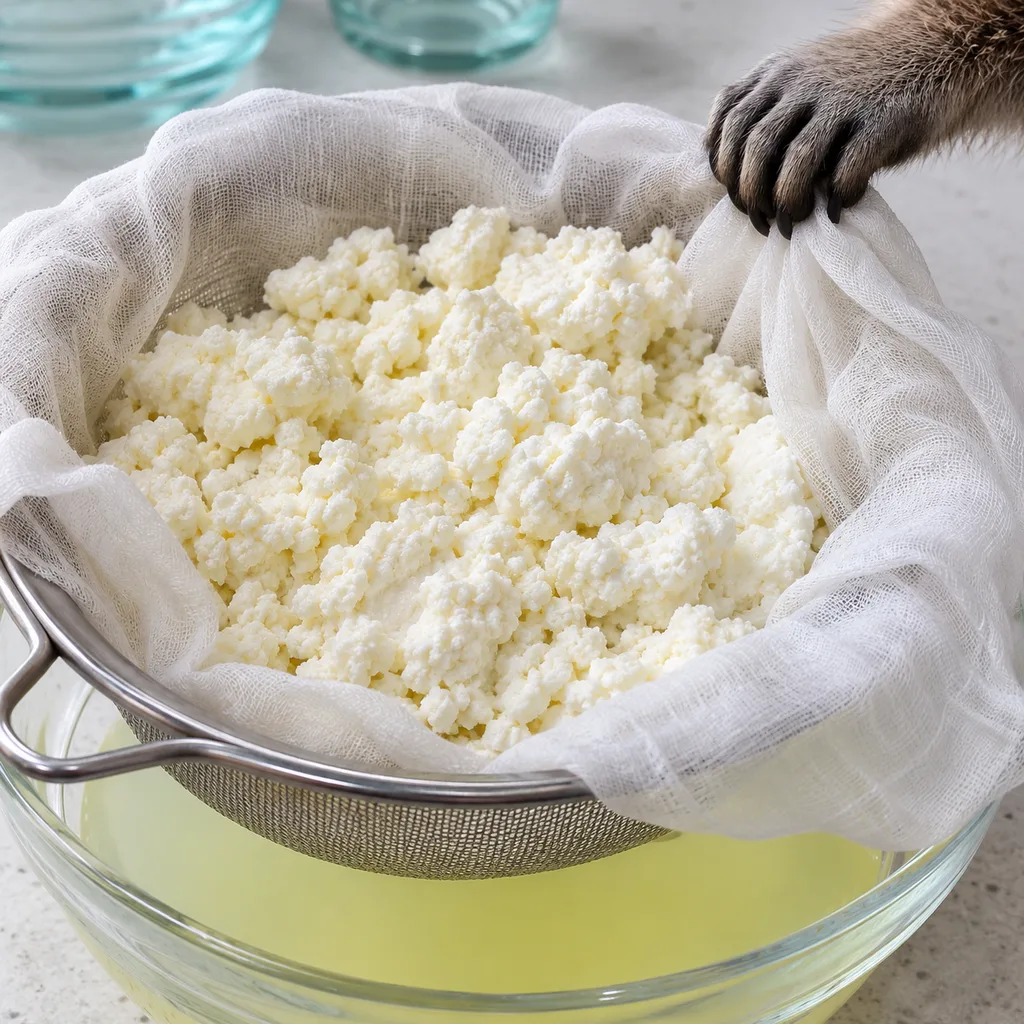
Drain gently. Pour into the cloth-lined sieve and rinse briefly with cool water to remove sharp lemon flavour. Gather the cloth and let it drain for about 20 minutes without pressing under a weight. The curds should be moist and crumbly, with no stream of whey when squeezed gently. Weigh 400 g for the cake; milk yield varies, so reserve any extra for another use.
Prepare the tin. Heat the oven to 180°C conventional, or 160°C fan. Grease the 15 cm square tin and line base and sides with parchment, leaving lifting handles. Crumble the measured chhena into a bowl.
Make a soft mixture. Mash chhena and sugar with a sturdy spoon for 3–5 minutes until the curds become softer and the sugar draws out moisture. Mix in semolina, ghee, cardamom, raisins, cashews and salt. The mixture should fall slowly from the spoon and settle when tapped, not hold as a dry dough. Add milk by the tablespoon only if needed. Rest for ten minutes, then spread evenly in the tin.
Bake to a dark crust. Bake on the middle shelf for 50–65 minutes. Check at 45 minutes. The top should become deep golden brown, the edges firm and the centre set with no liquid wobble. A skewer should show moist crumbs but no wet batter. If the surface darkens before the centre sets, cover loosely with foil and continue in five-minute intervals. Do not chase a black crust.
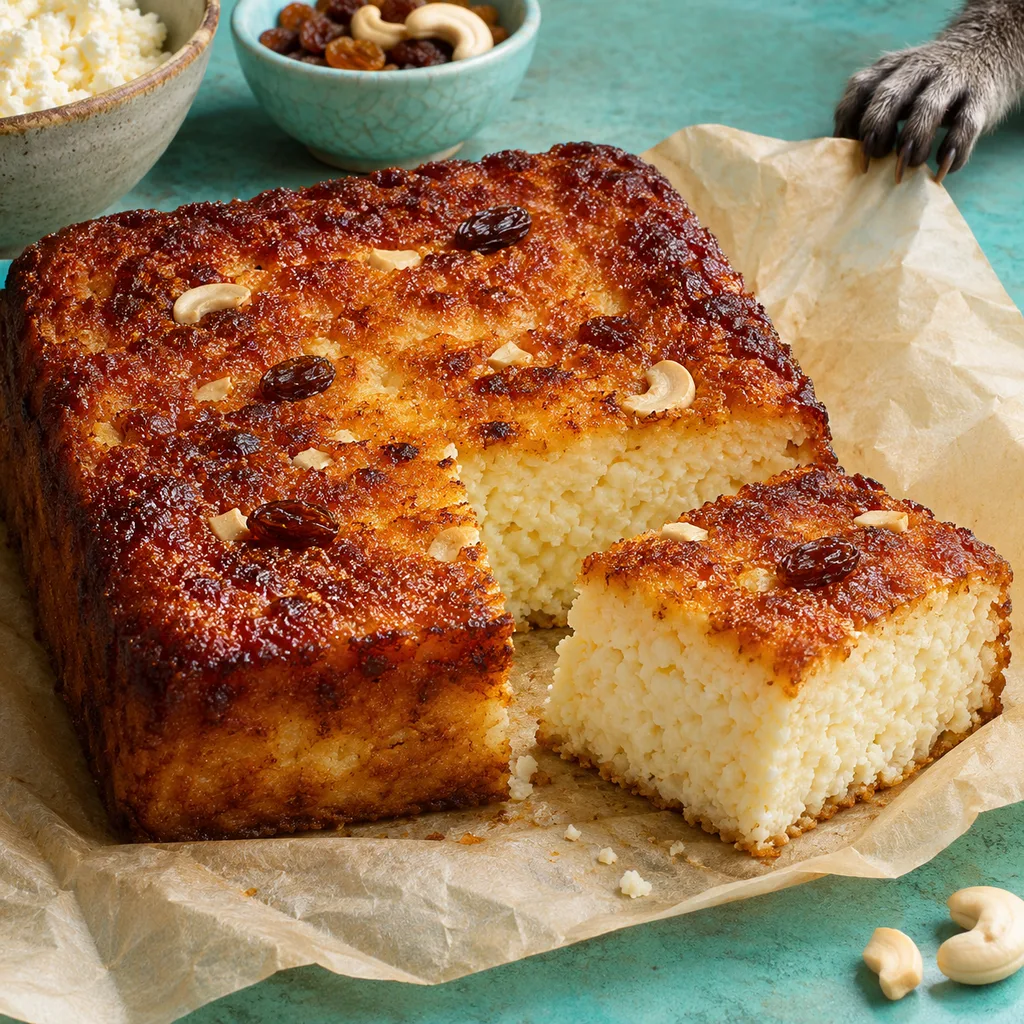
Cool before releasing. Let the bake cool in its tin for at least one hour, then lift using the paper. Wait until the centre is no longer warm before slicing, about another 10–30 minutes depending on room temperature. Cut with a clean knife into eight pieces. The pale interior should be moist and cohesive beneath the browned exterior.
Moisture notes and sources
Dry, heavily pressed paneer needs more liquid and gives a firmer result. A wet whey-filled batter takes longer to set; correct the curd draining rather than adding large amounts of semolina. Refrigerate the cooled cake and use within three days. For other desserts with deliberately different textures, try Tres Leches Cake and Moroccan Orange Blossom Cookies.
Odisha Tourism includes chhena poda among the region's sweets. Dassana Amit's oven method informs the soft curd consistency and browning cues; Sanjeev Kapoor's version uses fine semolina and a rest. This recipe specifies fresh-curd weight, tin size and a cooling schedule for the home oven.
You might also like
Indian Masala Chai
Cardamom, ginger, and cinnamon steeped with black tea and milk—India's aromatic embrace that turns simple tea into liquid comfort
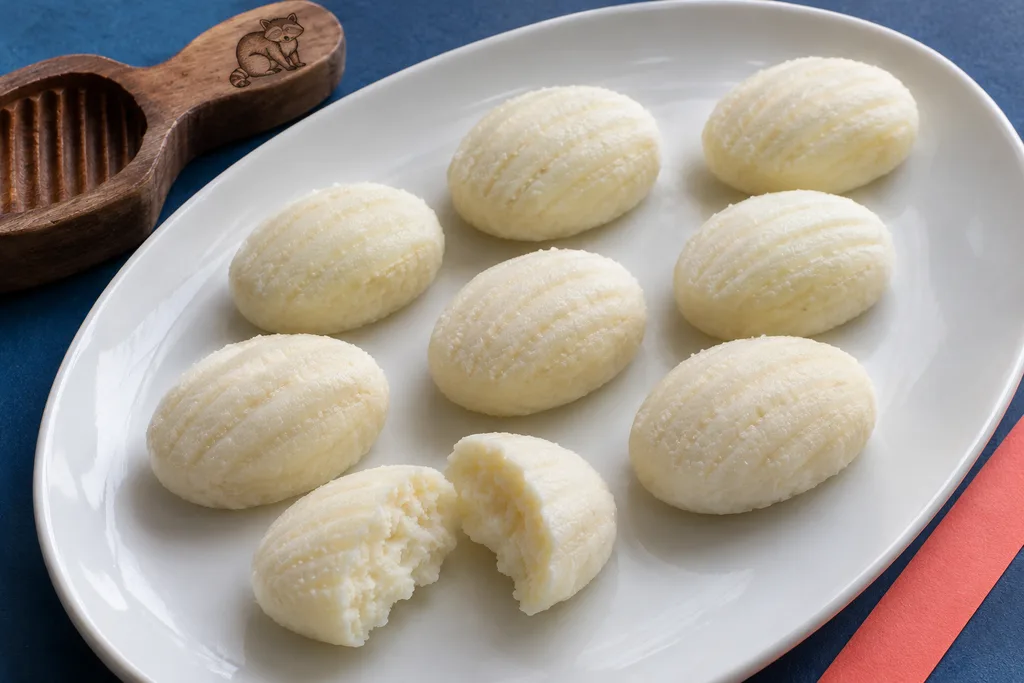
Bengali Sandesh
Soft Bengali fresh-curd sweets, gently kneaded and briefly cooked with sugar, with moisture cues for shaping tender ivory sandesh.
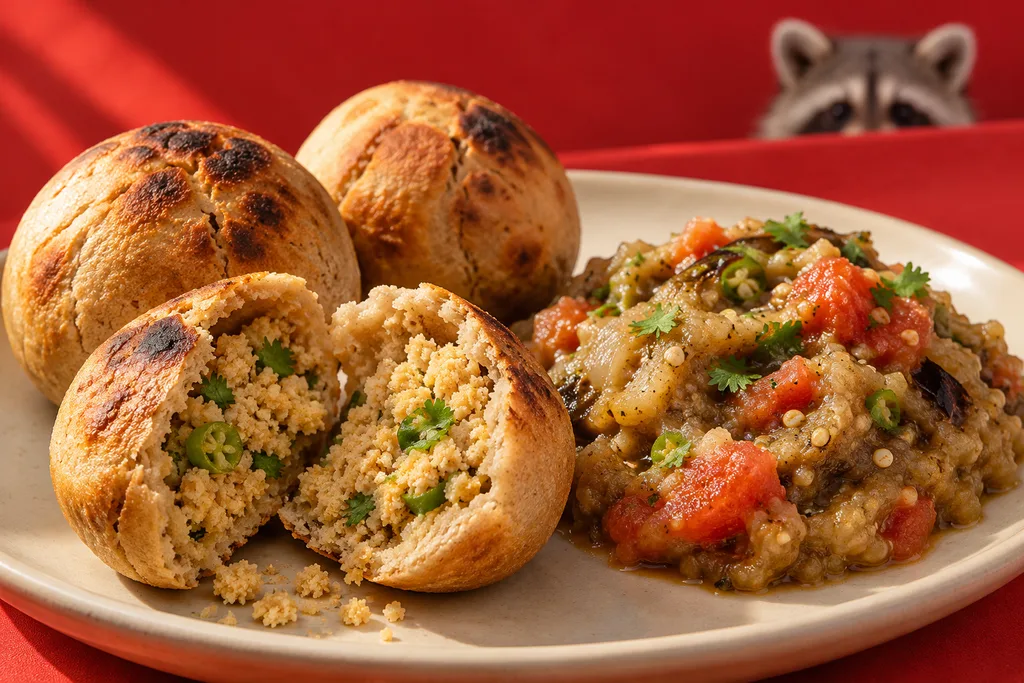
Litti Chokha
Oven-baked wheat parcels filled with tangy roasted-gram sattu, served with a coarse roasted eggplant and tomato chokha.
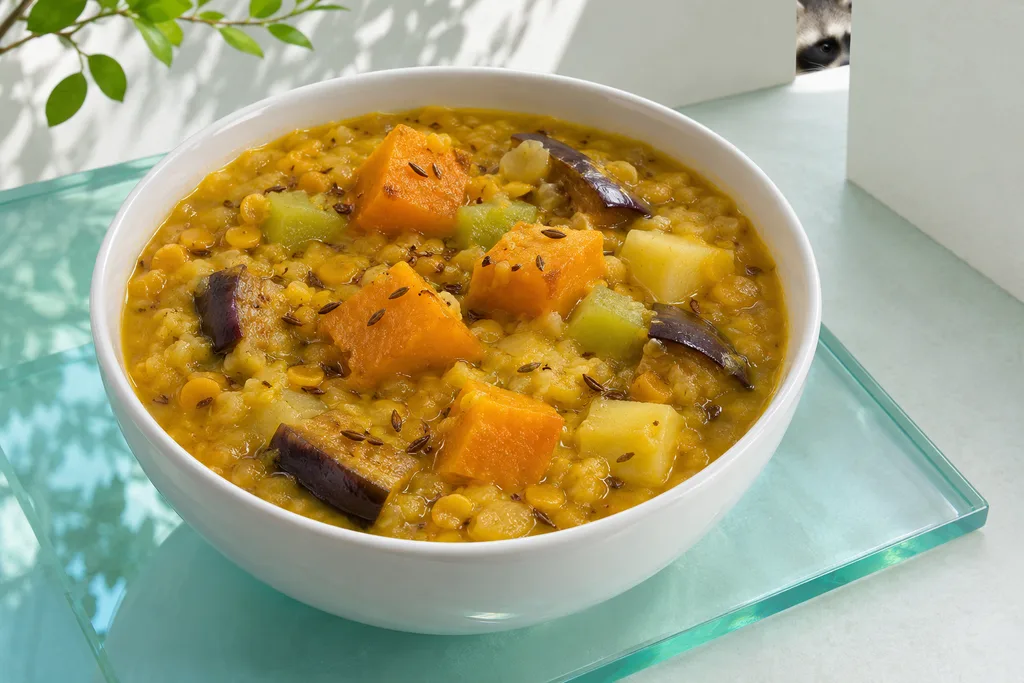
Odia Dalma
Odia toor dal with pumpkin, potato, raw papaya and aubergine, finished with roasted cumin-chilli seasoning and a light ghee tempering.