

Bisi Bele Bath
Karnataka rice and toor dal with vegetables, tamarind and a freshly roasted spice blend, finished loose and hot with cashew tempering.
November 20, 2026
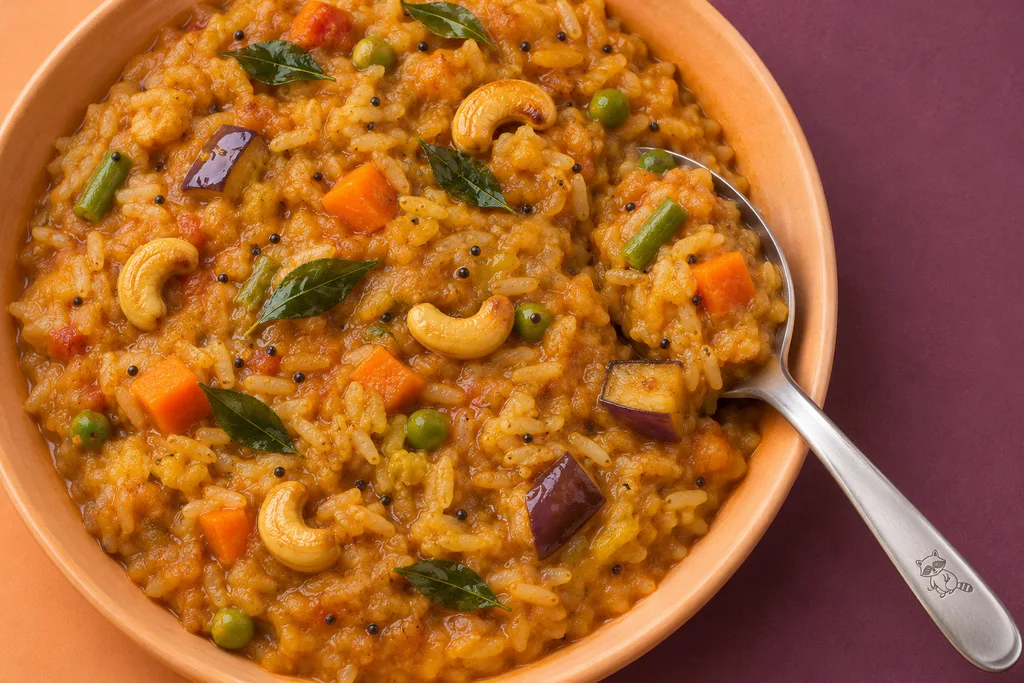
Bisi bele bath brings rice, toor dal, vegetables and tamarind together with its own roasted masala. The Karnataka dish should arrive hot and loose enough to settle in the bowl. Making the blend separately lets the pulses toast properly before the more delicate coconut and spices burn.
Makes six generous bowls. You need two saucepans, a large heavy pot, a skillet and spice grinder. Start the dal first, then roast and chop while it simmers; rice and vegetables cook alongside it. The estimate includes a 20-minute tamarind soak and five-minute final rest, with overlapping work.
Ingredients
Rice, dal and vegetables
- 200 g sona masuri or other medium-grain white rice, rinsed
- 150 g toor dal, rinsed
- 1.6 litres water, divided, plus more boiling water as needed
- 1/4 teaspoon turmeric
- 15 g seedless tamarind pulp, soaked in 150 ml hot water
- 150 g carrots, in 1 cm pieces
- 100 g green beans, in 2 cm pieces
- 100 g small aubergines, in 2 cm pieces
- 80 g peas
- 100 g onion, chopped
- 1 teaspoon fine salt, then to taste
- 1 teaspoon grated jaggery, optional
Small-batch masala
- 1 tablespoon coriander seeds
- 2 teaspoons chana dal
- 1 teaspoon split skinned urad dal
- 3 dried Byadagi chillies, stems removed
- 1/4 teaspoon cumin seeds
- 1/8 teaspoon fenugreek seeds
- 4 black peppercorns
- 2 cloves
- 2 cm cinnamon
- 1 Marathi moggu (dried kapok bud)
- 1 tablespoon unsweetened desiccated coconut
- 1/2 teaspoon white poppy seeds
Tempering
- 2 tablespoons ghee
- 25 g cashew halves
- 1/2 teaspoon black mustard seeds
- 10 curry leaves, dry after washing
- A pinch of asafoetida
Instructions
Start the slow pot. Simmer dal with 700 ml water and turmeric, partly covered, for 40–55 minutes until it crushes easily. Add water if needed. Mash lightly, keeping the cooking liquid. Meanwhile soak the tamarind for 20 minutes, squeeze it into the water and strain out fibres.
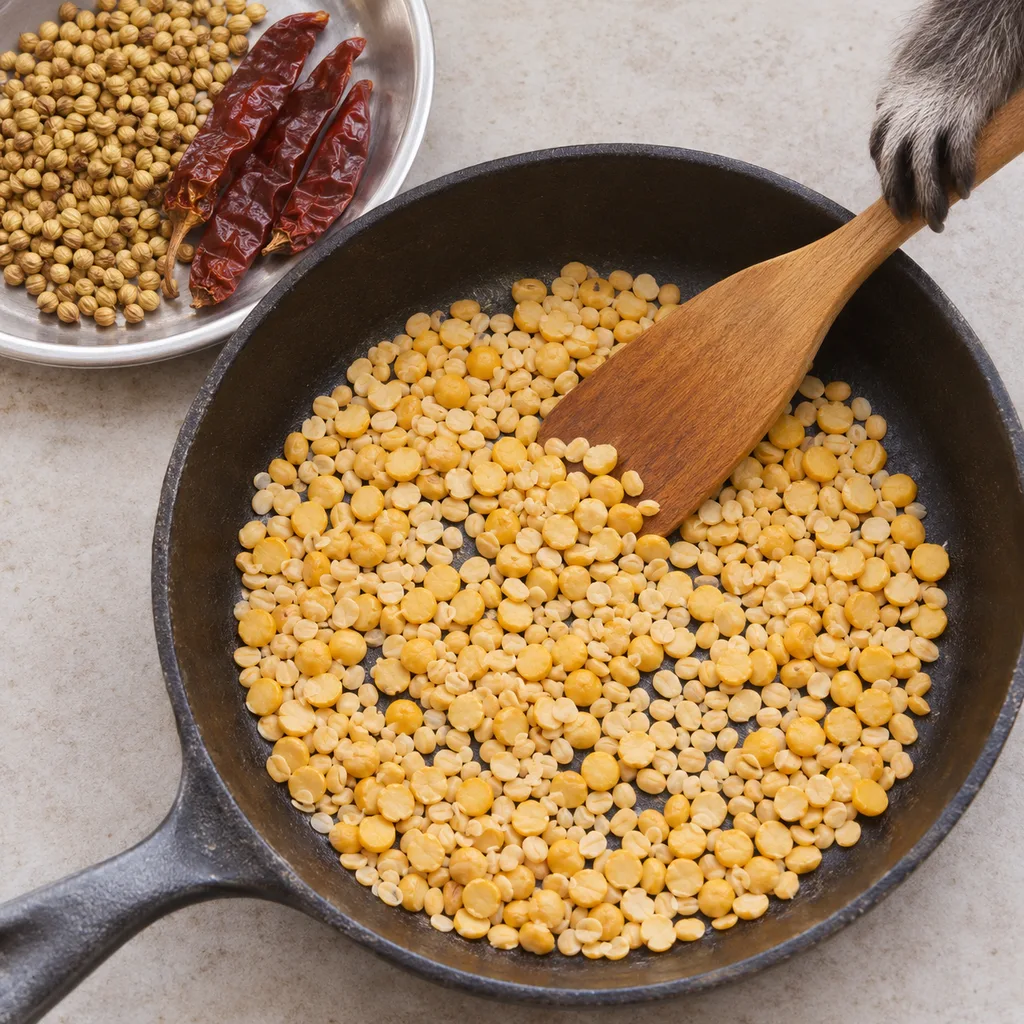
Roast for aroma. In a dry skillet over low heat, toast chana and urad dal for 3–4 minutes until golden. Transfer to a plate. Toast coriander, chillies, cumin, fenugreek, pepper, cloves, cinnamon and kapok bud for about two minutes until aromatic. Finally toast coconut and poppy seeds for 30–60 seconds until pale gold. Cool, then grind everything finely.
Cook rice and vegetables. Put rice and 500 ml water in the second saucepan. Bring to a boil, cover and simmer gently for 18–22 minutes until soft; leave covered off heat. In the large pot, simmer onion, carrots, beans and aubergine with the remaining 400 ml water and salt for 10–12 minutes. Add peas for the last three minutes. Keep this vegetable liquid.
Bring the flavours together. Stir strained tamarind liquid, all the ground masala and optional jaggery into the vegetables. Simmer for five minutes. Fold in the soft dal with its liquid and then the rice. Add boiling water, 100 ml at a time, to make a thick but flowing mixture. Simmer gently for 10–15 minutes, scraping the base often. Check salt and acidity.
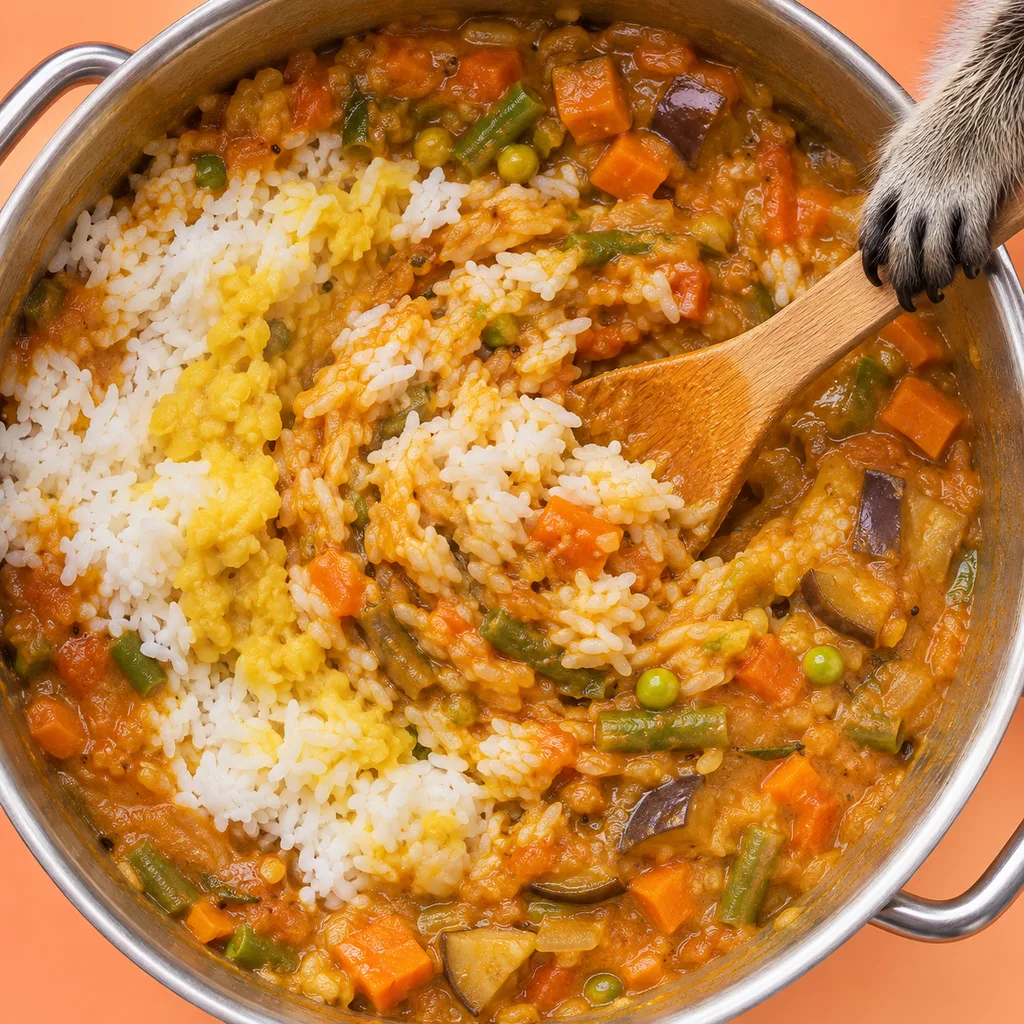
Temper and rest. Heat ghee in the skillet. Fry cashews over medium-low heat until pale gold; lift them out. Add mustard seeds and let them pop, then add curry leaves and asafoetida briefly. Stir this ghee and the cashews into the rice. Cover off heat for five minutes. Loosen with hot water before serving if the rice has absorbed the sauce.
Notes and sources
Marathi moggu gives this masala a distinctive aroma; it is a dried culinary kapok bud, not a clove. If unavailable, omit it and describe the result as an adaptation. Use the dedicated spice blend here; Vegetable Sambar has a different balance. Chinese Congee offers another example of rice cooked for a deliberately soft texture.
Dassana Amit's bisi bele bath and her masala guide inform the rice-dal balance, separate roasting and final consistency. This version makes one small batch of powder and gives a parallel stovetop schedule.
You might also like
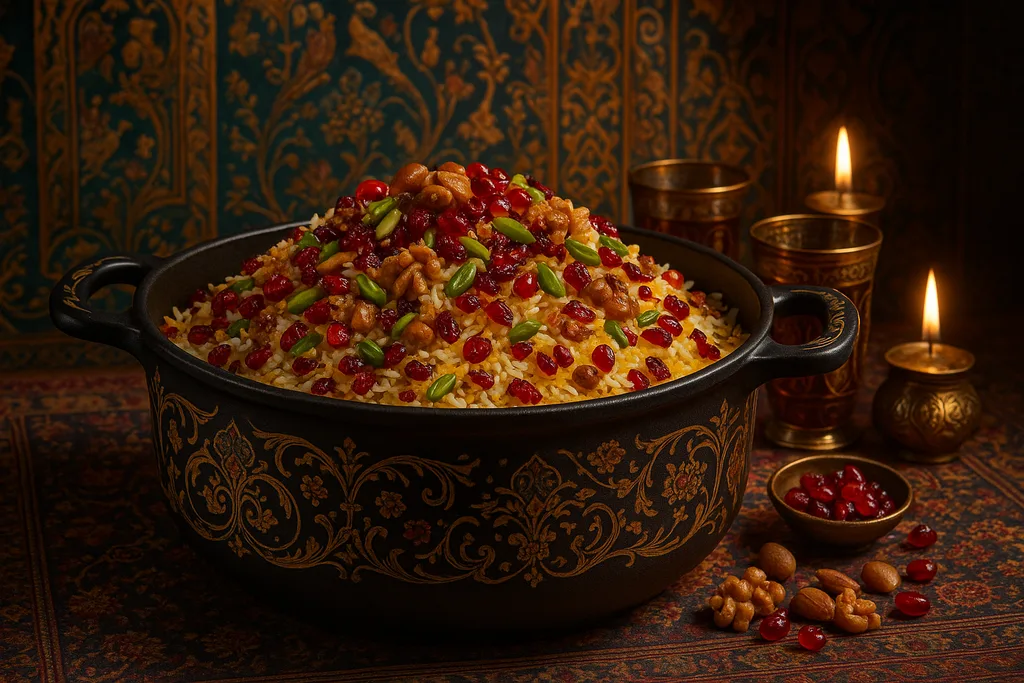
Iranian Jeweled Rice (Morasa Polo) in Cast Iron
Fragrant basmati rice studded with jewel-toned dried fruits, nuts, and spices, baked to perfection in cast iron
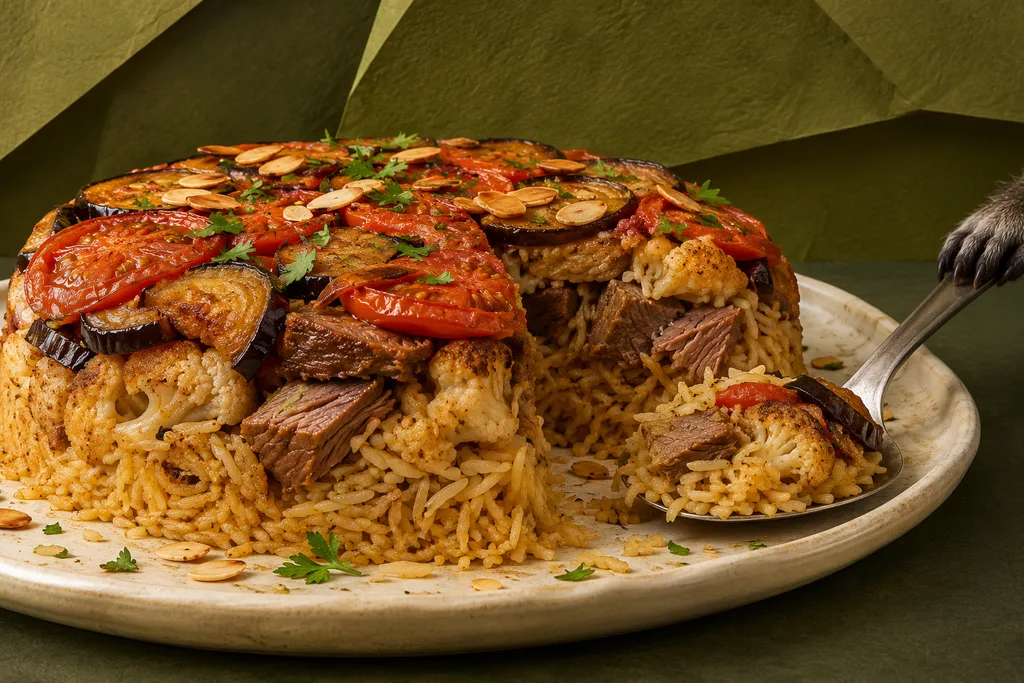
Maqluba with Lamb — Palestinian Upside-Down Rice
Layered lamb, roasted aubergine, cauliflower and spiced rice, rested in the pot and inverted onto a broad platter.
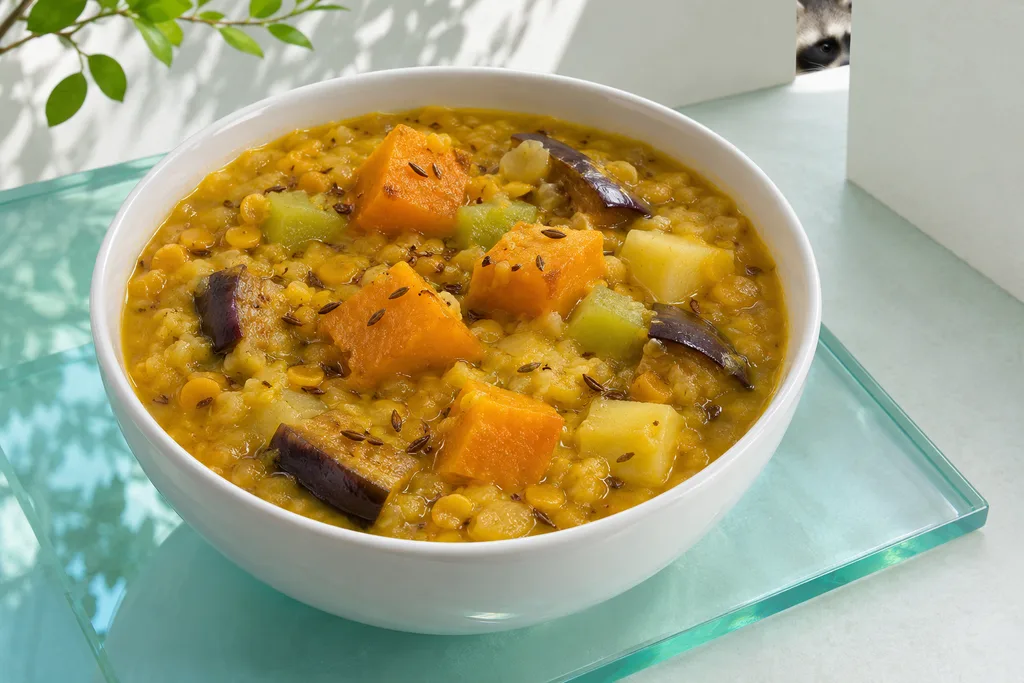
Odia Dalma
Odia toor dal with pumpkin, potato, raw papaya and aubergine, finished with roasted cumin-chilli seasoning and a light ghee tempering.
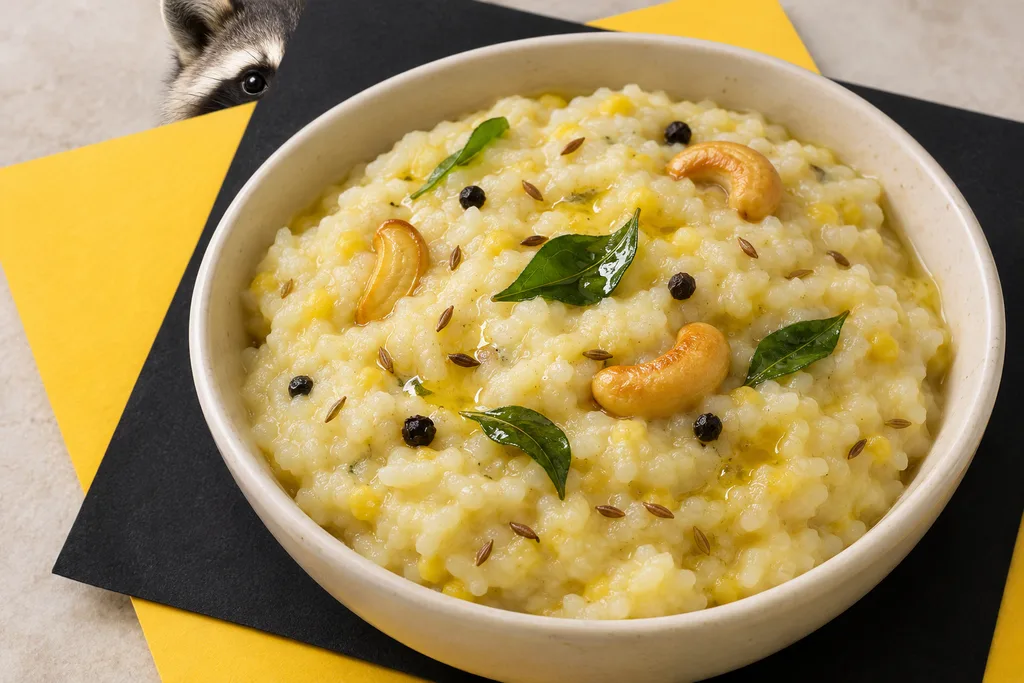
Ven Pongal
Tamil Nadu's savory rice and moong dal breakfast, cooked soft and finished with ghee, black pepper, cumin and golden cashews.