Argentine Asado
Four hours over live fire isn't cooking—it's a commitment to doing meat properly. Real asado demands patience: coals that burn down slowly, cuts that render fat for hours, and the understanding that good things happen when you refuse to rush the process.
This isn't just grilling. It's a four-hour commitment to doing things right.
Ingredients
🥩 For the Meat Selection:
• 2 lbs beef short ribs (costillas)
• 2 lbs beef flank steak (vacío)
• 1 lb pork shoulder, cut thick
• 4 Argentine chorizo sausages
• 1 whole chicken, butterflied
• 8 oz blood sausage (morcilla), optional
🧂 For the Seasoning:
• Coarse sea salt (lots of it)
• Freshly cracked black pepper
• 4 bay leaves, crushed
🔥 For the Fire:
• Hardwood charcoal or wood chunks
• Newspaper for starting
• Long matches
🥗 Traditional Sides:
• Chimichurri (recipe follows)
• Crusty bread
• Simple salad with tomatoes and onions
• Malbec wine (non-negotiable)
Quick Chimichurri
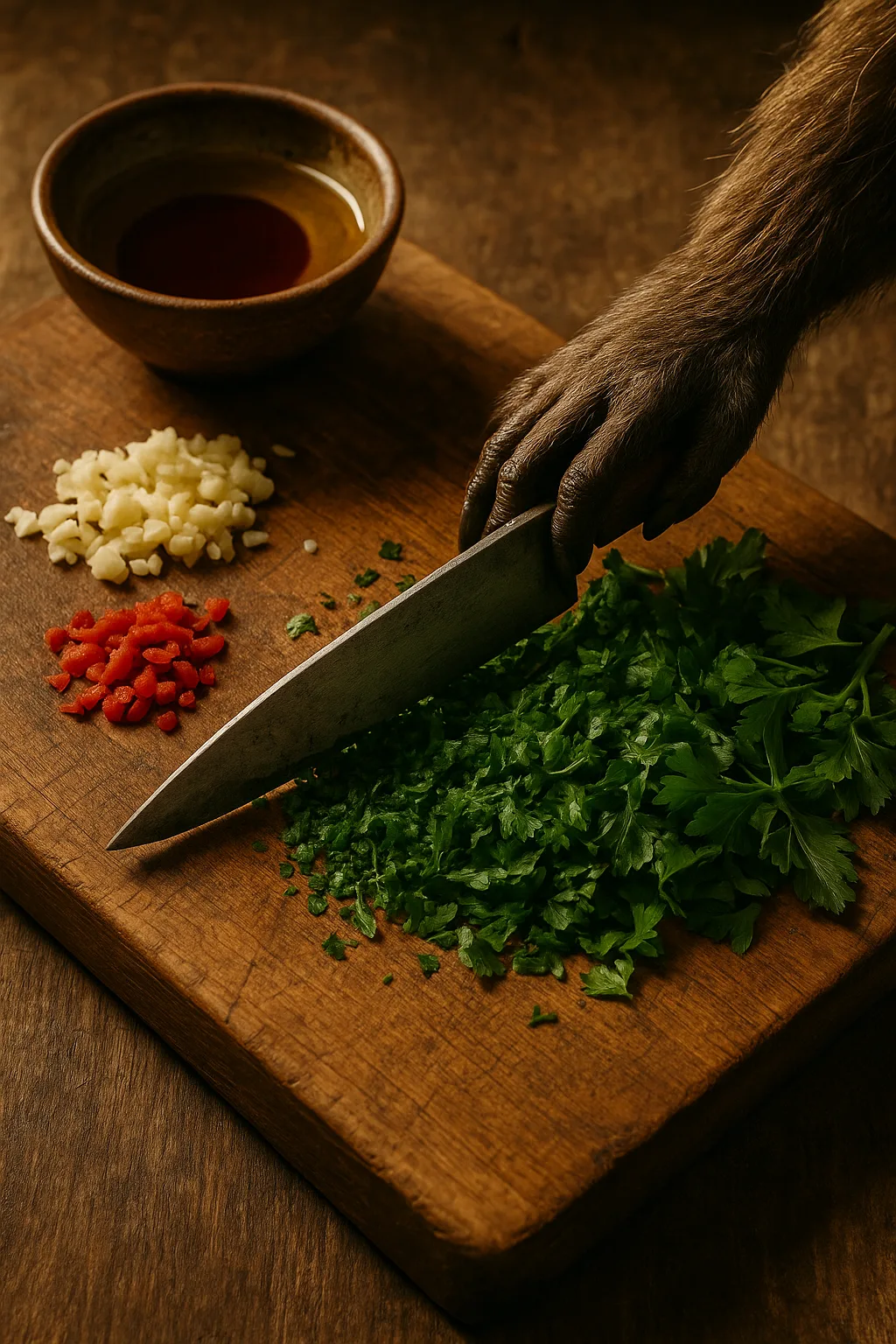
🌿 1 cup fresh parsley, finely chopped
🧄 4 garlic cloves, minced
🌶️ 1 small red chili, minced
🫒 1/2 cup olive oil
🍋 2 tbsp red wine vinegar
🧂 Salt and pepper to taste
Instructions
Build Your Fire (1 hour before cooking)
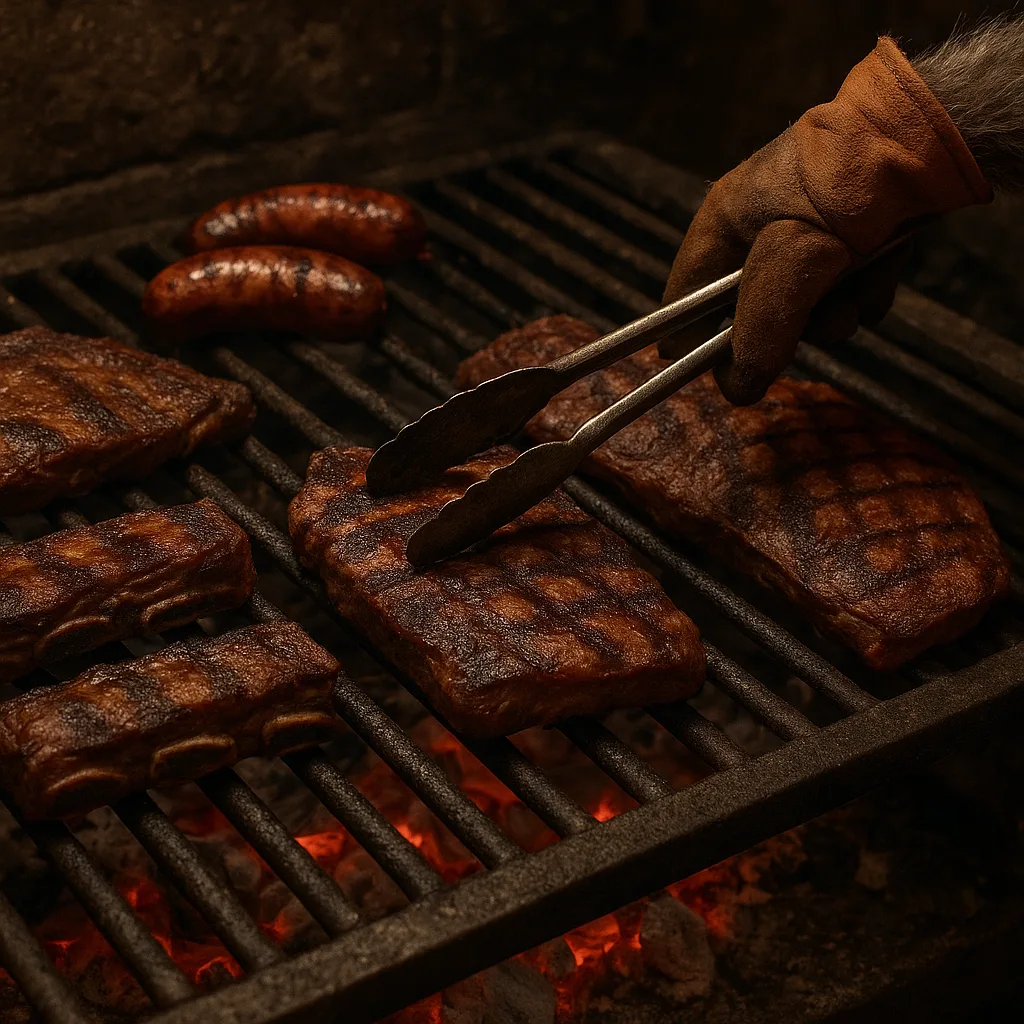
Start with a proper wood fire in your parrilla or large grill. No gas shortcuts here - the smoke is half the flavor. Build the fire to one side, letting it burn down to steady coals. You want different heat zones: hot for searing, medium for slow cooking, and cool for resting.
The fire's ready when you can hold your hand 6 inches above the coals for exactly 3 seconds before yanking it away.
Season and Rest
Salt your meats generously 30 minutes before they hit the grill. Don't be shy - Argentine salt is coarse and bold. The meat should look like it walked through a winter morning.
The Cooking Order (This Matters)
-
Chorizo first (20 minutes): These release fat that flavors everything else. Start them over medium heat, turning every 5 minutes until the casings split and the fat renders golden.
-
Short ribs (2-3 hours): These tough cuts need time. Place them bone-side down over indirect heat. Turn every 45 minutes. They're done when the meat pulls away from the bone with gentle pressure.
-
Chicken (45 minutes): Skin-side down first, over medium coals. The skin should crackle and char lightly. Flip once the juices run clear from the thickest part.
-
Pork shoulder (1.5 hours): Fat-side down first to render. Turn every 30 minutes, moving to cooler spots if it colors too fast.
-
Flank steak last (15 minutes): This is your grand finale. Sear hard over the hottest coals for 3-4 minutes per side. It should have a perfect crust but stay pink inside.
The Asador's Rules
- Never press the meat with your spatula
- Turn only when the meat releases easily from the grates
- Let each piece rest 5 minutes before cutting
- Serve directly from the grill as each piece finishes
Making Chimichurri
Mix everything in a bowl and let it sit while the meat cooks. The flavors meld and the garlic mellows. This keeps in the fridge for a week and gets better each day.
Asado Timeline (4 Hours)
Key Points:
- Different cuts need different heat levels and times
- Short ribs take longest - start early
- Flank steak is the grand finale - hot and fast
- Everything gets better with chimichurri
Serving the Asado
Arrange the finished meats on a large wooden board. Slice the flank steak against the grain, break the ribs at the bones, and let people tear the chicken with their hands. Set out small bowls of chimichurri, piles of bread, and that simple salad.
Pour the Malbec. Sit back. Watch people's faces change with the first bite.
Notes from the Fire
The beauty of asado isn't perfection - it's rhythm. Some pieces will be more charred, others more tender. That's the conversation between fire and meat that makes each asado unique.
Don't rush it. The Argentines have a saying: "Asado no se apura" - you don't hurry an asado. The meat will tell you when it's ready.
Variations:
- Add sweetbreads (mollejas) for the adventurous
- Try different wood types: quebracho is traditional, but hickory works
- Some families add provoleta cheese melted on the grill as an appetizer
This feeds a crowd and creates the kind of meal people remember. The kind where the last person doesn't leave until the coals have gone cold and the wine is finished.
Estimated nutrition per serving
One serving is 1/8 of the recipe. Values are rounded estimates.
- Calories
- 1115 kcal
- Protein
- 80 g
- Carbohydrate
- 3 g
- Fat
- 85 g
Calculated from USDA FoodData Central, SR Legacy (April 2018) food composition data and the stated recipe yield.
How this estimate was calculated
Ingredient amounts are converted to edible weights, matched to USDA foods, added together and divided by 8 servings. Comparable foods are used where a regional ingredient has no exact record. Ingredient brands, portion sizes, discarded fat and cooking losses can change the result. Optional ingredients and unmeasured accompaniments are excluded. Sodium is not estimated because salt and brine retention vary.
- Assumes 70% edible meat/fat for • 1 whole chicken, butterflied.